In the very beginning, when time itself was young and the world had not yet taken its familiar shape, the entire face of the earth lay submerged beneath dark, tumultuous waters. There was no land, no sky as we know it, no living creatures only an endless, churning ocean that stretched in every direction beneath a colorless void.
Through this primordial chaos flew a solitary bee, wise and ancient, carrying upon its back a precious burden: Mantis, the being who would become the hero of all Bushmen. For the desert people, water is the ancient and most sacred symbol of life itself the power to revitalize, to cleanse, to begin anew. And so it was from water that all life would spring.
The bee flew on and on, searching desperately for solid ground where it might rest. But as the hours passed, the bee grew increasingly weary. The cold penetrated its small body, numbing its wings. Mantis felt heavier and heavier upon the bee’s tired back, and the faithful insect began to sink lower and lower toward the dark water below. The bee’s wings beat slower with each passing moment, and hope seemed to fade like the last light of dusk.
Just when all seemed lost, while floating on the surface of the endless water, the bee glimpsed something magnificent: a great white flower, its petals half-open, waiting patiently for the sun’s first golden rays to awaken it fully. Summoning its last reserves of strength, the bee flew to this flower and gently laid Mantis within its tender heart. There, in that sacred space between petal and pistil, the bee planted within Mantis the seed of the first human being the ancestor of all the Bushmen who would ever walk the earth.
Having completed this final, momentous act, the wise bee died, its purpose fulfilled. But as the sun rose over the world’s first morning, warming the white flower with life-giving light, Mantis stirred and awoke. And there, from the precious seed left by the bee, the first Bushman was born humanity’s entrance into the world.
The Theft of Fire from Ostrich
Yet life alone was not enough. The first people ate their food raw, just as they killed it, living no differently than the Leopard prowling in the shadows or the Lion roaring across the plains. At night, they huddled in their shelters without any cheering light to brighten the long, dark hours when predators ruled and cold seeped into bones.
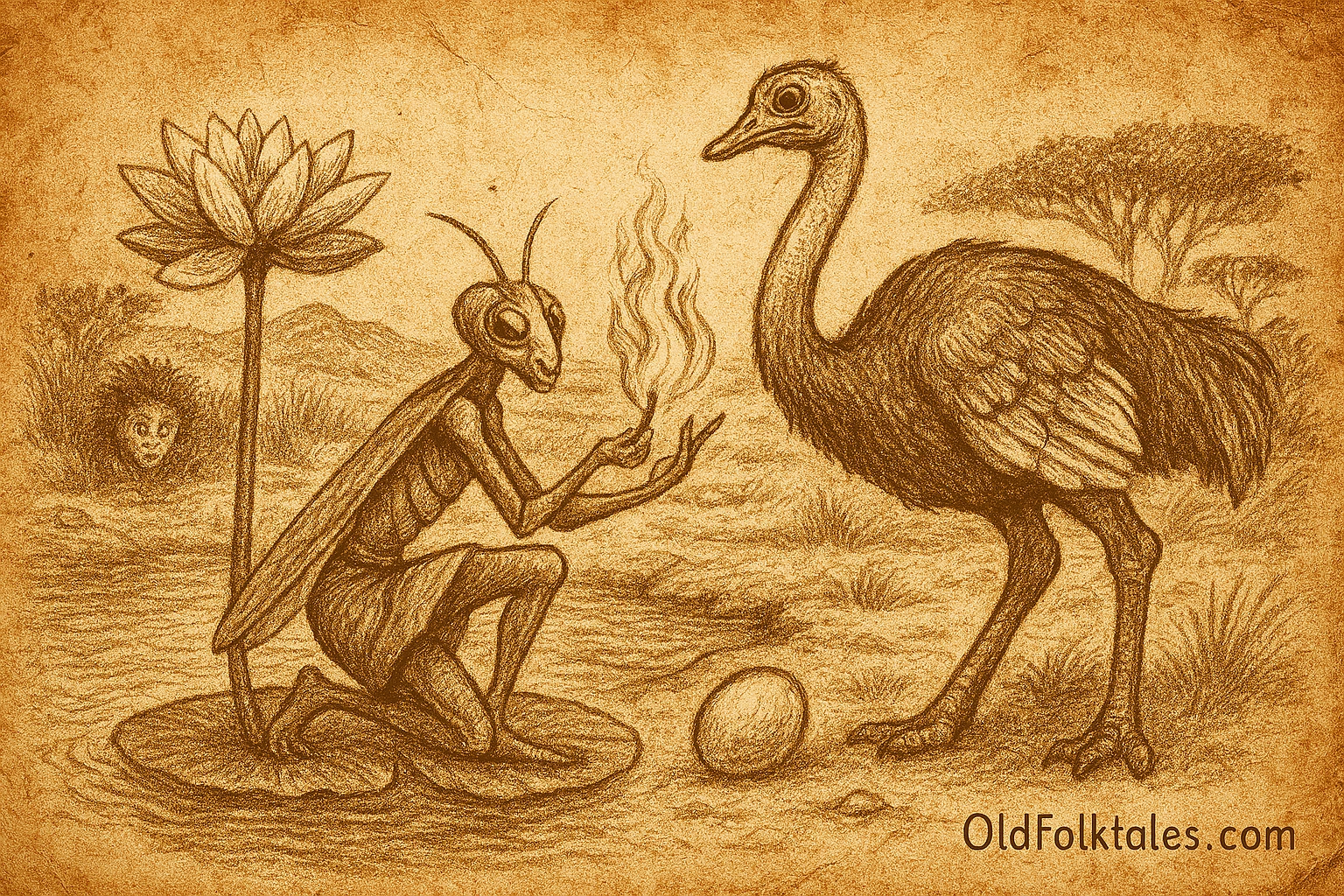
Mantis, observant and clever as always, began to notice something peculiar. Whenever Ostrich went to eat his meals, the food smelled wonderfully different rich and delicious, unlike anything else. Mantis’s curiosity burned within him. One day, he crept close to where Ostrich was dining, hiding himself carefully to observe without being seen.
What Mantis witnessed amazed him. He watched as Ostrich furtively reached beneath his own wing and withdrew something bright and warm: fire itself! The great bird dipped his food into this fire, cooking it before eating. When Ostrich had finished his meal, he carefully tucked the precious fire back beneath his wing and walked off, guarding his secret jealously.
Mantis knew immediately that Ostrich would never willingly share this treasure. The bird was far too proud and protective of his advantage. But Mantis was clever trickery and ingenuity were as natural to him as breathing. He began to formulate a plan.
The next day, Mantis went to visit Ostrich, his manner casual and friendly. “Come, my friend!” he called out enthusiastically. “I have found the most wonderful tree it’s covered with the most delicious yellow plums you’ve ever tasted!”
Ostrich, who loved good food as much as any creature, was immediately delighted. He followed Mantis to the tree and began eagerly eating the plums that hung within easy reach. But Mantis urged him on, pointing upward with excitement. “No, no! Higher, higher! The very best ones are right at the top of the tree. Those are the sweetest and juiciest!”
Ostrich, not wanting to miss out on the finest plums, stood up on his tiptoes and spread his great wings wide to balance himself as he reached for the high branches. This was exactly the moment Mantis had been waiting for. Quick as lightning, he darted forward and snatched the fire from beneath Ostrich’s outstretched wing. Then he ran off with it as fast as his legs could carry him, bringing the gift of fire to all the Bushmen people.
Since that fateful day, Ostrich has been terribly ashamed of being outwitted. He has never flown again, keeping his wings pressed tightly to his sides at all times, desperately preserving the little bit of fire he has left. The Bushmen say this is why Ostrich behaves so oddly even to this day.
When the female Ostrich makes her nest in a hollow scraped into the warm desert sand, she lays between twenty and thirty round, creamy eggs. But she invariably leaves one egg outside the nest just one, sitting apart from all the others. Why does she do this? Because both she and her husband are so busy brooding over the ancient theft of their fire, so consumed by the memory of Mantis’s trickery, that they have become terribly absent-minded. The female is liable to forget she’s even sitting on a clutch of eggs, and so she leaves one outside as a reminder to herself and her husband that they are there at all.
Click to read all Myths & Legends – timeless stories of creation, fate, and the divine across every culture and continent
The Wisdom of the Mantis Tale
The stories of Mantis carry profound meaning for the Bushmen people. They teach that wisdom often comes through cleverness rather than brute strength, that even the smallest beings can accomplish great things through intelligence and courage. Mantis shows that life itself is a gift to be cherished brought forth from water in the desert, where every drop is sacred. The fire he stole from Ostrich represents not just warmth and cooked food, but knowledge, civilization, and the spark of human ingenuity that separates people from animals. These tales remind the San people that they are part of an ancient story, connected to the very beginning of the world, and that the qualities Mantis embodies cleverness, family loyalty, and determination are the keys to survival in the harsh but beautiful desert lands they call home.
Knowledge Check
Q1: Who is Mantis in Bushman mythology and what makes him different from other divine beings?
A1: Mantis is the central trickster hero of Bushman (San) mythology who brought both the first human life and fire to the world. Unlike distant gods such as the Moon and Sun, Mantis is remarkably human in character he is clever yet fallible, heroic yet humble. The Bushmen consider him a “dream-Bushman” who personifies their own people rather than a remote deity. He resembles the actual praying mantis insect with his wedge-shaped face and intelligent appearance, making him relatable and accessible in their spiritual tradition.
Q2: What is the symbolic significance of water in the Mantis creation story for desert-dwelling Bushmen?
A2: In Bushman mythology, water holds sacred significance as the ancient symbol of life itself. For people living in the harsh Kalahari Desert where water is extremely scarce and precious, it represents divine properties the power to revitalize and enable fresh beginnings. The fact that Mantis and the first human emerged from primordial waters covering the earth emphasizes that life springs from this most precious resource. This reflects the Bushmen’s deep spiritual connection to water as the source of all existence in their desert homeland.
Q3: How did Mantis steal fire from Ostrich in this Southern African folk tale?
A3: Mantis used clever trickery to steal fire from Ostrich, who kept it hidden beneath his wing. After observing Ostrich secretly using fire to cook his food, Mantis devised a plan. He told Ostrich about a tree with delicious yellow plums and encouraged him to reach for the best ones at the very top. When Ostrich stood on tiptoe and spread his wings wide to balance himself, Mantis quickly snatched the fire from beneath the exposed wing and ran off, bringing this gift to all Bushmen people.
Q4: Why does Ostrich no longer fly according to Bushman legend?
A4: According to this San mythology, Ostrich has never flown since Mantis tricked him and stole his fire. Overcome with shame at being outwitted, Ostrich keeps his wings pressed tightly to his sides to preserve the little fire he has remaining. This mythological explanation accounts for the real-world observation that ostriches are flightless birds. The tale also explains why female ostriches leave one egg outside the nest both parents are so preoccupied brooding over the theft that they’ve become absent-minded.
Q5: What is the significance of the bee in the Mantis creation story?
A5: The bee plays a crucial role as the carrier of wisdom and the facilitator of creation in Bushman mythology. As honey-makers, bees symbolize wisdom in this tradition. The bee carried Mantis across the primordial waters searching for solid ground, and despite growing cold and weary, it persevered until finding the great white flower. Before dying, the bee planted the seed of the first human being within Mantis, completing its sacred purpose. This sacrifice enabled human life to emerge when the sun’s warmth awakened both Mantis and the first Bushman.
Q6: Who are the members of Mantis’s family and what do they represent in Bushman culture?
A6: Mantis has an extensive family that reflects Bushman social values. His wife is Dassie (rock hyrax), his son is Young Mantis (inheriting his father’s cleverness), and his adopted daughter is Porcupine (rescued from the terrifying All-Devourer). Porcupine married Kwammanga, a being who is part of the rainbow, representing the connection between earthly and magical realms. Their sons are Kwammanga the younger and Mongoose (Ichneumon), a bossy character who keeps his grandfather honest. Mantis’s beloved sister is Blue Crane. This family structure emphasizes the importance of kinship, loyalty, and multi-generational wisdom in Bushman culture.
Source: Adapted from “Myths and Legends of Southern Africa” told by Penny Miller
Cultural Origin: Bushman (San) People, Kalahari Desert Region (Botswana, Namibia, South Africa, Angola, Zimbabwe, Zambia)