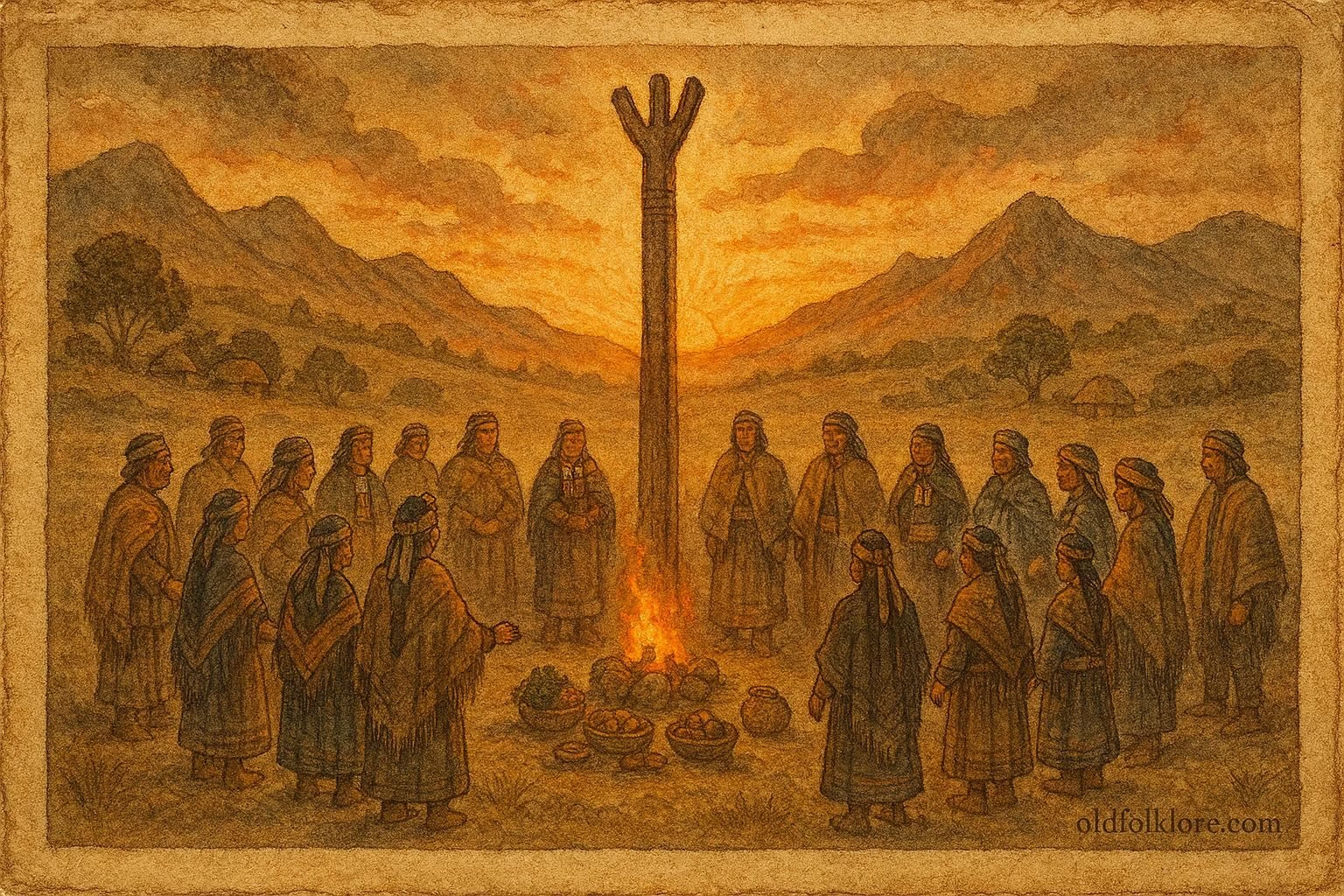
Ngillatun is a central ritual among the Mapuche people of southern Chile and Argentina. With deep pre-colonial roots, this ceremonial complex predates European contact but adapted certain Christian elements over centuries. At its core, Ngillatun reinforces the Mapuche worldview, linking the community, the land, and ancestral spirits. The ceremony is traditionally led by a machi, a spiritual specialist who mediates between humans and the ngen, spiritual forces governing fertility, health, and environmental balance.
Description
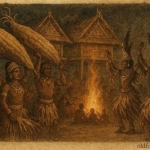
Ngillatun is a communal and highly structured ceremony. Villages gather at the rewe, a ritual center or sacred pole, where participants perform thanksgiving, petitions, and prayers for cosmic renewal. The ritual often spans several days, blending formalized prayers, offerings, dance, music, and feasting.
Offerings typically include food, drinks, and symbolic objects presented to ancestors and the ngen. Participants circle the rewe in choreographed dances, invoking blessings for fertile fields, healthy livestock, and social harmony. Drumming, chanting, and song accompany these movements, creating a layered soundscape that aligns human activity with cosmic rhythm.
The communal dimension is vital: families, elders, and youth contribute labor, food, and material goods. Political and social commitments are reaffirmed during the ceremony, as leaders and machi publicly renew obligations to protect communal wellbeing. Through these performances, Ngillatun enacts both spiritual mediation and civic cohesion, emphasizing the interconnectedness of human, natural, and divine orders.
Mythic Connection
Ngillatun ritualizes Mapuche cosmology. Central to the ceremony is a negotiation with ngen, localized spirits of rivers, mountains, forests, and fertility. The machi interprets the spirits’ will, offering guidance and maintaining harmony between humans and nature.
Mythologically, the ceremony enacts ancestral authority and cosmological order. The rewe pole symbolizes the axis mundi, connecting the earthly realm to spiritual heights. Through dance, offering, and prayer, participants re-enact the sacred contract with the land and its forces, ensuring that natural cycles, rain, harvest, and animal fertility, remain in balance.
The ritual is also a social myth-making process: by invoking ancestral narratives and performing communal acts, Ngillatun embeds cosmological understanding into everyday life, reinforcing both morality and practical cooperation.
Variants & Notes
Ngillatun ceremonies vary across Mapuche communities:
-
Regional Differences: Coastal, Andean, and forest-dwelling communities emphasize different spirits, dance forms, and offerings.
-
Machi Roles: Some lineages rely heavily on song and dance to mediate, while others incorporate divination and healing.
-
Historical Commemoration: Certain ceremonies also recall historical conflicts or colonial encounters, blending memory with spiritual ritual.
Despite variations, the core functions, cosmic renewal, communal cohesion, and ancestral communication, remain constant. The ceremony’s adaptability has allowed it to survive colonial suppression and modern societal changes while retaining profound cultural significance.
Author’s Note
Ngillatun exemplifies the Mapuche integration of ritual, community, and cosmology. Through complex ceremonial structures, participants honor the spirits of land and ancestors, while reaffirming social bonds and ecological stewardship. This ritual demonstrates how ceremonial practice encodes mythic understanding into everyday life, sustaining cultural memory and environmental respect. The endurance of Ngillatun highlights the resilience of indigenous knowledge systems and their continued relevance for communal identity, ecological balance, and spiritual continuity.
Knowledge Check
-
What is the Ngillatun ceremony?
-
A communal Mapuche ritual of prayer, offering, dance, and cosmic renewal.
-
-
Who leads the Ngillatun ceremonies?
-
A machi, a spiritual specialist and mediator with ancestral authority.
-
-
What is the role of the rewe in Ngillatun?
-
A sacred center/pole representing the axis mundi, connecting humans and spirits.
-
-
Who or what are the ngen?
-
Localized spirits that govern fertility, weather, and environmental balance.
-
-
What social functions does Ngillatun serve?
-
Reaffirming civic obligations, community cohesion, and intergenerational continuity.
-
-
How does Ngillatun reflect Mapuche cosmology?
-
Through offerings, dance, and prayer, it enacts harmony between humans, land, and spiritual forces.
-