Maslenitsa is one of the oldest surviving festivals of the Eastern Slavs, celebrated across Russia, Ukraine, and Belarus. It predates Christianity by centuries and preserves elements of early Slavic sun worship connected to seasonal cycles. Although the festival now precedes the Christian season of Lent, its foundations lie in agricultural rites and mythic stories surrounding the dying winter, the strengthening sun, and the rebirth of the natural world. Maslenitsa has remained a beloved celebration because it blends ancient symbolism with communal joy, making it a living expression of Slavic cultural identity.
Description
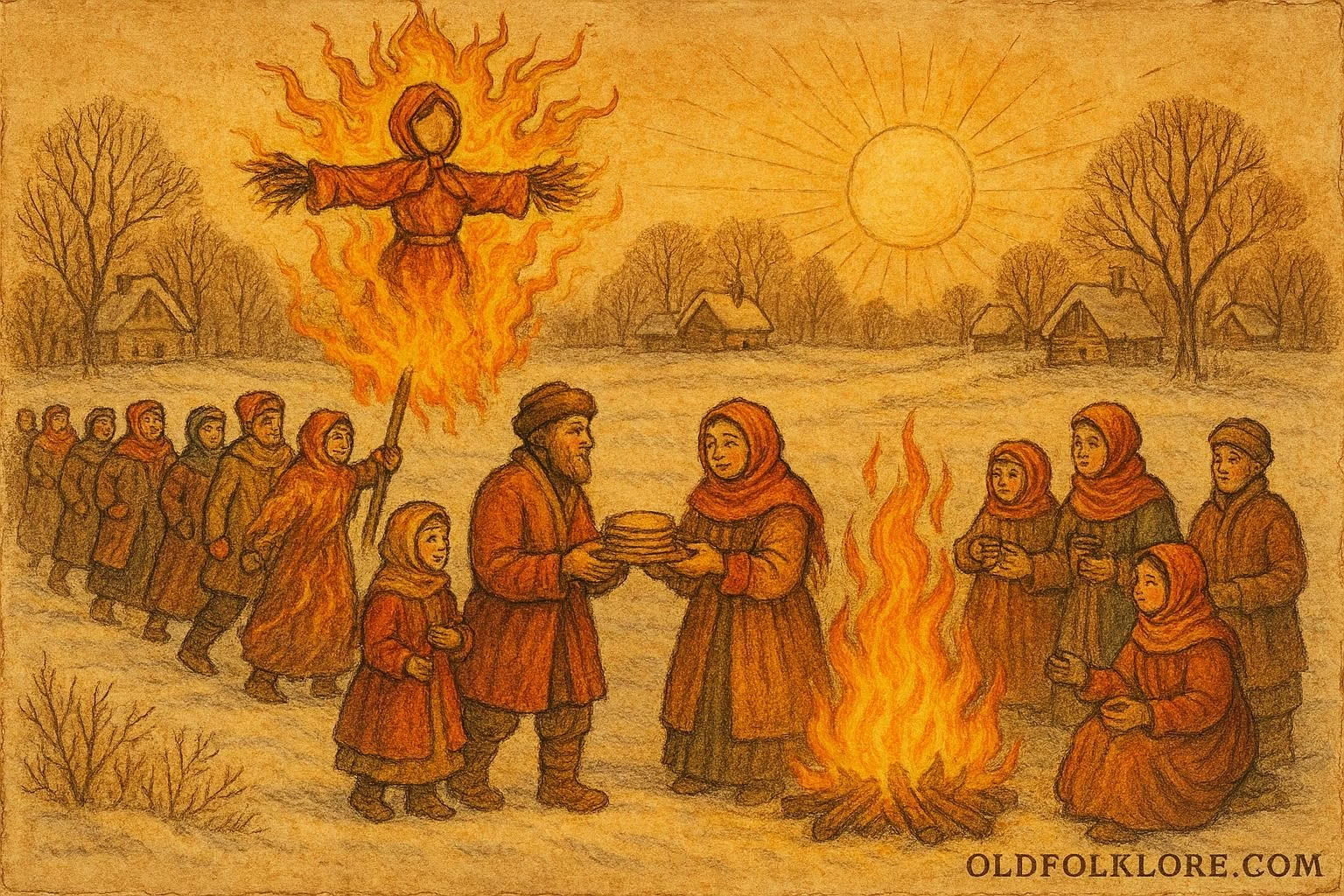
Maslenitsa lasts for seven days, each marked by specific customs. The festival appears during the final week before Lent, a moment when communities transition from winter’s scarcity to spring’s promise. Throughout the week, villages and towns host sleigh rides, outdoor games, music performances, and feasts. The most iconic food is blini—thin pancakes cooked in butter and traditionally served with honey, sour cream, berries, or caviar. Their round, golden shape reflects the returning sun, making them both nourishment and symbol.
Each day carries a theme. Early in the week, families prepare food, decorate homes, and visit relatives. As the days progress, the atmosphere grows louder and more vibrant. Children sing traditional songs, young people participate in playful competitions, and communities join together for shared meals. Villagers often hold mock battles, tug-of-war contests, and costumed parades where performers dress as animals or mythic spirits of the winter season.
The heart of the ritual is the effigy burning. A tall straw figure, known as Lady Maslenitsa, Kostroma, or sometimes simply “Winter”, is decorated with bright ribbons and traditional dress. People carry the effigy through the settlement accompanied by musicians and dancers. The procession ends in an open field where the effigy is set ablaze. The flames symbolize the destruction of winter’s hold on the land. As the straw burns, participants sing, cheer, and throw their final offerings into the fire. Many communities believe that the ashes scattered across the fields bring fertility and a strong harvest.
Another important aspect of Maslenitsa is the emphasis on forgiveness. The final day, known as Forgiveness Sunday, encourages people to reconcile with family, neighbors, and acquaintances. Participants say, “Forgive me,” and receive the reply, “God forgives, and I forgive.” This merging of Christian sentiment with older seasonal symbolism illustrates how the festival evolved yet continued to preserve its ancient spirit of renewal.
Although modern celebrations incorporate urban performances and public festivals, the core actions, feasting, communal gathering, symbolic burning, and celebration of light—remain unchanged. Through these acts, Maslenitsa continues to express the Eastern Slavic view of winter’s cycle, nature’s renewal, and the community’s unity under an ever-returning sun.
Mythic Connection
Maslenitsa emerges from a mythological worldview in which the sun is a living force, and seasonal change reflects a cosmic drama. The burning of the effigy symbolizes the death of winter and the triumph of the sun. In pre-Christian traditions, this returning light was tied to Yarilo, the youthful god of spring, fertility, and warmth. Yarilo’s return marked the awakening of the land, the stirring of seeds, and the renewal of life.
Blini, round and golden, act as edible symbols of the solar deity. Sharing them strengthens communal bonds and expresses gratitude for the sun’s warmth. The sleigh rides, once linked to honoring the dead during winter, gradually transformed into displays of speed and joy celebrating the end of the cold season.
Maslenitsa therefore acts as a ritual crossroads where mythic memory and daily life meet. It reenacts the eternal battle between darkness and light, winter and spring. Communities gather to witness and participate in that transformation, acknowledging the forces that shape the land and their lives. By burning the effigy, they help the world shift toward rebirth. By sharing blini, they honor the sun’s life-giving power. Through forgiveness, they renew social harmony to align human relationships with nature’s restored balance.
Author’s Note
This article summarizes Maslenitsa’s origins, symbolic actions, and mythological connections. It examines how the festival reflects Slavic reverence for the sun, seasonal cycles, and the renewal of both the land and the community through fire, food, and ritual unity.
Knowledge Check
1. What do blini symbolize in Maslenitsa?
Answer: The returning sun, due to their round, golden shape.
2. What is the purpose of burning the effigy?
Answer: To dramatize winter’s departure and welcome spring’s rebirth.
3. Which deity is linked to Maslenitsa’s sun symbolism?
Answer: Yarilo, the Slavic god of spring and fertility.
4. Why is forgiveness important during the festival?
Answer: It restores social harmony before the renewal of the season.
5. What does the effigy represent?
Answer: Winter, whose symbolic death allows spring to arrive.
6. How long does Maslenitsa last?
Answer: Seven days, each with traditional customs and rituals.