
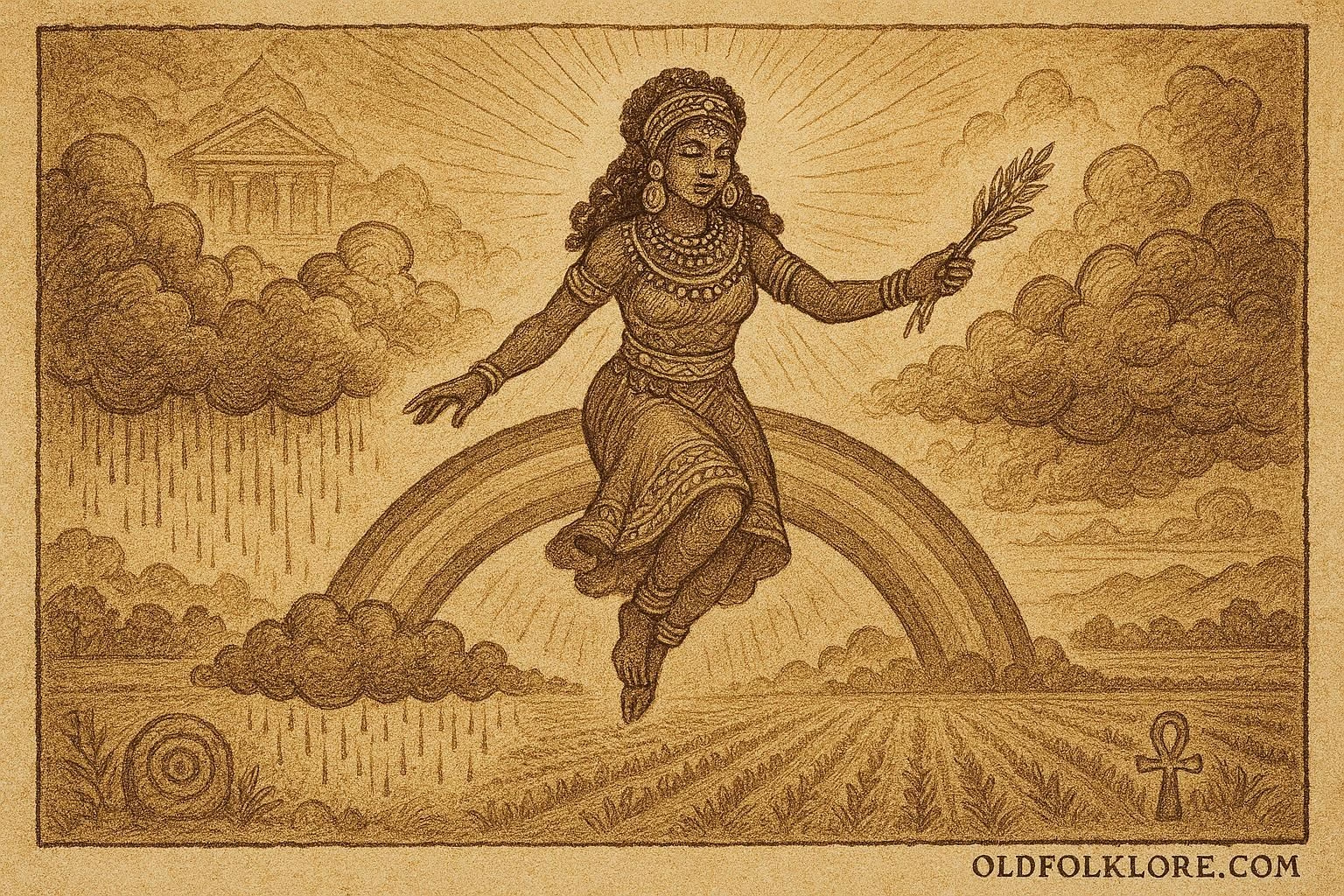
Mbaba Mwana Waresa is the radiant Zulu goddess of rainbows, rain, fertility, and agriculture, a divine being whose presence bridges sky and earth in shimmering arcs of color. She governs the life-giving waters that nourish crops, the rhythm of seasonal renewal, and the communal arts of beer brewing, ritual dancing, and social harmony.
Often depicted traveling between the heavens and the world below on a rainbow pathway, she is both a celestial mother and a teacher of human skill. Her influence extends across weather, crops, marriage, and the prosperity of families and cattle. Her sacred symbols include the rainbow, clay beer pots, fertile fields, and the gentle rains that follow her arrival.
Yet she is also remembered for a deeply human story: her marriage to a mortal man, an act that demonstrates the courage, compassion, and humility she values in both the divine and the earthly.
Mythic Story
In the earliest days, when the land was still learning the rhythm of seasons, the Zulu people looked to the skies for blessing. Among the high clouds dwelled Mbaba Mwana Waresa, the goddess whose laughter brought rainfall and whose footsteps painted rainbows across the horizon. She lived in a shining hut called Intukutuko, a dwelling of warm light that hovered in the heavens above the world.
From this sacred home, she watched the earth carefully. She saw the thirst of the soil, the hunger of cattle, and the efforts of farmers whose lives depended on rain. She loved them, these children of the earth, and she resolved not only to bless them from afar but to walk among them and teach them what only the gods knew.
First, she taught them agriculture.
She descended on a long, arching rainbow and stepped lightly upon the land, carrying with her seeds that glowed with divine potential. She taught families how to read the sky, how to plant with the seasons, how to respect the earth as a living companion. Under her guidance, fields flourished, and food became more than sustenance, it became a bond between the people and the divine.
Next, she taught them umqombothi, the sacred beer made from fermented grains. Mbaba Mwana Waresa showed them how the brewing process mirrored cycles of life, growth, transformation, and maturation. Through this gift, she strengthened the unity of households and clans, for shared beer was a symbol of peace, negotiation, and celebration. She also taught ritual dancing, where feet striking the earth echoed the heartbeat of creation itself.
But though she loved the people, she remained solitary in the heavens. Her hut, filled with swirling colors and the whisper of clouds, lacked only one thing: companionship. She watched how humans loved, fiercely, sincerely, and wondered whether she herself might find such a bond.
Many gods discouraged her.
To love a mortal was to risk sorrow, for mortals lived brief lives and carried the burdens of change and loss. Yet Mbaba Mwana Waresa felt a pull stronger than fear. She wanted someone who loved with humility, not because she was divine, but because her heart was worthy.
So she devised a test.
Across the land, she looked for a man whose nature was steady, respectful, and truth-filled. She discovered Thandile, a young herdsman known for kindness toward both cattle and people. But she would not reveal her divine form at once. She chose instead to observe him disguised as an ordinary woman, wanting to see if his character remained gentle even with those he believed powerless.
Days turned into weeks. She spoke with him at riverbanks, shared stories beside cattle kraals, and watched how he treated strangers and elders alike. Thandile showed no arrogance. He offered water to travelers, settled disputes with calm words, and never once raised his voice in pride.
Satisfied at last, Mbaba Mwana Waresa revealed her true form.
She stepped onto a rainbow that descended before him, her body wrapped in shimmering radiance, her presence smelling of rain-wet earth and sun-warmed grass. Thandile fell to his knees, overwhelmed not with fear but with awe.
Yet the goddess shook her head gently.
“Rise,” she told him. “Love cannot kneel.”
News spread across the land that a mortal had won the heart of a goddess, and the people rejoiced. But Thandile had one more trial before their union could be complete. The gods wished to know whether he would change now that he had seen divine power. They placed before him a series of illusions, riches, glory, and voices whispering that he could command heaven if he wished it.
Thandile refused all temptations.
He asked only to remain who he had always been: a herdsman loyal to truth, a man who valued peace over pride.
In this, he passed the gods’ final test.
Mbaba Mwana Waresa took him by the hand, and once more they ascended the rainbow to her heavenly hut. The wedding that followed blended the world above with the world below. Rain fell gently during their union, a blessing from the sky, while the people danced beneath it, their steps echoing the joy of their goddess.
From that day onward, Mbaba Mwana Waresa continued to bless the land with rain and renewal, but now she did so with a partner beside her, reminding all that love, humility, and generosity bind the heavens and the earth together.
Discover the gods, goddesses, and divine spirits who ruled the heavens and shaped human fate
Author’s Note
Mbaba Mwana Waresa’s myth bridges themes of divine generosity, cultural instruction, and the sacred union of different realms. Her story teaches that harmony between people, land, and spirit depends on humility and compassion. Through agriculture, shared rituals, and her marriage to a mortal, she reveals that abundance is both a gift and a responsibility.
Knowledge Check
Q1: What are Mbaba Mwana Waresa’s primary domains?
A: Rain, rainbows, fertility, agriculture, and ritual unity.
Q2: What sacred gifts did she teach humans?
A: Farming, beer brewing, and ritual dancing.
Q3: What symbol represents her movement between realms?
A: The rainbow pathway she travels upon.
Q4: Why did she test Thandile before revealing her true form?
A: To see if he possessed humility and integrity.
Q5: What trial did the gods give Thandile?
A: Illusions of power and wealth to test his purity of heart.
Q6: What cosmic significance does their marriage hold?
A: It symbolizes the union of sky and earth.
Source: Zulu Mythology, South Africa.
Source Origin: Zulu, South Africa






