
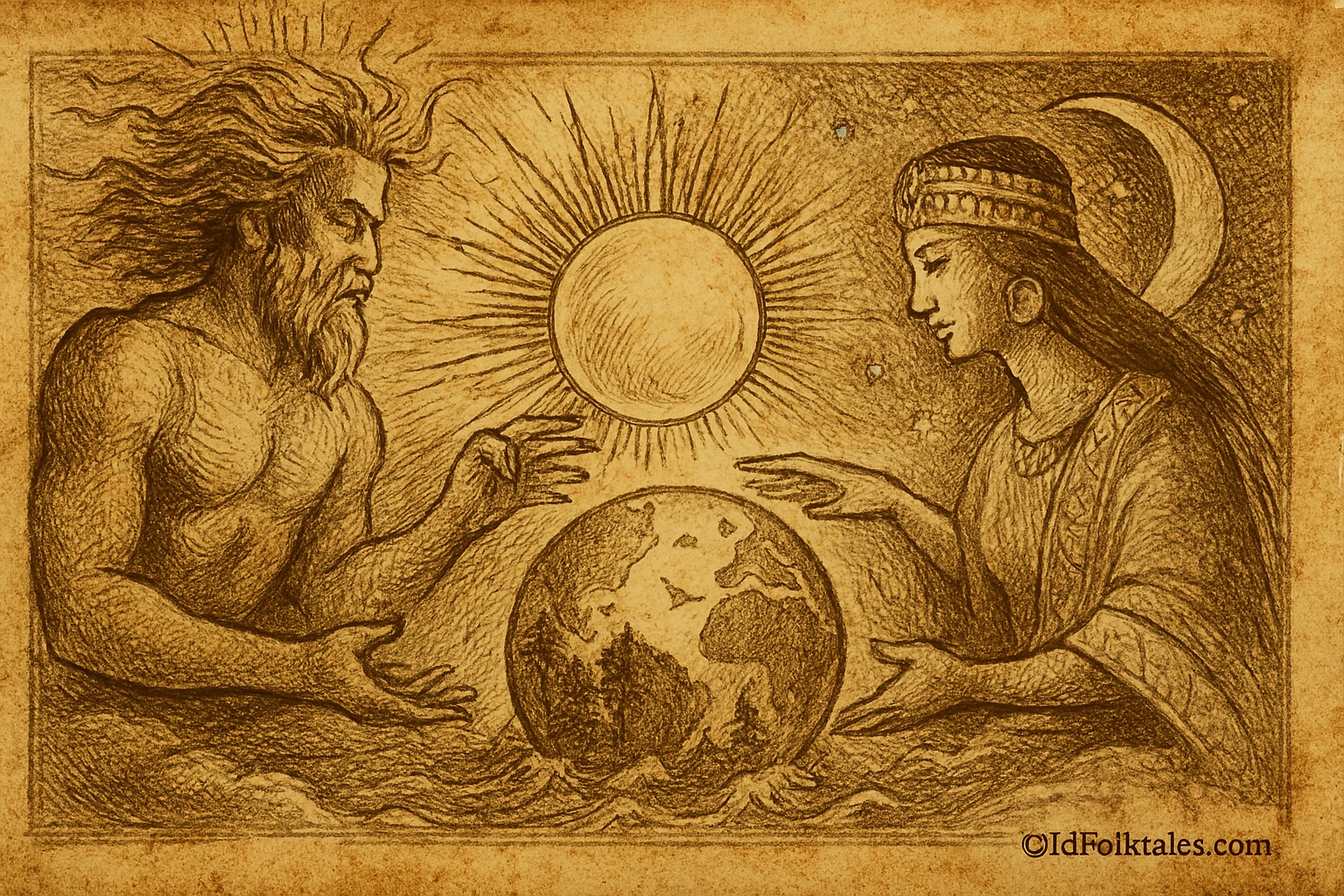
In the time before memory, when the stars were still finding their places in the heavens, the universe was a vast emptiness filled only with twinkling lights scattered across the infinite dark. Through this cosmic void traveled two divine beings, searching for one another across the endless expanse. One was Tupã, the creator god who brought light and life wherever he went. The other was Arasy, the moon goddess whose silver radiance illuminated the darkest corners of creation. For ages beyond counting, they circled through the stars, their paths never quite meeting, until finally, in a moment of cosmic destiny, they found each other.
Their union shook the foundations of existence. Together, Tupã and Arasy descended from the heavens to a hill in Aregúa, and from that sacred place, they sang the world into being. Tupã created the sun, flooding the new earth with golden light. He shaped the oceans and rivers, carved out valleys and raised mountains, planted forests thick with life, and filled the waters with fish and the skies with birds. Arasy breathed souls into these creations, giving them spirit and purpose.
Click to read all Myths & Legends – timeless stories of creation, fate, and the divine across every culture and continent
When their work was nearly complete, Tupã molded the first humans from clay: Rupavé, Father of Peoples, and Sypavé, Mother of Towns. He breathed life into them and taught them how to live in harmony with the earth. But Tupã understood that humanity needed guidance that people must have the freedom to choose their own path. So he created two spirits and left them upon the earth: Angatupyry, the radiant spirit of good, who would inspire kindness, courage, and wisdom; and Tau, the dark spirit of evil, who would tempt humanity toward selfishness, greed, and destruction.
With their creation complete, Tupã and Arasy ascended back to the heavens, leaving humanity to forge its own destiny.
Rupavé and Sypavé had many children. Among their sons was Marangatú, a benevolent and generous leader whose wisdom and compassion made him beloved by all the people. Marangatú had a daughter named Kerana, who grew to become the most beautiful young woman in all the Guaraní lands. Her beauty was like dawn breaking over still water radiant, pure, and impossible to ignore. But Kerana had a dreamy nature. She would wander alone into the forest, lost in thought, singing to herself among the trees and flowers.
From the shadows, Tau watched her. The evil spirit had never felt desire before, but when he saw Kerana, something dark and terrible awakened within him. He wanted her for himself, wanted to possess her beauty and make it his own. For days, he followed her through the forest, studying her movements, learning her habits, planning his approach.
Finally, Tau made his move. He transformed himself into a handsome young man tall and strong, with kind eyes and a smile that could melt even the coldest heart. He appeared in the village carrying a magic flute that played melodies sweeter than birdsong. Standing beside Kerana’s hammock, he played softly, and she woke to see the most beautiful young man she had ever encountered.
For seven days, Tau courted Kerana in his disguised form, enchanting her with music and stories, weaving spells with his words. She was mesmerized, unable to think of anything but this mysterious stranger who seemed to understand the poetry of her soul.
But Angatupyry, the spirit of good, saw through Tau’s deception. He understood that if Tau succeeded in claiming Kerana, the balance between good and evil would be destroyed. On the seventh day, when Tau prepared to kidnap the young woman, Angatupyry confronted him.
The battle between good and evil shook the earth and split the sky. For seven days and seven nights, the two spirits fought, their clash sending storms and lightning across the land. Trees were uprooted, rivers changed their courses, and the people huddled in their homes, terrified by the violence of the cosmic struggle above them. Angatupyry fought with all the light and strength of righteousness, but Tau’s rage and cunning were terrible to behold. Finally, with one devastating blow, Tau overpowered his opponent and cast him aside.
Before Angatupyry could recover, Tau seized Kerana and fled deep into the wilderness where no one could follow. The beautiful young woman, still half-enchanted by his magic, became his unwilling bride.
When the people realized what had happened, they cried out to the heavens. Their prayers reached Arasy, the moon goddess, who looked down from her celestial home and saw Kerana’s fate. Though Arasy could not rescue the young woman for even the gods must respect the free will that comes with creation she could ensure that Tau gained no victory from his evil deed.
With a voice that echoed across earth and sky, Arasy pronounced her curse: “Tau, you have stolen what was not yours to take. You have broken the sacred balance. For this crime, I condemn you and all your offspring. Kerana will bear you seven sons, one every seven moons, but each will be born a monster hideous, deformed, and cursed. They will wander the earth as embodiments of chaos and suffering, and they will bring you no joy, only sorrow and shame.”
The curse took hold immediately. When Kerana gave birth to her first son, instead of a child, she delivered a monstrous creature: Teju Jagua, a massive lizard with seven dog heads on serpentine necks. Fire shot from his eyes, and despite his fearsome appearance, he was slow and timid, preferring to hide in dark caves. He became the Lord of Caverns and guardian of hidden treasures.
Seven moons later, Kerana bore her second son, and this child was Mbói Tu’ĩ the Snake-Parrot. He emerged as an enormous serpent whose body stretched longer than the tallest trees. But where his head should have been, there grew instead the massive head of a parrot, complete with a huge, curved beak and brilliant feathers covering his skull. His forked tongue was the color of fresh blood, and his scales gleamed like wet stones. When he opened his beak, he let out a squawk so powerful and terrible that it could be heard for miles around, sending birds fleeing from the trees and causing the earth itself to tremble.
Unlike his timid brother, Mbói Tu’ĩ had purpose and dominion. He made the swamps and wetlands his home, patrolling the humid places where mist rises at dawn and flowers bloom in the damp soil. Despite his monstrous form, he became the protector of all aquatic life the frogs and fish, the water birds and amphibians. He loved the humidity and the perfume of swamp flowers. His terrible gaze frightened anyone unlucky enough to encounter him, but those who understood his true nature knew he guarded the delicate balance of the wetlands, ensuring that the waters remained clean and the creatures within them thrived.
The third son was Moñái, a serpent with two tall horns like antennae that could hypnotize prey. He claimed the open fields as his domain and hunted birds with ease. The fourth was Jasy Jateré, the only son not born monstrous a small, beautiful child with blonde hair who carried a golden staff and wandered during siesta time, sometimes playing with children, sometimes leading them astray.
The fifth was Kurupí, a deformed creature associated with fertility and lust. The sixth was Ao Ao, a monstrous boar with long fangs and an insatiable hunger for human flesh, who hunted through mountains and hills. And the seventh, the most terrible of all, was Luison, the death spirit half-wolf, half-man who prowled cemeteries and fed on rotting corpses, bringing fear to all who heard his name.
Each of the seven sons inherited aspects of their father’s evil nature, but each was also bound to a specific domain, a role in maintaining the balance between order and chaos. They were curses and guardians both, reminders of what happens when evil oversteps its bounds and evidence of the cosmic justice that the gods maintain.
Kerana, trapped between love and horror, watched her seven sons spread across the land. Some say she wept for the rest of her days, mourning the children who should have been human but were instead monsters. Others say she found a strange peace, understanding that even in curse there is purpose, that even monsters can serve creation.
The people learned to respect the domains of the seven monsters. They avoided the swamps where Mbói Tu’ĩ patrolled. They told stories to their children about Jasy Jateré to keep them obedient during siesta. They gave offerings to appease the creatures and maintained the balance between human settlements and the wild places where the monsters held sway.
Eventually, after their time on earth was complete, the seven monstrous brothers ascended to the heavens. Their bodies were consumed, their spirits purified, and they were transformed into seven small stars the constellation known as the Pleiades, or the Seven Little Goats where they rest forever, watching over the world they once roamed as monsters.
And so, the Guaraní people remember that evil may seem to triumph for a time, but the universe always finds balance. That curses can become guardians. That even from the darkest unions, the cosmic order reasserts itself. The story of Tau and Kerana, of Mbói Tu’ĩ and his six brothers, reminds us that chaos and order are eternally locked in struggle, and that the sacred balance must always be maintained.
Journey through the world’s most powerful legends, where gods, mortals, and destiny intertwine
The Moral Lesson
The Guaraní legend of Tau, Kerana, and the seven monsters teaches that actions born of selfishness and evil inevitably bring suffering and consequences. Tau’s violation of the sacred balance his use of deception and force to claim Kerana resulted not in victory but in a curse that twisted everything he created. The story emphasizes that cosmic justice is inescapable; even the spirit of evil cannot escape the consequences of his actions. Yet the myth also shows that from evil can come unexpected purpose: the seven monsters, though cursed and frightening, became guardians of different domains, maintaining balance in their own way. This reflects the Guaraní understanding that the universe seeks equilibrium, that light and darkness, good and evil, order and chaos must coexist in balance, and that violations of this sacred harmony will be corrected by the divine forces that watch over creation.
Knowledge Check
Q1: Who was Tau in Guaraní mythology and why did he kidnap Kerana?
A: Tau was the spirit of evil created by the supreme god Tupã to give humanity the freedom to choose between good and evil. Tau became obsessed with Kerana, the beautiful daughter of Marangatú, because of her extraordinary beauty. He disguised himself as a handsome young man, courted her for seven days with magic and enchantment, then kidnapped her after defeating Angatupyry, the spirit of good, in a seven-day cosmic battle.
Q2: What was Arasy’s curse and why did she pronounce it?
A: Arasy, the moon goddess, cursed Tau and Kerana after hearing the prayers of the Guaraní people. Unable to rescue Kerana from Tau’s grasp, Arasy ensured that Tau would gain no benefit from his evil deed by cursing all their offspring. She condemned Kerana to bear seven sons, one every seven moons, but each would be born as a hideous, deformed monster rather than a human child, bringing Tau only sorrow and shame.
Q3: What does Mbói Tu’ĩ mean and what does this creature look like?
A: Mbói Tu’ĩ literally translates to “snake-parrot” in the Guaraní language, which perfectly describes the creature’s appearance. He has the form of an enormous serpent with a huge parrot head, complete with a massive curved beak and feathers covering his skull. His forked tongue is blood-red, his body is covered in scaly, streaked skin, and he emits a powerful, terrifying squawk that can be heard from great distances.
Q4: What role does Mbói Tu’ĩ serve despite being a cursed monster?
A: Despite his frightening appearance and monstrous form, Mbói Tu’ĩ serves as the protector and guardian of wetlands and aquatic life. He patrols swamps and humid areas, protecting amphibians, fish, water birds, and all aquatic creatures. He enjoys the humidity and flowers of the wetlands, and while his appearance frightens those who encounter him, he maintains the delicate ecological balance of these watery domains.
Q5: What happened to the seven monsters at the end of their earthly existence?
A: After their time on earth was complete, the seven monstrous sons of Tau and Kerana ascended to the heavens. Their hideous bodies were consumed and their spirits were purified. They were transformed into seven small stars that form the constellation known as the Pleiades (also called the Seven Little Goats), where they rest forever in the high heavens, watching over the world they once roamed.
Q6: How does the story of the seven monsters reflect Guaraní beliefs about good, evil, and cosmic balance?
A: The story embodies the Guaraní belief that good and evil must remain in balance, and that violations of sacred harmony bring inevitable cosmic consequences. While Tau represented evil and Angatupyry represented good, both were necessary creations. Tau’s attempt to dominate and possess through deception disrupted this balance, resulting in divine punishment through Arasy’s curse. Yet even the cursed monsters served a purpose as guardians of specific domains, showing that the universe constantly seeks equilibrium and that even chaos can be incorporated into the cosmic order.
Source: Adapted from Guaraní oral traditions as recorded in “Ñande Ypy Kuéra” (Our Ancestors) by Narciso R. Colmán
Cultural Origin: Guaraní peoples, Paraguay, Argentina, and Bolivia, South America






