In the boundless void before time, before the sun warmed the earth and before the rivers carved valleys into the soil, there existed only Mbombo, also called Bumba, the Kuba creator god. Cloaked in shadow and silence, he lay alone in the great emptiness, his belly churning with power and knowledge beyond mortal understanding. The universe was not yet formed; the air was thick with nothingness, and the silence weighed heavy upon all that was unborn.
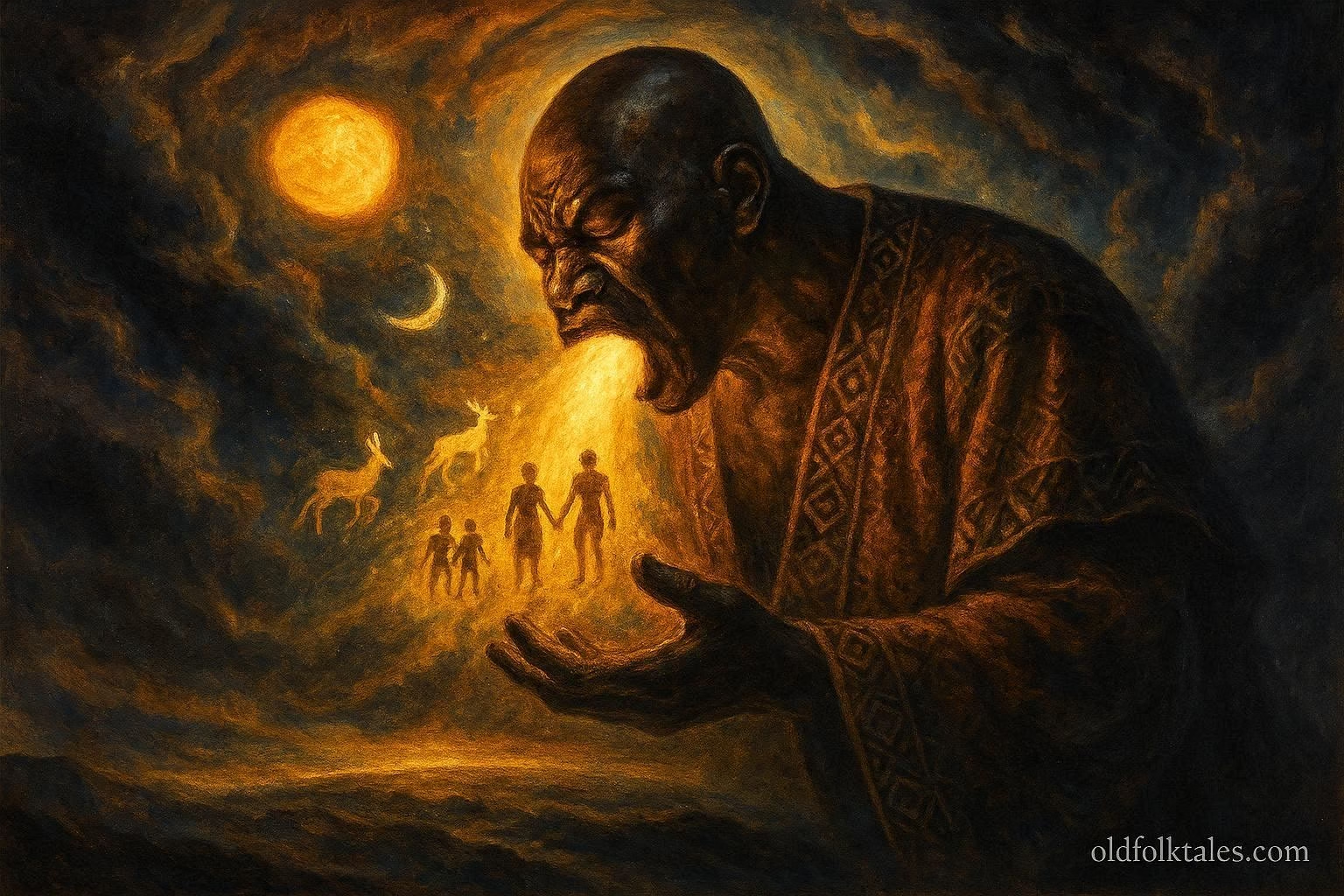
One day, a sharp pang of longing struck Mbombo, a deep yearning to bring life into the void. The god’s body convulsed, and with a force that shook the abyss, he vomited forth the sun. Its golden brilliance poured across the empty expanse, igniting the darkness with warmth and light. Yet the act awakened more than light, it awakened desire in the heart of creation itself. Mbombo’s first creation was not merely illumination, but the spark of existence.
From this eruption of brilliance, he vomited the moon, pale and serene, to dance in silent rhythm with the sun. With these celestial companions set in motion, Mbombo’s power surged further. His body, a vessel of cosmic intent, brought forth the first animals: the leopard, fierce and cunning; the crocodile, ancient and unyielding; the goat, nimble and enduring. Each emerged as if born from the very essence of the cosmos, reflections of Mbombo’s divine strength and wisdom.
Yet, the world remained incomplete. The sky and waters sang with life, but there were no beings to witness, to wonder, to act. A deeper pang twisted in Mbombo’s chest, heavier than the first: the need for companions of spirit, for minds that could shape thought and song. And so, in a final, heaving act of divine creation, Mbombo vomited the first humans. They fell upon the newly-formed earth, coughing and gasping, but alive, curious, and imbued with a spark of the god himself.
The newborn humans looked to Mbombo, awestruck. “Why have you sent us into this vast and strange place?” they asked in whispers that trembled like wind through reeds. Mbombo, exhausted from the weight of his own power, replied, “Walk upon the earth, learn its rivers, climb its mountains, and shape it with your hands. From your labors shall the world find its order.” And thus, the first human hearts carried both the gift of life and the burden of purpose.
Yet creation was never a gentle task. For each being that Mbombo brought forth, chaos lurked nearby. The animals roamed wild and untamed, and the humans struggled to master fire, water, and soil. Mbombo, though exhausted, knew the moral weight of his gift: life must balance with restraint. He taught humans to observe the world, to honor the animals and the earth, to act in harmony rather than dominion. In his wisdom, he revealed that creation was not mere power, but responsibility, a delicate weaving of courage, patience, and foresight.
As the ages passed, Mbombo’s form receded from the earthly realm. His great vomit of creation had established the cosmos’ first order: sun, moon, rivers, mountains, beasts, and humankind, each bound in a web of interdependence. Yet the echo of his presence lingered in the wind, in the roar of the leopard, and in the first breath of every child born upon the earth. Mbombo had not merely shaped matter; he had imbued it with meaning. In the silence after creation, the world thrummed with life, and the legacy of the cosmic demi-god endured.
Thus, the Kuba people tell of Mbombo, the god who, in an act both grotesque and magnificent, vomited the universe into being. From his body sprang the light and shadow, the wild and the wise, and the enduring lesson that creation carries both wonder and weight. Mbombo’s challenge was heroic, his moral struggle profound: to bring order from void without succumbing to pride, to bestow life yet demand responsibility. In the vomiting of sun, moon, animals, and humans, the cosmos found its beginning, and the world began to breathe with rhythm and reason.
Author’s Note
Mbombo, the cosmic creator of the Kuba, embodies the paradox of creation: the act is both violent and divine, chaotic yet purposeful. His legacy endures in the Kuba epic as a reminder that life, with all its complexity, is a sacred responsibility. Through the metaphor of vomiting life, the story conveys that creation requires effort, sacrifice, and moral reflection. Mbombo teaches that existence itself is a gift, but one that demands courage, wisdom, and care from all who inherit it.
Knowledge Check
-
Who is Mbombo and what role does he play in the Kuba creation epic?
-
What were the first creations Mbombo brought forth from his body?
-
How does the epic describe the moral responsibility humans inherit from Mbombo?
-
Why is the act of vomiting significant in Mbombo’s creation story?
-
How do the sun and moon function within Mbombo’s cosmos?
-
What does Mbombo’s retreat from the world symbolize in the epic?
Cultural Origin: Kuba people, Democratic Republic of the Congo
Source: Germaine Dieterlen, Le Conte du Monde (1965)