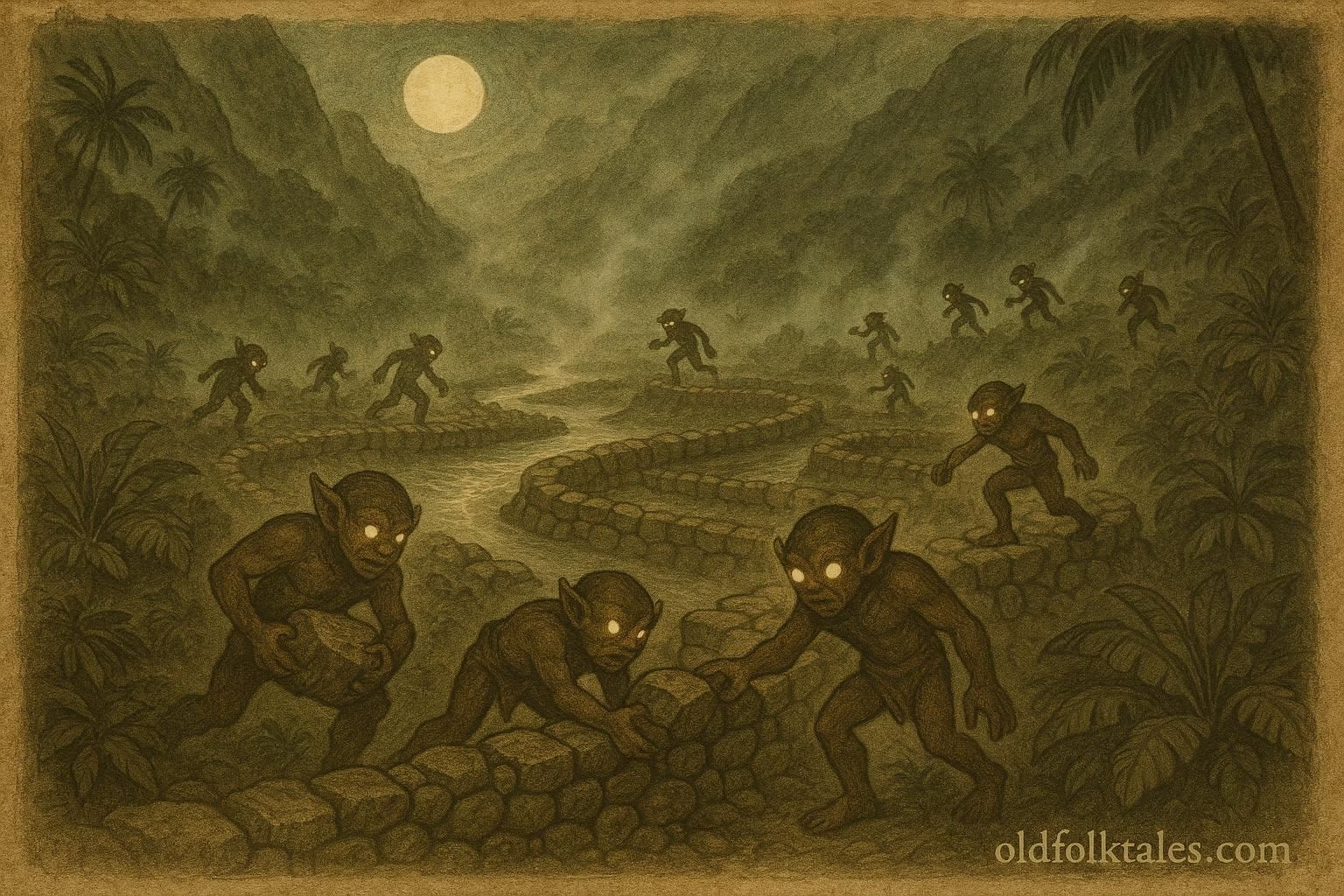
Menehune are one of the most enduring and fascinating figures in Hawaiian mythology. They are legendary small people, often described as diminutive humanoids who inhabit the valleys, forests, and remote areas of the Hawaiian Islands. Despite their small stature, often no taller than three feet, they possess superhuman strength, dexterity, and intelligence, allowing them to perform feats far beyond the abilities of ordinary humans.
Appearance
Descriptions of Menehune vary across islands and sources, reflecting local oral traditions and collector interpretations:
- Stature: Most accounts emphasize their small size, from child-sized to slightly taller than a toddler, though some narratives suggest adult proportions in certain contexts.
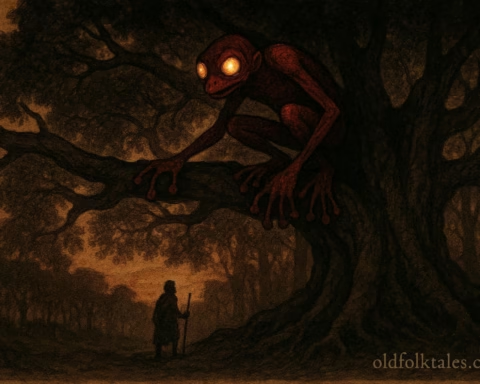
- Physical traits: They have human-like bodies, with hands and feet capable of precise work. Some versions describe them as having unusually large eyes, alert and luminous, to navigate night-time tasks. Others mention sharp features, pointed ears, or slightly reptilian or elf-like aspects.
- Clothing: Typically minimal or naturalistic, woven kapa, bark cloth, or loincloths, appropriate for tropical forest or valley life. Some versions imply ceremonial garb when engaged in sacred construction projects.
In all accounts, the supernatural qualities of their skill, speed, and stealth are more important than precise physical description. Their size emphasizes their liminality: small, hidden, yet powerful.
Journey through the world’s most powerful legends, where gods, mortals, and destiny intertwine
Powers and Abilities
Menehune are renowned for their extraordinary construction skills, often undertaken under the cover of night, earning them a reputation as supernatural engineers:
- Nighttime construction: They work exclusively at night, completing monumental projects like heiau (temples), stone walls, irrigation ditches, fishponds, and roadways. Some accounts describe them finishing multi-day projects in a single night.
- Superhuman strength: Despite being small, they can lift massive stones and maneuver heavy timber, demonstrating a combination of brute force and precise craftsmanship.
- Mystical knowledge: They understand engineering principles, spatial alignment, and hydrology intuitively, ensuring structures are functional and enduring.
- Stealth and secrecy: Menehune work unseen, often disappearing before humans can observe them, which preserves their mystical aura.
- Problem-solving and adaptation: Some tales describe Menehune repairing damaged structures or creating solutions for human settlements in response to urgent need.
The Kīkīaʻola Ditch on Kauaʻi is frequently cited as a real-world example of a structure attributed to Menehune, reflecting both local reverence for engineering and the persistence of oral legend.
Behavior and Mythic Roles
Menehune narratives encompass both constructive and moral functions in Hawaiian society:
- Builders and guardians: They often create structures that serve community needs while remaining largely invisible to humans. Some tales suggest they also protect sacred or ecologically sensitive sites.
- Nocturnal enforcers: Their night activity reinforces the boundary between the human and supernatural realms. They remain hidden, reminding humans of unseen forces in the world.
- Mischievous but morally aligned: Some stories depict Menehune as punishing humans who disrespect their work or attempt to exploit their labor. They may leave subtle marks or signs that warn of misdeeds.
- Island-specific identity: Each island, valley, or ahupuaʻa may have its own unique tales of Menehune, emphasizing local cultural identity and a deep connection to place.
These behaviors illustrate a complex relationship between humans and the supernatural, reflecting respect for natural resources, social norms, and ecological stewardship.
Canonical Tales and Motifs
A common narrative involves a village suffering from water scarcity. Overnight, Menehune arrive to build a fishpond or irrigation channel. By dawn, the project is complete, perfectly aligned and functional. When humans attempt to observe or thank them, the Menehune vanish. Such tales emphasize:
- Mystery: Humans cannot directly interact with the supernatural without risk.
- Ethics: Respect, offerings, and humility toward supernatural powers are expected.
- Skill and ingenuity: They showcase the high value placed on construction expertise, both practically and culturally.
Other stories depict competitions, where human chiefs challenge the Menehune to build walls or temples overnight. The Menehune invariably succeed, illustrating their superhuman efficiency and reinforcing the notion that some knowledge or ability lies beyond human mastery.
Cultural Role and Symbolism
Menehune hold significant symbolic and cultural importance:
- Preservation of ancestral knowledge: Legends may encode memories of early populations with specialized construction skills.
- Moral enforcement: Tales reinforce values such as respect for sacred spaces, diligence, and ecological stewardship.
- Supernatural liminality: Their nocturnal work reflects the unseen forces of nature and spiritual worlds.
- Local identity and place attachment: Tales often anchor them to valleys, streams, or forests, creating a strong sense of community heritage.
In essence, Menehune legends serve as metaphors for human ingenuity, respect for the environment, and the unseen forces that shape life and survival.
Encounter dragons, spirits, and beasts that roamed the myths of every civilization
Author’s Note
This entry draws on primary sources such as Fornander, Malo, and Emerson, alongside ethnographic and archival collections at the Bishop Museum. Care is taken to distinguish traditional oral accounts from later European-influenced or tourism-based retellings, which sometimes over-dramatize features or combine multiple islands’ stories. Hawaiian terms such as heiau (temple), wai (water), and kapa (bark cloth) are retained to preserve linguistic and cultural accuracy.
Knowledge Check (Q&A)
- What are Menehune most famous for?
Overnight construction of fishponds, temples, stone walls, and irrigation systems. - When do Menehune operate?
Primarily at night, emphasizing secrecy and mystical aura. - How do they enforce ethical behavior?
By punishing humans who disrespect their work or sacred places. - Are Menehune human-sized?
No, they are typically small, child-sized, but possess superhuman strength. - Why are they associated with specific valleys or islands?
They serve as guardians of place, linking communities to local geography and heritage. - What cultural concepts do Menehune symbolize?
Ingenuity, respect for nature, ancestral knowledge, and liminality between human and supernatural realms.
Source: Fornander, David Malo, Emerson, Bishop Museum collections
Origin: Hawaiian Islands; oral tradition pre-European contact, recorded 19th–early 20th century