In the deep, breathing wetlands of the Congo Basin, where the forest canopy casts green shadows and the rivers slip through peat-dark channels, there is said to dwell a being older than the first migrations of people. Known in Lingala and Baka traditions as Mokele-mbembe, meaning loosely “one who stops the flows of rivers” or “the blocker of waterways,” this being is far more than an animal. It is a river spirit, a territorial force, and a living embodiment of nature’s impenetrable will.
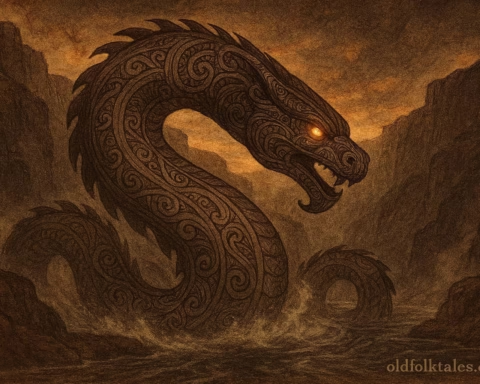
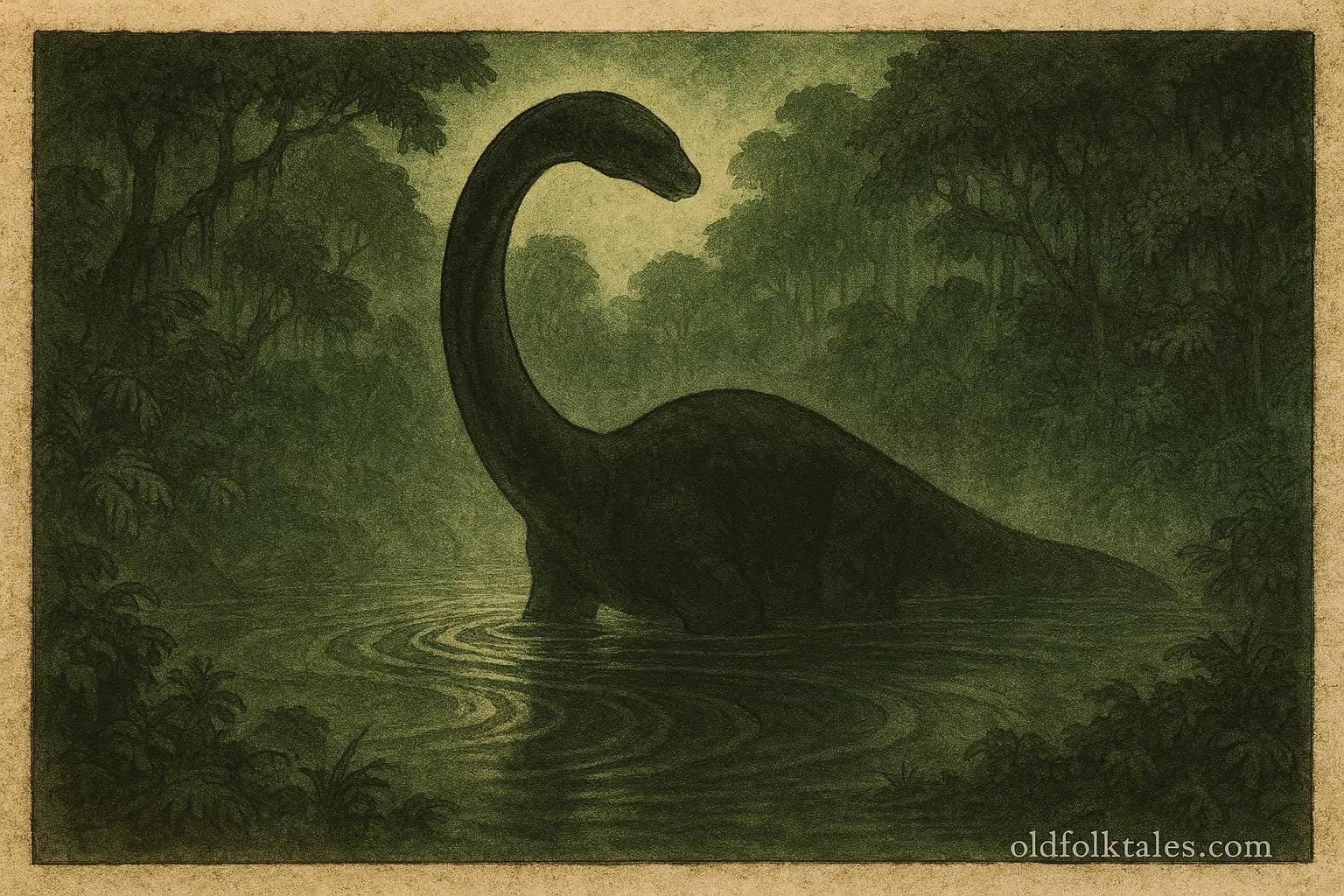
Indigenous accounts describe Mokele-mbembe as large, slow-moving, and deeply silent, a creature whose presence is felt long before it is seen. Its form is often said to resemble a massive river-beast with a thick body, a long neck, powerful tail, and smooth skin reminiscent of river mammals. It does not fit into any straightforward animal category; it is part-spirit, part-beast, and entirely tied to the hydrology and energy of the swamp.
Journey through the world’s most powerful legends, where gods, mortals, and destiny intertwine
Many Baka storytellers emphasize that Mokele-mbembe is not a dinosaur, nor a remnant animal lost to time, a misunderstanding largely introduced by Western explorers of the 20th century. Instead, the creature is a guardian of taboo zones, places where humans should not fish, build, or trespass without ritual permission. To enter such areas without respect, they say, is to invite the wrath of the river.
The creature does not roar or rampage; its power is in its presence. It can block a canoe’s passage without being fully visible, churn the water subtly, or create an oppressive heaviness in the air. Some narratives say that the river’s quieting, birds stopping, wind dying, is the first sign that Mokele-mbembe is near.
Its movements are slow but purposeful: ripples that do not match the wind, sudden smooth waves in still backwaters, or a shifting of reeds without current. Witnesses speak of a creature that lives more within the river than above it, part of the water, part of the shadow, part of the breath of the swamp.
Behavior and Powers
Mokele-mbembe’s powers reflect the environment it rules.
- Controller of Waterways: Its most fundamental trait is the ability to block rivers, close channels, and claim entire stretches of swamp. This is not usually through physical obstruction but through spiritual influence, currents changing direction, sandbars forming overnight, or flooding that reroutes a familiar path.
- Guardian of Taboo Zones: Territoriality is central to its being. It protects:
- sacred fishing pools
- hidden spawning zones
- deep peat-swamp forests that humans are not meant to cross
Breaking these taboos can cause:
- sickness
- failed hunts
- canoes mysteriously overturned
- days of disorientation in the swamp
- Shaper of Atmosphere: Forest peoples say that Mokele-mbembe changes the air pressure around its presence. Hunters describe feeling “pressed” or “listened to” by the forest.
- Semi-Invisibility: It can be seen only when it chooses, appearing often as:
- a low back rising from a pool
- a glistening neck shape in the dusk
- a smooth shadow where no shadow should fall
The creature is not a predator of humans. Its danger lies in disrespect, not hunger.
Myths and Beliefs
The Story of the Forbidden Ford: One common narrative tells of a hunter who ignored the elders’ warning not to cross a certain ford. He insisted the water was shallow and safe. When he stepped in, the entire riverbed shifted beneath him, mud becoming deep, water rising without rain. The hunter fought the current but felt a pressure around him, like a giant body moving under the surface. He emerged alive but shaken, and the ford collapsed behind him, creating a permanent pool. Elders said Mokele-mbembe had spared but warned him.
The Creature That Breathes With the Forest: Some Baka traditions say that when the forest “breathes”, expanding and contracting with dawn and dusk, Mokele-mbembe breathes with it. The rising fog is sometimes interpreted as the creature’s exhalation.
The River That Must Not Be Named: Certain remote rivers are not referred to directly. People use euphemisms like “the quiet one” or “the one that hides its path.” To name the waterway is to draw the spirit’s attention and risk misfortune.
Correct Ritual Conduct: Before crossing certain swamps, hunters pour libations (often water or palm wine) and speak to the river, acknowledging its spirit. This is not worship, it is recognition of a powerful neighbor.
Cultural Role
Mokele-mbembe symbolizes respect for ecological boundaries. In cultures that live closely with the Congo Basin environment, the creature’s legend serves to:
- Protect Sensitive Ecological Zones: By associating certain areas with spiritual danger, the tradition helps prevent overfishing, habitat disturbance, and exploitation of vulnerable river systems.
- Teach Humility Toward Nature: Humans are not masters of every environment. Some places belong to other beings, seen and unseen.
- Reinforce Ethical Conduct: Entering sacred or taboo spaces without guidance is considered arrogant. Stories emphasize collective knowledge over individual bravado.
- Express Cosmology of Water Spirits: In Lingala and Baka belief systems, water bodies are alive, sentient, and responsive. Mokele-mbembe is one powerful manifestation of these forces.
- Resist External Misinterpretation: For many elders, Western portrayals of Mokele-mbembe as a cryptid “prehistoric animal” misunderstand its spiritual and cultural role. They argue it should be understood not as a biological organism but as a presence, a law of the swamp, and a living guardian of place.
Author’s Note
This entry respects indigenous voices by presenting Mokele-mbembe not as a cryptid or biological anomaly but as it exists within Congo Basin cosmology, a river spirit tied to respect, taboo, and ecological harmony. Western narratives often strip away cultural meaning; restoring that meaning is essential to honoring the people whose knowledge defines the creature.
Knowledge Check
- What does Mokele-mbembe primarily represent?
A guardian of taboo river zones and ecological boundaries. - Why is it misunderstood in Western cryptid literature?
Because indigenous spiritual significance is replaced with dinosaur-like interpretations. - What is its most important power?
Controlling or blocking waterways through spiritual influence. - How does it often reveal its presence?
Through changes in atmosphere, water movement, and forest stillness. - Is it dangerous because it hunts humans?
No, its danger comes from violating taboos or disrespecting sacred spaces. - What cultural lesson does it teach?
Humility and respectful coexistence with nature.
Source: Compiled from Lingala and Baka oral narratives, Congo Basin forest traditions, and ethnographic field work on river-spirit cosmology.
Origin: Congo Basin (especially areas around the Likouala swamps)