
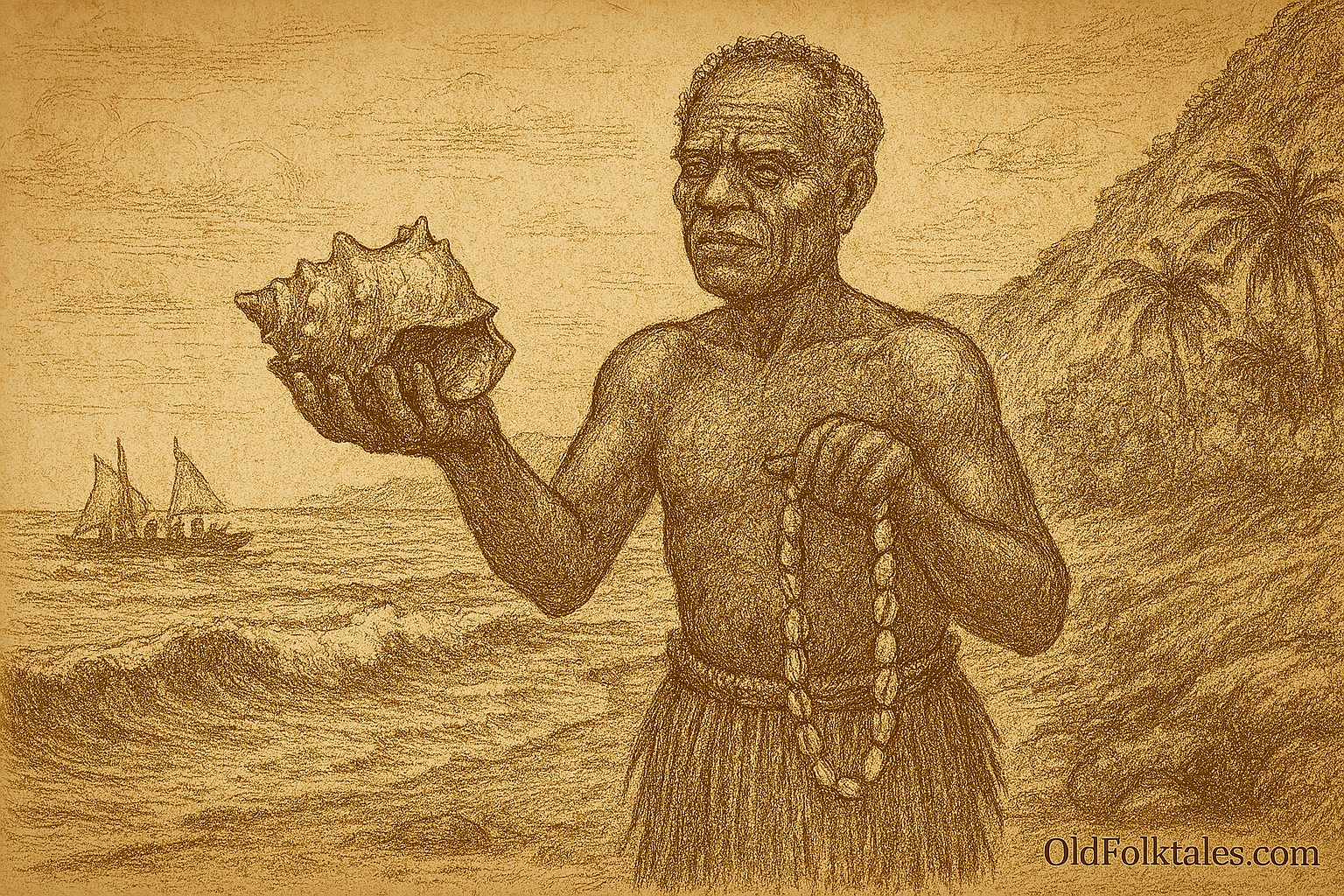
In the rugged mountains of Malaita, where mist clings to the valleys like spirits embracing the earth and the ocean’s rhythm pulses through the very soul of the land, there lived an ancestor whose name would echo through generations. His name was Moro, and he was no ordinary man. Moro possessed a connection to the unseen world that ran deeper than the ocean trenches surrounding the Solomon Islands, a connection that would transform the Kwaio people’s understanding of wealth, sacredness, and their relationship with the spirits of the sea.
Moro was a man of great wisdom and spiritual power, respected by all who knew him. While others busied themselves with the visible world, tending gardens, fishing the coastal waters, building homes from the forest’s bounty, Moro walked between worlds. He could sense the presence of ancestral spirits in the rustle of leaves, hear their whispers in the breaking waves, and feel their guidance in the quiet moments before dawn. The people recognized this gift in him, and they listened when he spoke, for his words carried the weight of both the living and the dead.
Click to read all Myths & Legends – timeless stories of creation, fate, and the divine across every culture and continent
One day, as Moro walked along the shore where black volcanic sand met the turquoise embrace of the Pacific, he felt a calling stronger than any he had experienced before. The ocean spirits were reaching out to him, their voices rising from the depths like the tide itself. Without hesitation, Moro waded into the warm waters, moving beyond the breakers, beyond the reef, until the seafloor dropped away beneath him and he floated in the profound blue expanse where sky and sea become one.
The ocean spirits materialized around him not as solid beings, but as shimmering presences, as movements in the water that carried intention and awareness. They spoke to Moro not with words, but with knowledge that flowed directly into his understanding, the way moonlight fills a dark room. They showed him treasures that glittered on the ocean floor small shells, delicate and beautiful, polished by countless tides and blessed by the spirits themselves. These were no ordinary shells. These were repositories of sacred power, fragments of the ocean’s own wealth, imbued with spiritual significance that transcended their physical form.
The spirits taught Moro the sacred art of creating shell-money. They revealed to him which shells held the greatest power, how to gather them with respect and proper ritual, how to clean and prepare them with reverence, and how to string them together in ways that honored both their beauty and their spiritual essence. But most importantly, they taught him that shell-money was not merely currency, it was a bridge between the material and spiritual worlds, a sacred trust that carried the blessings of ancestors and the power of the ocean itself.
When Moro emerged from the waters that day, he carried with him not just physical shells, but profound knowledge that would reshape Kwaio society. He gathered the elders and the young people alike, and he shared what the ocean spirits had revealed to him. With patient hands and careful words, he demonstrated the sacred process of creating shell-money, explaining each step’s significance, each prayer that must be spoken, each taboo that must be observed.
“This shell-money,” Moro explained, his voice carrying the authority of one who has communed with spirits, “is not simply a tool for trade or a means to acquire goods. It is sacred wealth, blessed by the ocean spirits and protected by ancestral power. When you create it, you must do so with pure intentions and proper ritual. When you use it, you must treat it with respect. When you exchange it, you must honor the spiritual bonds it represents.”
The Kwaio people listened intently, understanding that Moro was teaching them something far more significant than a practical skill. He was initiating them into a sacred practice, one that would define their culture and bind them to their ancestors and the spirit world for generations to come.
Moro taught them how to bless the shell-money, calling upon ancestral spirits to infuse each strand with protective power. He showed them how shell-money could be used in ceremonies to mark important life events births, marriages, deaths and how it could facilitate connections between families and clans. He explained that shell-money carried memories, that each strand held within it the intentions of those who created it and the blessings of those who had possessed it. To treat shell-money carelessly was to disrespect not just an object, but the ancestors themselves, the ocean spirits, and the sacred bonds that held the community together.
“Remember,” Moro warned, his eyes reflecting depths as profound as the ocean itself, “I will not remain in this world forever. When I pass to the realm of spirits, I will continue to watch over the shell-money tradition. My ghost will protect those who honor it properly, but those who disrespect these sacred objects will bring misfortune upon themselves and their entire household. The spirits do not forgive carelessness with sacred things.”
True to his words, when Moro’s earthly life came to its end, his spirit did not depart entirely. Instead, he became one of the most powerful ancestral spirits, a guardian of the sacred shell-money tradition he had established. The Kwaio people could feel his presence whenever they worked with shell-money, a watchful awareness that ensured the proper rituals were maintained and the sacred nature of the practice was preserved.
Over time, stories spread throughout Malaita of households that had disrespected shell-money families who treated it as mere decoration, individuals who handled it without proper ritual, or those who used it for improper purposes. Without fail, misfortune followed. Crops failed, illnesses struck, accidents occurred, and prosperity fled from their homes like birds startled from the trees. The people learned that Moro’s warning had been no idle threat. His ghost was real, his vigilance unwavering, and his power to bring consequences upon those who violated sacred protocols was undeniable.
But for those who honored the tradition, who created and used shell-money with proper respect and ritual awareness, blessings flowed abundantly. Their families prospered, their ceremonies carried power, and they felt the protective presence of Moro’s spirit watching over them, guiding their hands and blessing their endeavors.
To this day, among the Kwaio people of Malaita, shell-money remains far more than currency or ornamentation. It is a living connection to Moro, to the ocean spirits who first shared their sacred knowledge, and to countless generations of ancestors who have maintained this precious tradition. When a Kwaio person holds shell-money in their hands, they are touching not just polished shells strung together, but the very essence of their cultural identity, their spiritual beliefs, and their relationship with the unseen forces that shape their world.
The sound of shell-money clinking together is not simply a pleasant chime it is the whisper of Moro’s voice, reminding the living that some things are too sacred to be taken lightly, and that true wealth is measured not in material abundance but in the strength of one’s connection to ancestors, spirits, and the timeless traditions that bind a people together across the generations.
The Moral Lesson
The legend of Moro and the sacred shell-money teaches us that true wealth extends far beyond material value it encompasses spiritual connection, cultural identity, and respect for sacred traditions. The story emphasizes that objects can carry profound spiritual significance when treated with proper reverence, and that disrespecting sacred practices brings consequences not just to individuals but to entire communities. It reminds us that ancestral wisdom and spiritual teachings must be honored and preserved, for they represent the bridges that connect us to our past, guide our present, and protect our future. Most importantly, the tale illustrates that some knowledge comes directly from the spiritual realm and must be treated with the seriousness and respect it deserves.
Knowledge Check
Q1: Who was Moro in Kwaio tradition?
A1: Moro was a powerful ancestor of the Kwaio people of Malaita in the Solomon Islands who possessed a deep spiritual connection to the ocean spirits. He received sacred knowledge directly from these spirits and taught his people how to create, bless, and properly use shell-money as sacred wealth rather than mere currency.
Q2: How did Moro receive knowledge about shell-money?
A2: Moro received knowledge about shell-money directly from ocean spirits who called him into the sea. The spirits revealed which shells held sacred power, taught him the proper rituals for gathering and preparing them, and showed him how to create shell-money in ways that honored its spiritual significance.
Q3: What makes shell-money sacred in Kwaio culture?
A3: Shell-money is sacred because it was blessed by ocean spirits and is protected by ancestral power, particularly by Moro’s ghost. It serves as a bridge between the material and spiritual worlds, carries ancestral memories and blessings, and is used in important ceremonies marking births, marriages, and deaths rather than being merely decorative or transactional.
Q4: What happens to those who disrespect shell-money according to the legend?
A4: According to the legend, those who disrespect shell-money offend Moro’s ghost and bring misfortune upon their entire household. This can manifest as crop failures, illnesses, accidents, and loss of prosperity. Moro’s spirit actively watches over the tradition and ensures consequences for those who treat shell-money carelessly or improperly.
Q5: Where does the tradition of Moro and shell-money originate?
A5: The tradition originates from the Kwaio people of Malaita, one of the main islands in the Solomon Islands. Malaita is characterized by rugged mountains and deep spiritual traditions that emphasize the connection between the living, ancestral spirits, and the natural world, particularly the ocean.
Q6: What cultural lesson does Moro’s story teach about sacred objects?
A6: Moro’s story teaches that sacred objects require proper ritual, respect, and understanding of their spiritual significance. It emphasizes that some things transcend material value and carry cultural identity, ancestral blessings, and spiritual power. The lesson warns that treating sacred objects carelessly not only shows disrespect to ancestors but also severs important spiritual connections that protect and guide communities.
Source: Adapted from Solomon Islands Cultural Division Oral Records.
Cultural Origin: Kwaio People, Malaita Island, Solomon Islands, Melanesia






