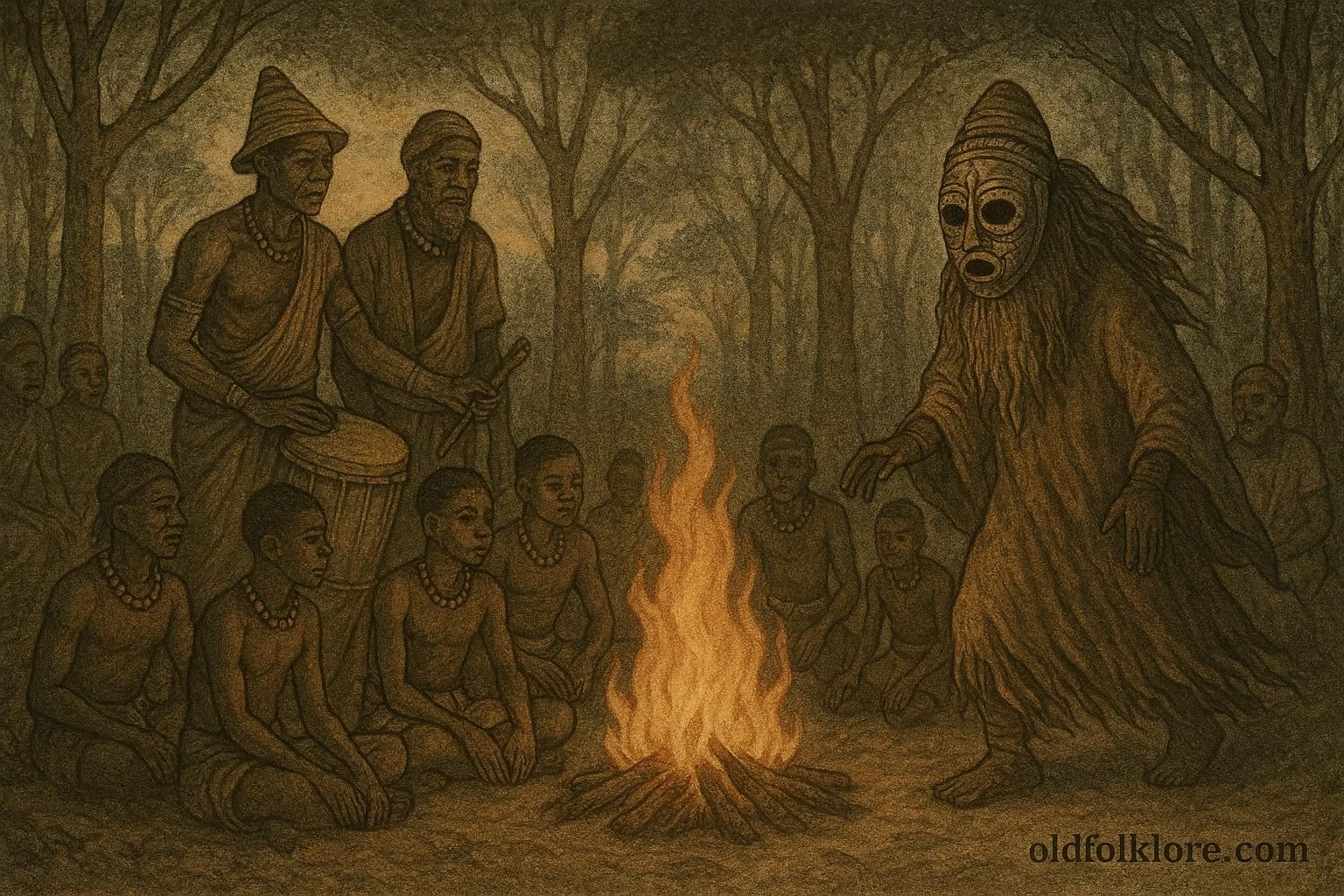
Mukanda is a traditional male initiation complex practiced among the Lunda, Chokwe, Yaka, and several closely related groups across Angola, DR Congo, and Zambia. Its cultural foundations stretch deep into Central Africa’s pre-colonial history, where lineage, age-grades, and ancestral authority determined social order. For these societies, a boy was not considered a full member of the community until he passed through Mukanda. It was more than a ceremony; it was a transformation shaped by cosmology, myth, and the memory of the ancestors who guarded the forest.
Description
Mukanda begins when boys, usually between ages eight and twelve, are taken from their households and led into temporary camps built in the forest or at the edge of the village. These camps function as secluded training grounds, overseen by initiated elders, ritual specialists, and sometimes masked spirits who embody the presence of the ancestors. The first major act of the ritual is circumcision, which is performed not simply as a physical mark of adulthood but as the symbolic “cutting away” of childhood.
After circumcision, the boys enter a period of strict seclusion. They remain in the initiation camp for weeks or several months, depending on local custom. During this time, they recover, learn discipline, and receive lessons that define their new place in society. Elders teach them moral behavior, respect for kin networks, the responsibilities of husbands and fathers, and the history of their people. Young initiates learn songs, dances, and codes that are known only to adults within the community.
The forest is an important setting for Mukanda because it represents distance from ordinary life and closeness to the spirit world. The natural environment becomes a living classroom. Boys learn to hunt, track animals, cultivate small crops, and understand the spiritual meanings attached to these skills. Instruction is practical, but it always carries a moral foundation. Work, bravery, silence, humility, and endurance are seen as the cornerstones of a good adult life.
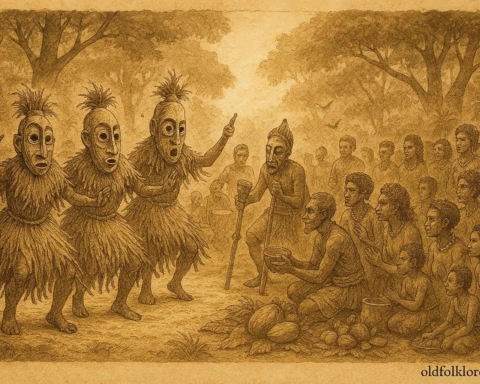
A key feature of Mukanda is masked performance. Among the Chokwe and related peoples, ritual masks are powerful beings who connect the living with the ancestors. Their appearance is not decoration; it is revelation. During certain phases of the camp, masked figures appear to guide, frighten, discipline, or instruct the boys. Each mask has a name, a story, and a cosmic role, some represent ancestors, others represent forest spirits, others embody moral lessons about greed, pride, foolishness, or courage.
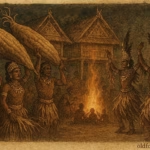
Near the end of seclusion, the boys undergo ritual cleansing, receive new clothing, and rehearse dances learned in the camp. Their return to the community is a major event. Families gather, drummers play, and the newly initiated perform the dances they have mastered. The atmosphere is joyful, but it also carries solemn acknowledgment of their new responsibilities. The boys are no longer considered children; they are socially reborn.
Mythic Connection
Mukanda reflects a worldview in which birth and rebirth are cyclical forces woven through human life. To the Lunda–Chokwe peoples, every major transition occurs under the gaze of the ancestors. Circumcision symbolizes death to one stage of being. Seclusion mirrors the darkness of the womb or the quiet of the grave. Instruction becomes the shaping of a new body and spirit. Return to the village represents rebirth under ancestral blessing.
Masked spirits play a crucial mythological role. Many are linked to stories about the first ancestors who taught humans how to live and survive in the forest. Others reenact struggles between order and chaos. Their presence in Mukanda ensures that myth is not something told, it is something enacted. The boys witness cosmology in motion, a living reminder that human life is shaped by divine and ancestral wisdom.
Mukanda also reinforces fertility and continuity. Through the training of new men, the community ensures that families, lineages, and sacred knowledge will continue. The camp becomes a symbolic forge where the future of the society is shaped under supernatural guidance.
Author’s Note
This article explores the profound meaning of Mukanda, tracing its origins, ritual stages, and spiritual symbolism within Lunda, Chokwe cosmology. It highlights how initiation weaves together ancestral presence, moral training, and masked ritual drama to guide boys into adulthood. Through its blend of practical instruction and mythic rebirth, Mukanda stands as one of Central Africa’s most enduring pathways to communal identity and continuity.
Knowledge Check
1. What is the main purpose of Mukanda?
To transform boys into socially recognized men through ritual training, circumcision, and ancestral instruction.
2. Why is the forest important in the ritual?
It represents separation from ordinary life and closeness to the spirit world, making it a sacred space for transformation.
3. What role do masked figures play?
They embody ancestors and spirits who guide, teach, and discipline the initiates through sacred performance.
4. Why is circumcision central to Mukanda?
It symbolizes the removal of childhood and the first step toward social rebirth.
5. What do boys learn during seclusion?
Moral codes, survival skills, cultural history, secret songs, and their duties as future adults.
6. How does Mukanda express mythic rebirth?
Seclusion, cleansing, and return to the village mimic a cycle of death and renewal watched over by ancestral forces.