The Nagual (or Nahual, Nāhualli in Classical Nahuatl) is one of the most fascinating spiritual concepts in Mesoamerican cosmology. At its core, it represents a human-animal connection, blending the physical and spiritual worlds in a way that bridges mortality and divine or supernatural power. While often understood as a shapeshifting human who can assume the form of a sacred animal, the term also denotes the animal spirit itself, which serves as a personal guardian or guide.
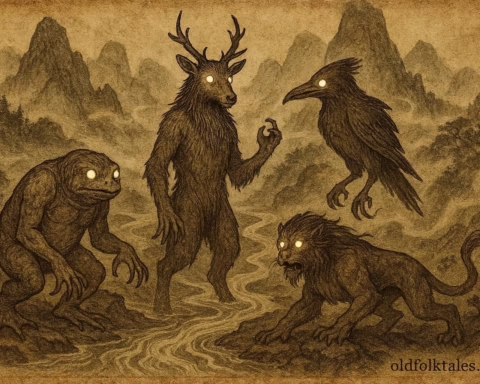
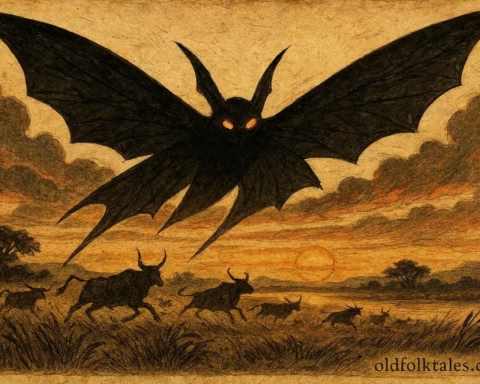
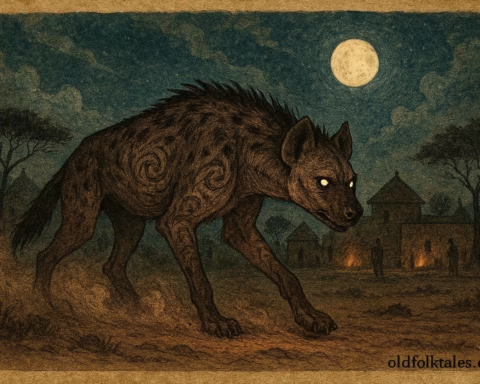
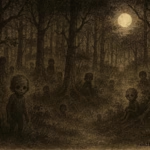
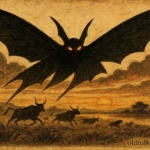
Physically, Naguals are defined not only by their human or animal form, but also by their liminal, hybrid essence. A human may transform into a jaguar, wolf, deer, coyote, bird, or even smaller creatures depending on their spiritual calling, region, and social role. The jaguar, one of the most common forms, embodies stealth, ferocity, and authority, while the coyote conveys cunning and trickster energy. Birds and bats are often associated with the sky, the ancestors, or nocturnal powers. During transformation, stories describe partial blending of human and animal traits: eyes that glow unnaturally, hands or claws retaining some human dexterity, or shadowed, ghost-like features revealing the underlying spiritual identity. In ceremonial art, codices, and ritual masks, Naguals are frequently illustrated as half-human, half-animal figures, emphasizing the liminality of their existence.
Explore the shadows of world mythology, where demons test the soul and spirits watch over mankind
Naguals possess extraordinary powers, tied both to their animal identity and human shamanic training. They are protectors, guides, and intermediaries between the material world and the spirit realm. As healers or diviners, they may travel invisibly through forests, rivers, and sacred mountains to retrieve lost souls, gain knowledge, or guard communities from harm. In darker traditions, especially under colonial influence or when tied to malevolent intentions, a Nagual may be a sorcerer who harms others by sending their animal form to commit mischief or danger. Some legends report theft, causing sickness, or harming livestock, demonstrating that ethical alignment determines the impact of the Nagual.
The transformation process itself is significant culturally. While in some cases it is achieved through rigorous ritual, dream-travel, or divine calling, in others it is inherited or innate. Many traditions maintain that the bond between a person and their animal-nagual is lifelong, reflecting a deeply personal and spiritual connection. Separation from or disrespect toward the nagual is often associated with misfortune or loss of spiritual potency.
Behavior and Powers
Naguals are versatile in both behavior and environment. In their animal form, they roam forests, mountains, lakes, or even villages. Stories often depict them acting with calculated purpose, whether to protect, heal, or punish. They may be invisible or partially manifested, with only subtle signs of presence: a shadow, an unusual animal sound, or a glimpse of glowing eyes.
Shamanic Naguals are reported to:
- Travel vast distances quickly in the form of their animal companion
- Engage with spirits and ancestors for guidance or ritual consultation
- Influence the natural world, such as controlling weather in magical narratives
- Protect villages or family members by diverting harm or guiding them away from danger
- Punish wrongdoers, enforcing moral and social codes within the community
The Nagual embodies dual potential. They can protect, heal, and empower, yet misuse of the bond can result in malice or harm. Colonial accounts often emphasize the malevolent side, sometimes labeling Naguals as witches, reflecting the tension between Indigenous spiritual systems and European moral frameworks.
Myth and Belief
Nagualism predates European contact and is deeply embedded in Mesoamerican oral literature, codices, and ritual practice. Early Nahuatl lexicons and ethnographies identify Nāhualli as a spiritual companion, often represented in local art and symbolic codices. Maya, Mixtec, and Zapotec communities also describe human-animal relationships that parallel the Nagual concept, demonstrating its broad cultural penetration.
Stories often highlight nagual-human moral choices. For instance, a shaman might transform into a jaguar to recover a lost soul but must resist predatory urges that could harm innocents. Another tale may describe a community protector whose animal form intervenes during a storm, guiding villagers to safety. These stories illustrate how cosmic ethics and social morality are intertwined with spiritual power, teaching lessons about responsibility, humility, and respect for the natural world.
Colonial narratives sometimes reframed the Nagual as malevolent witchcraft, distorting the original duality of protective and harmful potential. Despite this, modern Indigenous communities continue to honor naguals as essential guides, healing partners, and reminders of humans’ relationship with the animal world.
Cultural Symbolism
- Guardian Spirit: The Nagual safeguards individuals, families, and communities, emphasizing the reciprocal relationship between humans and the spirit-animal realm.
- Shamanic Authority: Demonstrates spiritual mastery, allowing interaction with hidden worlds and the retrieval of knowledge.
- Moral Reflection: Highlights ethical responsibility: power must be used wisely, respecting social and cosmic law.
- Ecological Connection: Encodes understanding of the environment, recognizing animals as sentient beings and spiritual agents.
- Liminal Existence: Symbolizes the threshold between life and spirit, human and animal, natural and supernatural, highlighting balance and interdependence.
Author’s Note
Nagualism is not a uniform tradition; it varies across Mesoamerican cultures, and meanings shift over time and geography. This entry draws on ethnography, codices, and oral history to present a culturally faithful and respectful description. Naguals are central to Indigenous knowledge systems, representing spiritual, ecological, and moral wisdom, not merely shapeshifters or fantastical creatures.
Knowledge Check
- What is a Nagual?
A spiritual-animal guardian and, in some cases, a human capable of transforming into that animal. - Which animals are commonly associated with Naguals?
Jaguar, wolf, deer, coyote, bird, bat, and regionally significant creatures. - What are Naguals’ roles in society?
Protectors, healers, shamanic guides, or occasionally malevolent actors depending on alignment. - How is a human connected to their Nagual?
Through birth, spiritual calling, ritual initiation, or innate ability; the bond is lifelong. - What moral responsibility do Nagual-users carry?
To use their powers ethically, for protection and community benefit rather than harm. - How did colonial interpretations affect Nagual beliefs?
European observers often equated them with witchcraft or evil sorcery, misrepresenting their spiritual roles.
Source: Encyclopedia Britannica; “The Nahual in Mesoamerican Art” (University of Oregon); colonial-era Nahuatl lexicons and ethnographies; Cultura Colectiva
Origin: Mesoamerica, Nahua (Aztec), Maya, Mixtec, Zapotec, and other indigenous groups; pre-contact through modern oral tradition