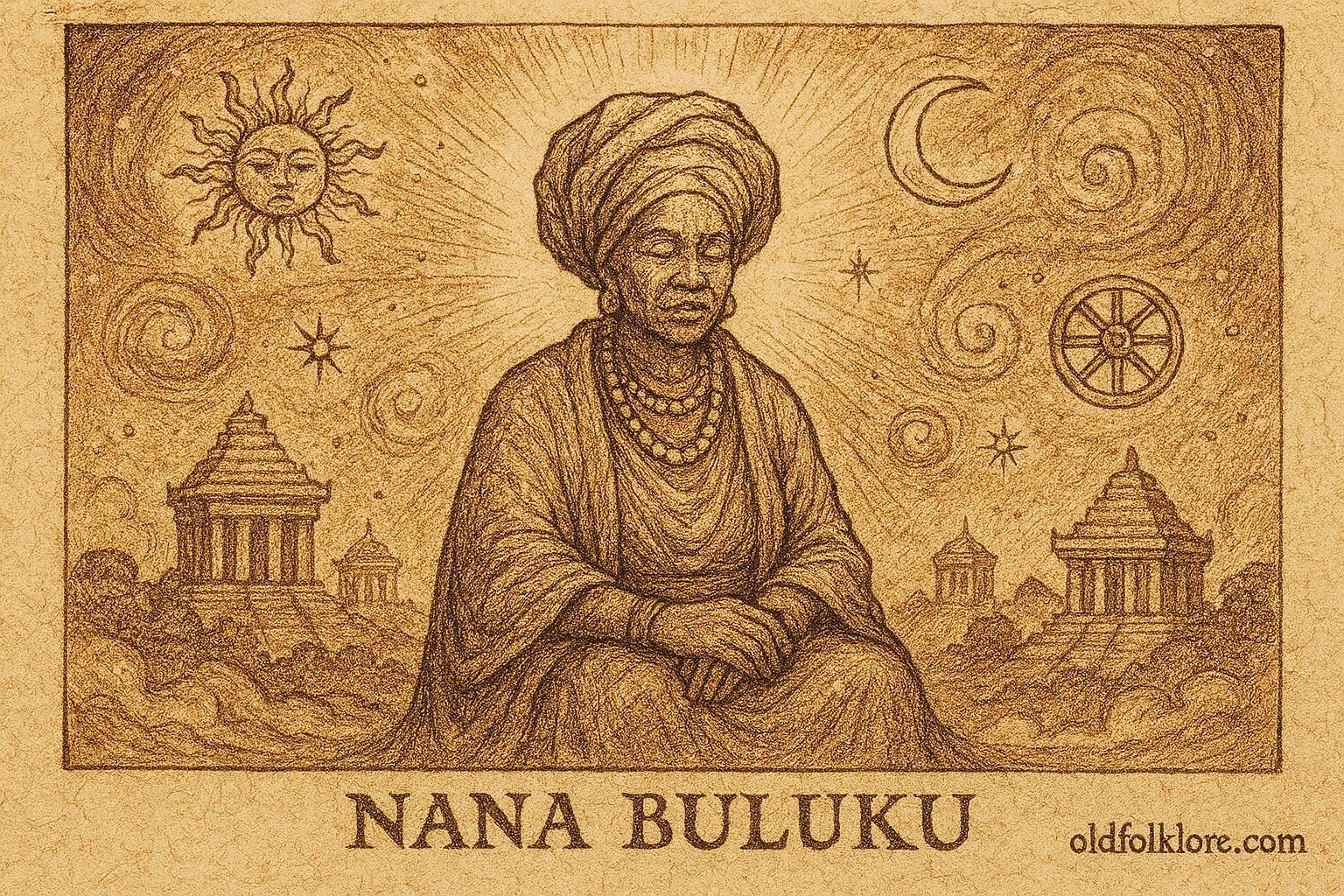
Nana Buluku is revered as the primordial creator, the invisible and omniscient force from which all existence flows. She predates time, space, and even the pantheon of visible deities, embodying ultimate wisdom, generative power, and patience. In Dahomey cosmology, she gave birth to the universe and delegated the shaping of life and nature to her children, including Mawu and Lisa, who personify the sun and moon.
Her presence is often described as vast and unseen, not easily represented in physical form. Rituals honoring Nana Buluku are meditative, often invoking silence, offerings, or chants acknowledging her as the origin of all spirits. In Afro-Diasporic Vodun, especially Haitian Vodou, Nana Buluku is syncretized with Bondye, the distant, ultimate creator, highlighting continuity across geographies and centuries. Despite being less anthropomorphized than other deities, she remains central to creation myths, symbolizing the unseen principles governing life, the cosmos, and moral order.
Relive the heroic sagas of every age – stories of triumph, tragedy, and timeless valor
Mythic Story
Before the sun rose and before the moon shimmered in the night sky, there was only the infinite expanse of nothingness. Within this emptiness lived Nana Buluku, the eternal source, silent and all-knowing. She existed without form yet carried within her the seed of all life. In her solitude, she envisioned a universe teeming with motion, light, and spirit. And so, she willed the cosmos into being, but with patience, she did not act alone.
From her essence, she birthed twin deities: Mawu and Lisa, embodying moonlight and sunlight, night and day, yin and yang. She entrusted them with the shaping of creation, the mountains, the rivers, the forests, the creatures that would roam the earth. Nana Buluku, in her wisdom, knew that balance and order were necessary, so she gave her children the knowledge and responsibility to govern their domains, watching from afar as they brought life into form.
The twins began their work with reverence. Mawu shaped the night, guiding stars and the cycles of the moon, while Lisa illuminated the day, bringing warmth, energy, and growth. Under their care, the first humans appeared—fragile and curious, capable of understanding the world through senses, toil, and reflection. Nana Buluku, though unseen, provided the rhythm of life: the heartbeat of existence, the cycles of nature, and the laws that governed both mortal and divine realms.
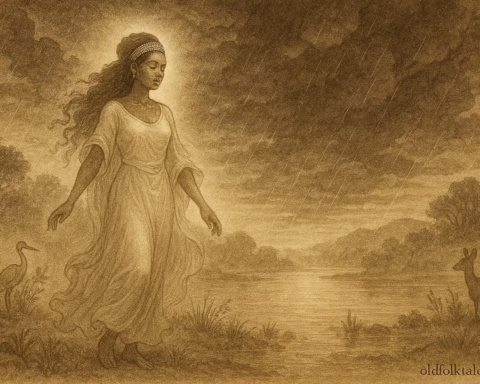
One tale tells of the first drought, when humans despaired for rain and sustenance. They prayed to their immediate gods, but the clouds did not respond. Recognizing their prayers were incomplete, a shaman sought the counsel of Nana Buluku, calling upon the source of all wisdom. In a silent vision, the shaman saw her essence: an infinite light pulsating behind the stars, a calm force ordering the universe. She whispered that balance required patience, action, and respect. Inspired, the shaman instructed the people to offer gratitude to both the earth and sky, to live in harmony with the cycles that Nana Buluku had set in motion. Rain returned, crops flourished, and the people understood that the unseen hand of the primordial creator governed all.
Nana Buluku’s myth illustrates a cosmic delegation. She did not intervene directly in every act but entrusted the visible deities and humanity to exercise wisdom and moral discernment. Her creation was layered: the universe, the gods, the humans, and the natural laws interwoven into a delicate harmony. Festivals honoring her focus on reflection, acknowledgment of ancestors, and the continuity of life, recognizing that the seen and unseen worlds are inseparable.
Even in the transatlantic diaspora, Nana Buluku’s influence endured. Across oceans, enslaved Africans remembered her as the ultimate source, merging her essence with local understandings of a distant, omnipotent creator. In Haitian Vodou, she became the distant Bondye, still revered as the invisible hand behind the workings of the loa, the spirits, and all living beings. This continuity underscores her universality: whether in the Dahomey kingdom or across the Caribbean, Nana Buluku embodies the enduring concept of a source from which all life and divine action originates.
Through her story, we see that creation is not chaos but intentional, patient, and guided by wisdom. Nana Buluku exemplifies the power of origin, the unseen energy that shapes the visible world, the moral law that guides human action, and the cosmic balance that maintains life. She reminds us that even when gods act, when humans strive, it is always within the framework she first envisioned, a universe of order, harmony, and generative potential.
Author’s Note
Nana Buluku teaches that creation and existence are rooted in patience, wisdom, and delegation. She emphasizes that unseen forces govern life, that balance requires both divine and human responsibility, and that respect for natural and moral law is essential. Her myth inspires reflection on origin, responsibility, and the interconnectedness of all life.
Knowledge Check
Q1: What domain does Nana Buluku govern?
A: Primordial creation, source of all gods, and the unseen principles of the universe.
Q2: Who are Nana Buluku’s children and what do they represent?
A: Mawu and Lisa, embodying the moon and sun, night and day, responsible for shaping creation.
Q3: How is Nana Buluku represented in rituals?
A: Often unseen or non-anthropomorphic, invoked through meditation, offerings, and chants acknowledging her as the source.
Q4: How does Nana Buluku appear in Afro-Diasporic Vodun?
A: She is syncretized with Bondye, the distant ultimate creator.
Q5: What lesson does the myth of Nana Buluku convey about creation?
A: Creation is intentional, balanced, and guided by wisdom and patience.
Q6: How does Nana Buluku maintain cosmic balance?
A: By delegating creation to her children and providing the moral and natural framework for life.
Source: Dahomean Oral Traditions and Ethnographies, Benin / West Africa.
Source Origin: Dahomey Kingdom, Benin; West African and Afro-Diaspora traditions