In the scattered coral atolls of the Southern Gilbert Islands, where the Pacific Ocean stretches endlessly in every direction, and the land itself seems to float between sea and sky, there exists a goddess whose name is spoken with reverence by women gathering pandanus leaves, by mothers cradling newborns, and by grandmothers teaching ancient weaving patterns. Her name is Nei Manganibuka, and she is the Fertility Mother, the Weaving Teacher, the Divine Ancestor from whom entire clans trace their lineage and their blessings.
Nei Manganibuka walked the earth in the time when the world was still being shaped, when the gods moved freely between the realms of spirit and flesh, and when the boundaries between divine and mortal were as thin as morning mist over the lagoon. She was a being of extraordinary beauty and power, her presence radiating the warmth of creation itself. But what made Nei Manganibuka truly remarkable was not her divine nature; it was her deep compassion for the women of the islands and her desire to give them both the practical tools for survival and the sacred gift of life itself.
Click to read all Myths & Legends – timeless stories of creation, fate, and the divine across every culture and continent
In those early days, the pandanus tree grew wild and untamed across the atolls. Its long, spiny leaves sprouted in chaotic patterns, and while the people recognized that these leaves might be useful, they had not yet discovered how to transform them into the woven mats, baskets, and roof thatching that would become essential to island life. The pandanus bore fruit, but the tree itself seemed reluctant to share its full potential with humanity.
Nei Manganibuka, observing the struggles of the island women, decided to intervene. She approached the pandanus tree with the authority of a goddess and the gentleness of a mother. She ran her divine hands along the trunk, speaking words of power and transformation. Under her touch, the tree began to change. Its leaves grew longer, more pliable, more perfect for weaving. Their spines became more manageable, positioned in ways that made harvesting easier. The tree’s growth patterns became more orderly, more generous, as if the pandanus itself understood that it had been chosen to serve a sacred purpose.
But shaping the tree was only the beginning. Nei Manganibuka knew that knowledge without teaching is like seed without soil it cannot take root and flourish. So she gathered the women of the islands together, calling them to the shade of the newly transformed pandanus trees, and there she began to teach them the sacred art of weaving.
With patient hands and infinite grace, Nei Manganibuka demonstrated how to select the best leaves, how to strip them properly, how to dry them in the sun until they achieved the perfect texture. She showed the women how to split the leaves into fine strands, how to weave them into patterns that were both beautiful and strong, and how to create mats that could serve as sleeping surfaces, baskets that could carry food and water, and thatching that could shelter families from the tropical rains and scorching sun.
But this was more than practical instruction. Nei Manganibuka was teaching weaving magic the understanding that every pattern held meaning, that every strand pulled through another created not just physical structure but spiritual connection. She taught that weaving was a meditation, a prayer, a way of binding together not just pandanus leaves but the very fabric of community and tradition.
“When you weave,” Nei Manganibuka told the women, her voice carrying the rhythm of waves upon the shore, “you are not merely making objects. You are creating homes, preserving stories, and maintaining the bonds that hold families and clans together. Weaving is women’s power, handed down from my hands to yours, and from your hands to your daughters and granddaughters through all the generations to come.”
The women learned eagerly, their fingers growing skilled under the goddess’s guidance. Soon, every household possessed beautifully woven mats, every family had sturdy baskets, and the art of pandanus weaving became one of the defining features of island culture. But Nei Manganibuka’s gifts to the women did not end with practical skills.
There were women throughout the islands who carried a particular sorrow those who longed for children but whose bodies seemed unable to conceive. They watched other women nurture babies at their breasts, heard the laughter of children playing in the lagoons, and felt an emptiness that no amount of work or distraction could fill. Nei Manganibuka, whose very essence was fertility and creation, felt their grief as if it were her own.
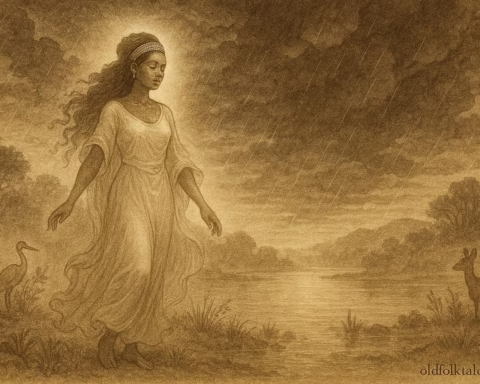
And so the goddess began appearing in dreams to these women who yearned for motherhood. She would come at night, when the boundary between waking and sleeping grows thin, manifesting in visions that were more vivid than ordinary dreams. Sometimes she appeared as a radiant woman with arms outstretched in blessing. Sometimes she came as a voice filled with comfort and promise. Sometimes she was simply a presence warm, maternal, unmistakably divine.
In these sacred dream-visits, Nei Manganibuka would speak directly to the longing hearts of childless women. “Your prayers have been heard,” she would say, her words carrying the weight of divine promise. “I grant you the gift of children. Your womb will quicken, your arms will cradle new life, and your lineage will continue through the generations.”
When these women woke from such dreams, they felt changed. A certainty settled in their hearts, a knowing that transcended hope and entered the realm of truth. And in the months that followed, their bodies would indeed quicken with life. Children would be born healthy, strong, blessed by the goddess herself. These children were considered especially sacred, marked by divine favor, and their mothers never forgot that Nei Manganibuka had heard their silent tears and answered with the most precious gift of all.
Over time, entire clans throughout the Southern Gilbert Islands came to trace their descent from Nei Manganibuka. Women would tell their daughters, “We come from the Fertility Mother. Her blood flows in our veins. When you weave, you honor her. When you bear children, you continue her gift.” These matrilineal lines became sources of pride and spiritual connection, linking mortal women to their divine ancestor across countless generations.
To this day, when women in Kiribati gather pandanus leaves and sit together to weave, they remember Nei Manganibuka. When a young woman learns the intricate patterns from her grandmother’s patient hands, she is receiving knowledge that flows directly from the goddess. When a woman discovers she is pregnant after years of waiting, older relatives will sometimes whisper that perhaps Nei Manganibuka visited her dreams, just as in the ancient stories.
The pandanus tree itself stands as a living monument to the goddess’s care. Every long, pliable leaf is a reminder that she shaped the natural world to serve human needs. Every woven mat is a prayer of gratitude. Every child born to a woman who thought herself barren is proof that the divine feminine power of Nei Manganibuka continues to bless the islands, generation after generation, weaving together the strands of past, present, and future into a pattern as enduring as the ocean itself.
The Moral Lesson
The legend of Nei Manganibuka teaches us that true divinity expresses itself through practical care and compassionate response to human needs. The goddess did not merely command from a distance but actively shaped the natural world and personally taught essential skills, demonstrating that sacred knowledge should be shared generously. Her gift of fertility to childless women reminds us that the deepest human longings are worthy of divine attention, and that hope and faith can indeed be answered.
Knowledge Check
Q1: Who is Nei Manganibuka in Kiribati tradition?
A1: Nei Manganibuka is the Fertility Mother and divine ancestor of the Southern Gilbert Islands in Kiribati. She is a goddess who shaped the pandanus tree for human use, taught women the sacred art of weaving, and granted the gift of children to women struggling with infertility. Entire clans trace their matrilineal descent to her.
Q2: How did Nei Manganibuka transform the pandanus tree?
A2: Nei Manganibuka used her divine power to reshape the pandanus tree, making its leaves longer, more pliable, and better suited for weaving. She made the spines more manageable and the tree’s growth patterns more orderly and generous, transforming it from a wild plant into one perfectly designed to serve the practical needs of island women.
Q3: What is “weaving magic” according to the legend?
A3: Weaving magic is the understanding that pandanus weaving is more than a practical skill it is a spiritual practice. Each pattern holds meaning, each woven strand creates spiritual connection, and the act of weaving itself is a meditation and prayer that binds together not just leaves but community, tradition, and the bonds between generations of women.
Q4: How did Nei Manganibuka help infertile women?
A4: Nei Manganibuka appeared in dreams to women who longed for children but could not conceive. In these sacred visions, she would speak words of comfort and divine promise, granting them the gift of fertility. Women who received such dream-visits would later become pregnant and bear children who were considered especially blessed.
Q5: Why do certain clans trace their descent to Nei Manganibuka?
A5: Certain clans in the Southern Gilbert Islands trace their matrilineal descent to Nei Manganibuka because their ancestral mothers received the goddess’s blessing of fertility, either through dream-visits or other divine intervention. These women’s bloodlines are considered to carry the goddess’s essence, making them sacred lineages that connect mortal families to their divine ancestor.
Q6: What cultural significance does pandanus weaving hold in this legend?
A6: Pandanus weaving holds profound cultural significance as a sacred skill directly taught by a goddess to women. It represents women’s power, connects them to their divine ancestor, preserves stories and traditions, and maintains community bonds across generations. The act of weaving is both a practical necessity and a spiritual practice that honors Nei Manganibuka and reinforces matrilineal identity.
Cultural Origin: Southern Gilbert Islands, Kiribati, Micronesia.