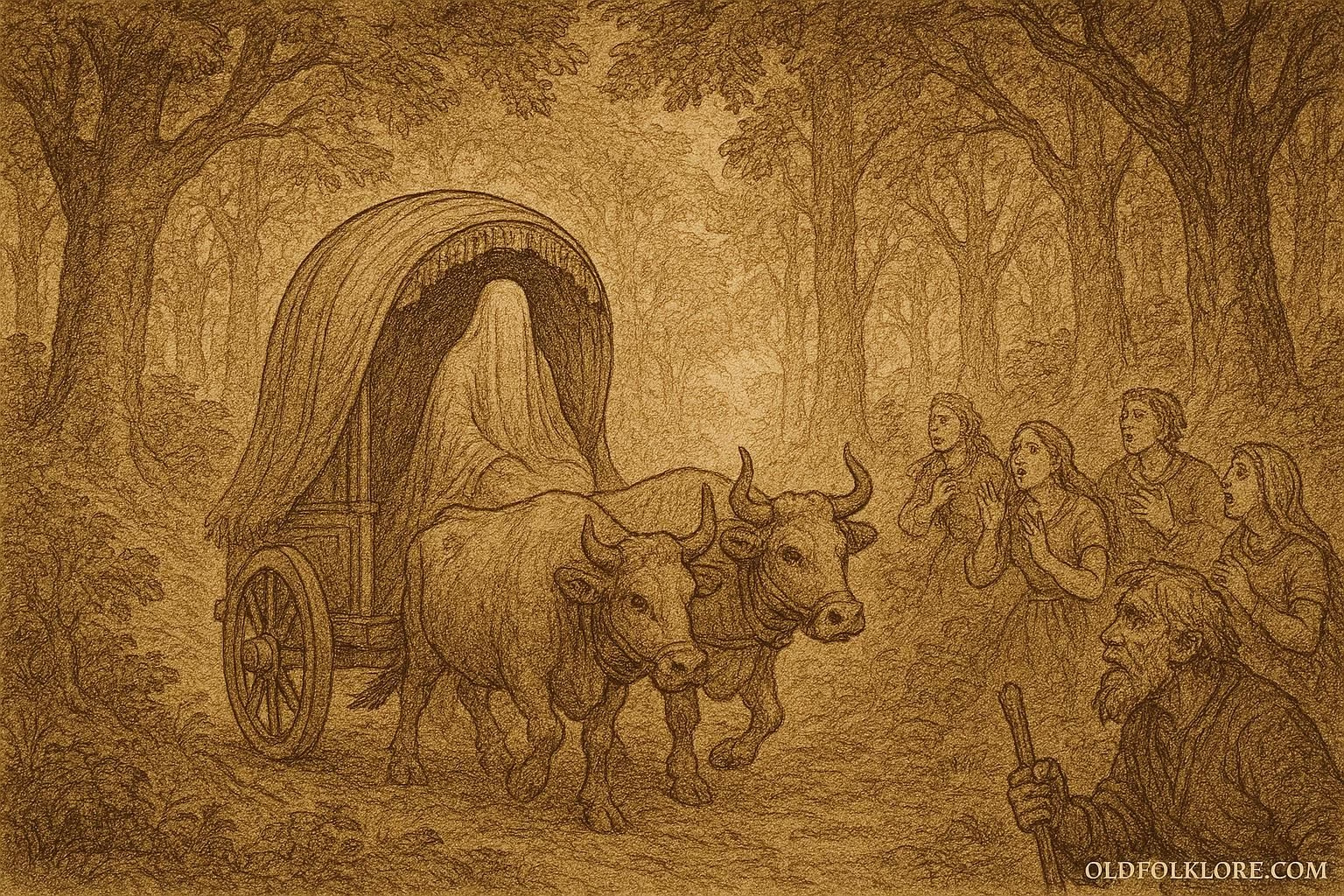
Nerthus is a goddess of fertility, peace, and agricultural abundance, revered as the Earth-Mother who binds humans to the cycles of the land. She is symbolized by a veiled idol, carried in a sacred chariot drawn by oxen, which travels between villages to bless crops, herds, and communities. Her cult emphasizes purity, harmony, and communal wellbeing.
The goddess’ rituals include purification ceremonies at sacred waters, offerings of food and drink, and seasonal observances that highlight the sanctity of the land. She is connected to prosperity, social cohesion, and the cyclical rhythms of life, embodying the idea that human flourishing depends upon the land and its divine guardian.
Journey through the world’s most powerful legends, where gods, mortals, and destiny intertwine
Mythic Story: Nerthus’ Sacred Journey
In the earliest centuries of the Germanic world, Nerthus moved among her people not with fanfare, but with calm authority and sacred stillness. Tacitus recounts that her presence was marked by a veiled image placed upon a chariot, drawn by ritually cleansed oxen, which traveled slowly from village to village. Only her priests, charged with maintaining the sanctity of the ritual, were permitted to touch the sacred vehicle or approach the goddess directly.
The journey of Nerthus’ chariot was no mere procession. As it passed through fields and settlements, the very air seemed to quiet, and human strife gave way to communal peace. Swords were sheathed, disputes were suspended, and even the fiercest warriors felt compelled to lay down their arms. The goddess’ veiled presence brought the invisible power of the earth into the daily lives of mortals, creating a moment of perfect harmony between humans and the divine.
Villagers observed the chariot in silence, offering gestures of reverence and small offerings of grain or drink. It was believed that wherever Nerthus’ chariot traveled, crops flourished, livestock multiplied, and communities experienced unity. The goddess’ movement mirrored the cycles of nature—the slow, measured pace reflecting the rhythms of planting, growth, and harvest.
At the conclusion of her journey, Nerthus was brought to a sacred lake, where her chariot, her cloth covering, and her idol were washed in ritual cleansing. Tacitus notes a striking, solemn aspect: the slaves who assisted in this washing were drowned, for having beheld the divine secret. This act, while harsh to modern sensibilities, underscored a fundamental belief: some aspects of the divine are too potent for human endurance. The boundary between mortal and god remained inviolate, preserving the sacred mystery of the Earth-Mother.
Through this ritual, Nerthus withdrew temporarily, leaving her people to carry the blessings of her visit into the daily work of tending fields and livestock. Yet her influence endured, her presence was the invisible force behind the fecundity of the land, the cooperative spirit among humans, and the sense of continuity that defined early Germanic society.
Even beyond Tacitus’ account, Nerthus’ symbolism resonates with broader European earth-goddess traditions. Scholars note connections to Njörðr in Norse mythology, as well as echoes of maternal fertility figures across Celtic and Slavic cultures. While her exact lineage remains debated, her role as guardian of fertility, peace, and human prosperity is clear.
Author’s Note
Nerthus demonstrates that divinity need not be loud or violent to command reverence. Through ritual and sacred presence, she teaches that human society flourishes when aligned with the cycles of the earth and that true peace emerges when respect for the natural and divine order prevails. Her veiled chariot reminds us that some truths are best approached with humility, patience, and awe.
Knowledge Check
Q1: Who is Nerthus, and what does she govern?
A: Nerthus is a Germanic goddess of fertility, peace, and agricultural abundance.
Q2: How is Nerthus’ image presented during her rituals?
A: She is represented by a veiled idol placed on a sacred chariot drawn by oxen.
Q3: What happens when Nerthus’ chariot moves through villages?
A: Conflicts cease, disputes are suspended, and communities experience temporary peace.
Q4: What occurs at the sacred lake after Nerthus’ procession?
A: The chariot, covering, and idol are ritually washed, and the assisting slaves are drowned to preserve the divine secret.
Q5: How is Nerthus connected to later Germanic deities?
A: Scholars link her to Njörðr in Norse mythology, noting similarities in fertility and prosperity roles.
Q6: What broader themes does Nerthus represent?
A: She embodies harmony with the land, communal peace, the sacredness of hidden knowledge, and the cyclical renewal of life.
Source: Germania, Tacitus, 1st century CE, Early Germanic tribes.
Source Origin: Tacitus, Germania