Ngillatun, also written as Nguillatun, is one of the most important ceremonial traditions of the Mapuche people of southern Chile and Argentina. It is a communal rite held to restore balance, honor the spirits who guard the land, and ensure well-being for families and future harvests. The ceremony has ancient roots tied to Mapuche cosmology, where every mountain, river, and field is alive with ngen, the guardian spirits of nature. These spiritual forces require respect, reciprocity, and continual renewal, which the Ngillatun provides through collective prayer, ritual leadership, offerings, dance, and sacred songs.
Historically, the Ngillatun was held during periods of need, drought, disease, or social tension, but it also developed into a cyclical event, often every two to three years. While its structure varies by community, the purpose remains constant: to reaffirm the relationship between humans, ancestors, the land, and the divine.
Description
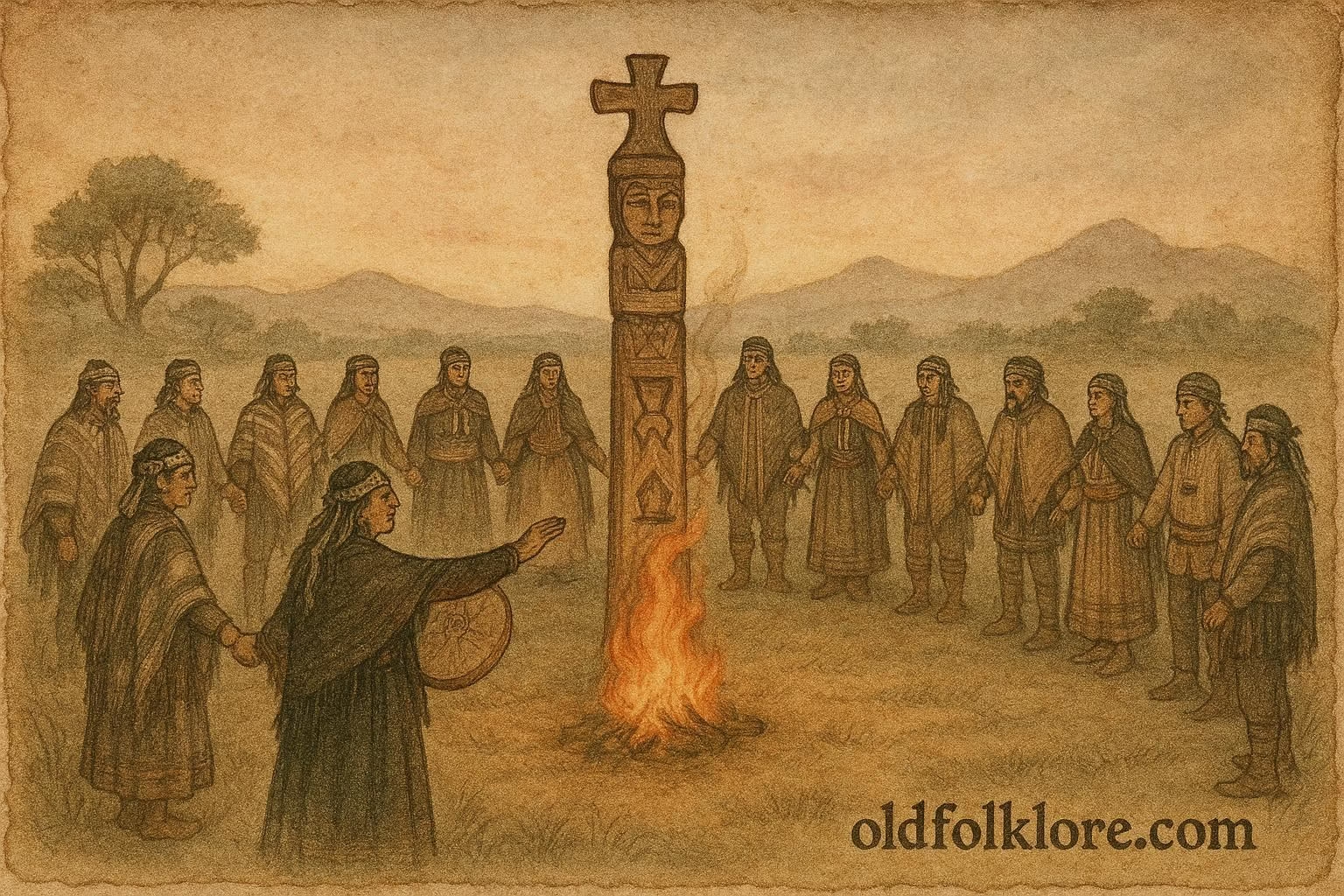
A Ngillatun is not a performance but a living expression of Mapuche spirituality. It typically takes place in an open ceremonial field called a ngillatuwe or within a large communal structure. Families arrive over the course of a day, carrying symbolic offerings and preparing themselves through quiet reflection. At the center of the ritual space stands a rewe, a carved wooden altar or sacred pole, representing the vertical link between the earthly world and the divine realms above.
The ceremony is led by a machi, the Mapuche ritual specialist and healer. Some communities appoint additional leaders, such as the ulmen (respected elders) and ritual assistants who help coordinate prayers, dances, and the flow of participants. Their role is to maintain harmony, guide sequences, and ensure that each act aligns with tradition.
The Ngillatun unfolds through collective actions rather than individual devotion. Drums and flutes establish the ceremonial rhythm. Community members form a circular procession, moving clockwise around the field, a gesture symbolizing unity, the passage of time, and the cyclical nature of life. The circle also mirrors the Mapuche understanding of the universe, where energy moves in spirals and returns to its point of origin.
Participants raise their hands to the sky during prayers, calling upon Ngünechen, the supreme deity associated with creation, fertility, and cosmic balance. They also address the ngen spirits of water, forests, and mountains. Offerings may include seeds, woven cloth, symbolic food items, and ceremonial drink, all placed at the foot of the rewe. These gifts affirm gratitude for what has been received and trust in what is yet to come.
Throughout the ceremony, elders deliver speeches reminding the community of ethical living, respect for the earth, and the responsibilities of each family. Dances are performed in structured patterns, guided by drumbeats and accompanied by ritual songs known as tayil. These songs are considered living prayers, carrying the voices of ancestors across generations.
The atmosphere is solemn yet uplifting. It is a gathering of renewal, socially, spiritually, and ecologically, where all generations participate. Even children are encouraged to learn the rhythms and words, ensuring the ceremony’s continuity.
In modern times, some Ngillatun ceremonies include Christian imagery alongside traditional elements. This blending does not replace Mapuche cosmology; rather, it reflects the community’s adaptive resilience. Despite historical pressures, the Ngillatun remains a powerful anchor of identity, sovereignty, and spiritual presence.
Mythic Connection
The Ngillatun is deeply rooted in Mapuche cosmology, which describes a layered universe composed of the upper worlds (wenu mapu), the earthly plane (nag mapu), and the lower regions associated with disharmony. The machi serves as a mediator between these realms, and the ceremony’s acts mirror the struggles described in Mapuche myth.
Central to the ritual is the relationship with Ngünechen, often understood as a fourfold deity representing man, woman, youth, and age—symbolizing wholeness and universal balance. By offering prayers and symbolic gifts, the community re-establishes harmony with this divine presence.
Ngillatun also reflects the Mapuche belief that land is not property but kin. Mountains, lakes, and forests are home to ngen who must be respected. When balance is broken, through drought, illness, or conflict, it is not simply misfortune but a disruption of spiritual relations. Ngillatun is the ceremony that restores those bonds, renewing the sacred contracts among humans, spirits, and ancestors.
Author’s Note
This article highlights the Ngillatun as a ceremony of connection, gratitude, and cosmic balance within Mapuche tradition. The ritual’s structured prayers, dances, and offerings express a worldview in which land, ancestors, and community form an inseparable whole. Its endurance into the present reflects the Mapuche commitment to resilience, memory, and spiritual continuity.
Knowledge Check
1. What is the main purpose of the Ngillatun?
To restore balance among the community, the land, and the spirits through collective prayer and ritual action.
2. Who leads the ceremony?
A machi, accompanied by elders and ritual assistants who guide prayers, dances, and offerings.
3. What is the significance of the rewe?
It is a sacred wooden altar symbolizing the connection between the earthly world and the divine realms.
4. How do participants express unity?
They form circular processions, moving together in symbolic patterns that reflect cosmic cycles.
5. Who are the ngen?
Spirits who guard natural elements such as rivers, forests, and mountains.
6. How has the ceremony adapted in modern times?
Some communities incorporate Christian elements while preserving core Mapuche cosmology and ritual structure.