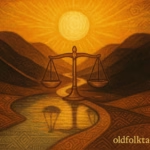
In Nigerian philosophy, leadership and destiny are regarded as sacred trusts rather than personal accomplishments. Across the Yoruba, Igbo, Hausa, and other ethnic groups, leadership is understood as service to the community, humility in action, and moral responsibility. A good leader guides with wisdom, acts with justice, and remains attentive to the needs of the people. Similarly, destiny (“Ori” in Yoruba thought) is believed to guide every life; it is not merely the result of effort but a path divinely designed for each individual. These proverbs capture the interplay between human agency and divine ordination, reminding us that true greatness is measured not by titles, wealth, or influence, but by character, integrity, and the fulfillment of one’s purpose.
The wisdom embedded in these sayings also reflects patience, foresight, and resilience. Leaders are called to serve with humility, to protect the vulnerable, and to adapt to change without abandoning principle. Destiny, on the other hand, teaches the importance of perseverance, moral courage, and trust in the unfolding of life’s journey. Taken together, these proverbs form a cultural compass for navigating the responsibilities of leadership and the pathways of fate, offering guidance relevant for kings, community leaders, and ordinary citizens alike.
Traditional Nigerian Proverbs and Their Meanings:
-
“The head that will wear the crown must bear the weight.” (Yoruba). Meaning: Leadership carries responsibility and burden, not just honor.
-
“No matter how long the night, the day must break.” (Hausa). Meaning: Hard times and uncertainty never last; destiny eventually unfolds.
-
“A king’s greatness is measured by the peace of his people.” (Igbo). Meaning: True leadership is proven by the welfare and happiness of the community.
-
“The load one chooses is never too heavy.” (Yoruba). Meaning: When one embraces their destiny or duty willingly, they find the strength to bear it.
-
“Rain does not recognize anyone as a friend; it falls on all.” (Hausa). Meaning: Justice and fairness must be impartial; true leaders show no favoritism.
-
“The hen with many chicks must spread her wings often.” (Igbo). Meaning: A good leader must constantly protect, guide, and provide for their followers.
-
“A man who does not know where he is going must not lead the way.” (Yoruba). Meaning: Only those with vision and direction are fit to lead others.
-
“When the drumbeat changes, the dancer must also change steps.” (Hausa). Meaning: Leaders must adapt to changing circumstances to stay effective.
-
“No one tests the depth of a river with both feet.” (Igbo). Meaning: Wise leadership requires caution and foresight in decision-making.
-
“The king’s ears must not be far from the people’s mouths.” (Yoruba). Meaning: A ruler must stay connected and attentive to the needs of the people.
-
“He who cannot manage a hut should not build a palace.” (Hausa). Meaning: Leadership begins with managing small responsibilities before greater ones.
-
“Destiny may delay, but it never forgets its path.” (Igbo). Meaning: Fate may take time to manifest, but it will always fulfill its purpose.
-
“A leader who forgets where he came from will lose his way.” (Yoruba). Meaning: Humility and remembrance of one’s roots keep leaders grounded.
-
“The road does not close because the king has passed.” (Hausa). Meaning: Leadership is temporary; life continues after power fades.
-
“Even the drum that calls others to dance must itself be beaten.” (Igbo). Meaning: Leaders must endure discipline and hardship while serving others.
-
“The child destined to be a king is known even in the cradle.” (Yoruba). Meaning: Greatness often shows itself early through character and potential.
-
“The mouth that speaks truth may be wounded, but it is never silenced.” (Hausa). Meaning: Integrity in leadership is costly but enduring.
-
“The path is made by the one who walks it.” (Igbo). Meaning: Destiny is fulfilled through action; one must take steps toward purpose.
-
“He who leads with justice sleeps with peace.” (Yoruba). Meaning: Fair and honest leadership brings inner calm and public trust.
-
“No one can block the sun from rising; destiny cannot be hidden.” (Hausa). Meaning: No matter the obstacles, what is destined will come to pass.
-
“The palm tree that bends does not break.” (Igbo). Meaning: Flexibility and humility help leaders endure challenges.
-
“A leader is known by the soldiers he keeps.” (Yoruba). Meaning: The quality of one’s followers reflects the character of the leader.
-
“Even a king is judged by his servants.” (Hausa). Meaning: Leadership is reflected in how one treats subordinates.
-
“He who rides a horse must endure the dust.” (Igbo). Meaning: Authority comes with inevitable burdens.
-
“The wise chief listens before he acts.” (Yoruba). Meaning: Prudence and counsel are marks of good leadership.
-
“Destiny is like a shadow; it follows those who run from it.” (Hausa). Meaning: One cannot escape what is meant to happen.
-
“A tree cannot grow to the sky without deep roots.” (Igbo). Meaning: Leaders must build strong foundations to reach greatness.
-
“The head that forgets the body invites trouble.” (Yoruba). Meaning: Leadership disconnected from people is doomed to fail.
-
“The river does not forget the path it has carved.” (Hausa). Meaning: Destiny follows the course that life has set.
-
“The elephant does not ask who will lead the herd.” (Igbo). Meaning: True leaders emerge naturally through merit and respect.
-
“He who speaks first may speak twice.” (Yoruba). Meaning: Thoughtful communication is essential in leadership.
-
“A leader without followers is like a tree falling in the forest.” (Hausa). Meaning: Authority has no impact without support.
-
“Even the lion seeks counsel from the wise.” (Igbo). Meaning: Courage and strength require wisdom.
-
“The crown weighs more than the head.” (Yoruba). Meaning: Leadership brings burdens beyond honor.
-
“Destiny is like fire; it will find fuel.” (Hausa). Meaning: Fate finds its way despite obstacles.
-
“A chief’s tongue can be a sharp sword or a healing balm.” (Igbo). Meaning: Words of a leader can harm or heal.
-
“The owl does not ask for permission to enter the house.” (Yoruba). Meaning: Opportunities must sometimes be seized boldly.
-
“Even the strongest drum will not play itself.” (Hausa). Meaning: Leadership requires effort and active engagement.
-
“One cannot clap with one hand alone.” (Igbo). Meaning: Leadership and destiny require cooperation and support.
-
“The wise chief walks before the people.” (Yoruba). Meaning: True leadership leads by example.
-
“A river that forgets its source will dry up.” (Hausa). Meaning: Leaders must remember their roots.
-
“He who sows leadership reaps loyalty.” (Igbo). Meaning: Invest in people to earn devotion.
-
“The head that follows no advice follows disaster.” (Yoruba). Meaning: Ignoring counsel leads to failure.
-
“A destiny unfulfilled is like a tree that bears no fruit.” (Hausa). Meaning: Purpose must be realized through action.
-
“Even a king fears the judgment of time.” (Igbo). Meaning: All leaders are subject to the consequences of their actions.
-
“The goat that strays must be brought back by the herdsman.” (Yoruba). Meaning: Leaders must guide those who wander.
-
“No crown can fit a head that is not disciplined.” (Hausa). Meaning: Only the disciplined are fit to lead.
-
“The drum is silent when the drummer sleeps.” (Igbo). Meaning: Leadership requires vigilance and active participation.
-
“A leader’s strength lies in the unity of his people.” (Yoruba). Meaning: Leadership depends on cohesion among followers.
-
“Destiny does not knock; it is found by those who search.” (Hausa). Meaning: Purpose must be actively pursued.
-
“Even the tallest tree bends to the wind.” (Igbo). Meaning: Humility and adaptability are crucial in leadership.
-
“The crown does not make the king wise; experience does.” (Yoruba). Meaning: Wisdom comes from learning, not title.
-
“A path not walked cannot lead to destiny.” (Hausa). Meaning: One must take initiative to fulfill their purpose.
-
“Even a small chief can lead a large village if he is wise.” (Igbo). Meaning: Wisdom outweighs rank in leadership.
-
“The head that leads without listening will stumble.” (Yoruba). Meaning: Leaders must consider advice.
-
“Destiny may tarry, but it will not fail.” (Hausa). Meaning: Patience is essential in realizing one’s purpose.
-
“He who ignores the small stones will stumble over large boulders.” (Igbo). Meaning: Attention to details ensures success in leadership.
-
“The lion does not shout; it acts.” (Yoruba). Meaning: True leadership is demonstrated through action.
-
“Even the moon has its phases, yet it rises.” (Hausa). Meaning: Destiny unfolds in its own time.
-
“The leader who forgets justice forgets peace.” (Igbo). Meaning: Fairness is the foundation of lasting leadership.
-
“The crown may be heavy, but it is lighter than dishonor.” (Yoruba). Meaning: Integrity outweighs the burden of power.
-
“A river that changes course does not lose its water.” (Hausa). Meaning: Adaptation does not compromise destiny.
-
“Even the smallest drum can call a village together.” (Igbo). Meaning: Leadership impact is not measured by size.
-
“The head that fears judgment cannot wear the crown.” (Yoruba). Meaning: Courage and accountability are essential in leadership.
-
“Destiny is like the wind; you cannot see it, but you feel its direction.” (Hausa). Meaning: One must be sensitive to the signs of their path.
Author’s Note
Nigerian proverbs on leadership and destiny carry profound lessons for every generation. They teach that power is service, that destiny is sacred, and that integrity outweighs influence. These timeless sayings continue to remind modern leaders, whether kings, chiefs, or citizens, that greatness is found not in ruling over others, but in guiding them with wisdom, justice, and love.
Knowledge Check
- Question: What does “The head that will wear the crown must bear the weight” teach about leadership?
Answer: True leadership involves heavy responsibility and sacrifice. - Question: Which proverb emphasizes humility in leadership?
Answer: “A leader who forgets where he came from will lose his way.” - Question: What does “The path is made by the one who walks it” say about destiny?
Answer: Destiny is realized through personal action and effort. - Question: How does “He who cannot manage a hut should not build a palace” relate to leadership?
Answer: One must prove capable in small matters before handling great ones. - Question: What lesson lies in “The king’s ears must not be far from the people’s mouths”?
Answer: Leaders should stay connected and listen to their people. - Question: According to Nigerian wisdom, how does justice affect a leader’s peace of mind?
Answer: A leader who governs justly enjoys inner peace and public respect.
Origin: Nigeria