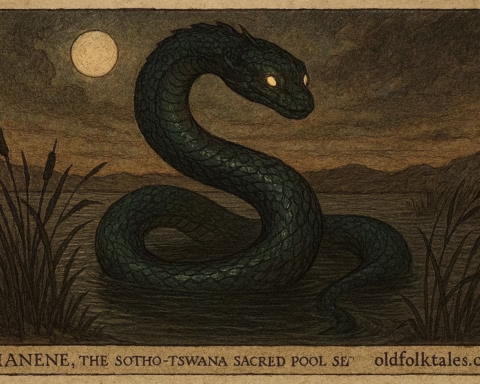
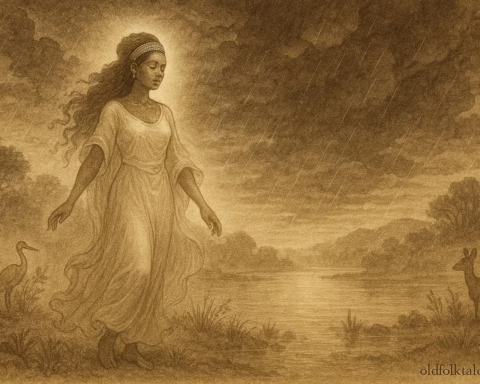
Nomkhubulwane is one of the most beloved and vital deities in Zulu cosmology, the goddess of rain, fertility, agriculture, transformation, and the harmony between humans and the natural world. Her name is often translated as “She Who Chooses the State of Her Being,” reflecting her power of shape-shifting. She appears as a beautiful young woman, a shimmering mist, a great serpent, or even an animal walking through the grasslands after rainfall.
She is associated with abundance, renewal, and the continuation of life. Her rains soften the earth, swell the rivers, and awaken the seeds buried beneath the soil. She teaches humanity how to cultivate crops, care for livestock, and live in respectful balance with nature. In many Zulu communities, rites of thanksgiving and supplication were once performed for her: songs, dances, and offerings of beer, milk, or cultivated foods.
Nomkhubulwane is sometimes linked to Umvelinqangi, the sky god and primordial source of creation. Though not always described as a daughter in the literal sense, her presence is deeply tied to the sky’s blessing, for rain is the lifeblood of Zulu agriculture and pastoral life.
Even today, her name appears in oral traditions, rural ceremonies, and memories of elders who recall the rituals that honored her seasonal return.
Mythic Story
Long before fields were plowed or cattle kraals built, when the Zulu people lived by the rhythms of wandering herds and wild fruits, the world was young and full of stories. The sky was bright, the earth open, and rain came only when the heavens felt moved to release it. In that early age, the ancestors looked upward with uncertainty, wondering when the next life-giving storm would come. It was then that Nomkhubulwane first stepped into the world.
She emerged not from thunder or flame but from a gentle spiraling mist that descended after an unexpected shower. As the droplets settled on the grass, she took the form of a young woman, tall, graceful, and clothed in shimmering dewdrops that glowed like beads in the dawn light. Her eyes carried the calm of distant rain clouds, and wherever she walked, flowers seemed to lift their faces toward her.
The people approached her with awe. They sensed she was no ordinary maiden but a being whose presence carried the scent of earth after rain. She spoke softly, her voice like water moving over stones, telling them she had come to show them how to live not only from the land, but with it.
Her first lessons were simple: how to recognize edible plants, how to store grain, and how to choose land that would welcome crops. But soon she revealed greater teachings. One morning, she led a small group of elders to a clearing. The earth there was bare and cracked, untouched by rain for many weeks. Nomkhubulwane knelt, placing her hands upon the dry soil. The people watched as her fingers shimmered and darkened like storm clouds. Then, from the sky above, a single rumble of distant thunder rolled over the hills.
Within moments, clouds began to gather, slowly at first, then thickening into towering shapes. Rain fell, gentle but steady, soaking the clearing until the soil softened beneath her touch. She turned to the elders and said, “Where there is respect, rain follows.”
In the days that followed, she taught them to plant seeds in orderly rows, to water their fields, and to bless the ground with gratitude. Under her guidance, the first cultivated gardens took shape. Corn sprouted. Wild grains grew in abundance. For the first time, the people understood how to shape the land without harming it.
But Nomkhubulwane was also a being of transformation. She often changed her form as she walked through the world. At times she appeared as a serpent gliding through the grass, its scales shining with the colors of the rainbow. The people came to understand that the serpent form symbolized the cycle of life, shedding, renewal, and the eternal return of the seasons. They honored her with songs that praised the strength of the earth and the generosity of the sky.
In one remembered tale, Nomkhubulwane disappeared for a long season. The rains grew sparse, and crops began to wither. The people feared they had offended her. They gathered to sing and dance, stamping their feet in the dust, lifting their voices in appeal. Their songs carried across the plains, rising toward the high blue sky where they hoped she would hear.
At sunset, as the people danced around their fires, a faint tremor moved through the air. A wind stirred, although no clouds were yet visible. And then, from the edge of the horizon, a figure approached, a great white cow with horns shaped like crescent moons. As she walked, the scent of fresh rain drifted behind her.
The people understood. This was Nomkhubulwane returning in another of her sacred forms. They bowed as she approached. When she reached the center of the gathering, she raised her head, and the sky split with thunder. Rain poured down in torrents, soaking the earth, drenching the dancers, and filling the night with cries of relief and gratitude.
From that moment, the people vowed to honor her not only in times of need but in seasons of plenty. They held festivals celebrating her gift of life, dances for rain, offerings of food grown from her teachings, and blessings upon the herds that depended on her waters.
To this day, elders say Nomkhubulwane walks the earth when rain falls gently across the fields. Some see her in the mist rising from wet soil, others in the flash of a serpent slipping into tall grass. Wherever she appears, she brings renewal, reminding humanity that life flourishes when respect, gratitude, and care guide their hands.
Discover the gods, goddesses, and divine spirits who ruled the heavens and shaped human fate
Author’s Note
Nomkhubulwane embodies the essential relationship between humans and nature. Her myth teaches that abundance is never accidental, it grows from respect, stewardship, and harmony. Through her transformations, she reminds us that life is cyclical, always renewing itself, and that gratitude is the foundation of survival.
Knowledge Check
Q1: What is Nomkhubulwane’s main domain?
A: Rain, fertility, agriculture, and shape-shifting.
Q2: What forms can she take?
A: A young woman, a serpent, mist, or other natural beings.
Q3: What key lessons does she teach humans?
A: Farming, respect for nature, and sustainable living.
Q4: How do people honor her?
A: Through rainmaking dances, offerings, and agricultural rituals.
Q5: What natural signs indicate her presence?
A: Gentle rain, mist, serpents, or renewed plant growth.
Q6: What does her serpent form symbolize?
A: Renewal, transformation, and cyclical life.
Source: Zulu Oral Traditions, South Africa.
Source Origin: Zulu, South Africa