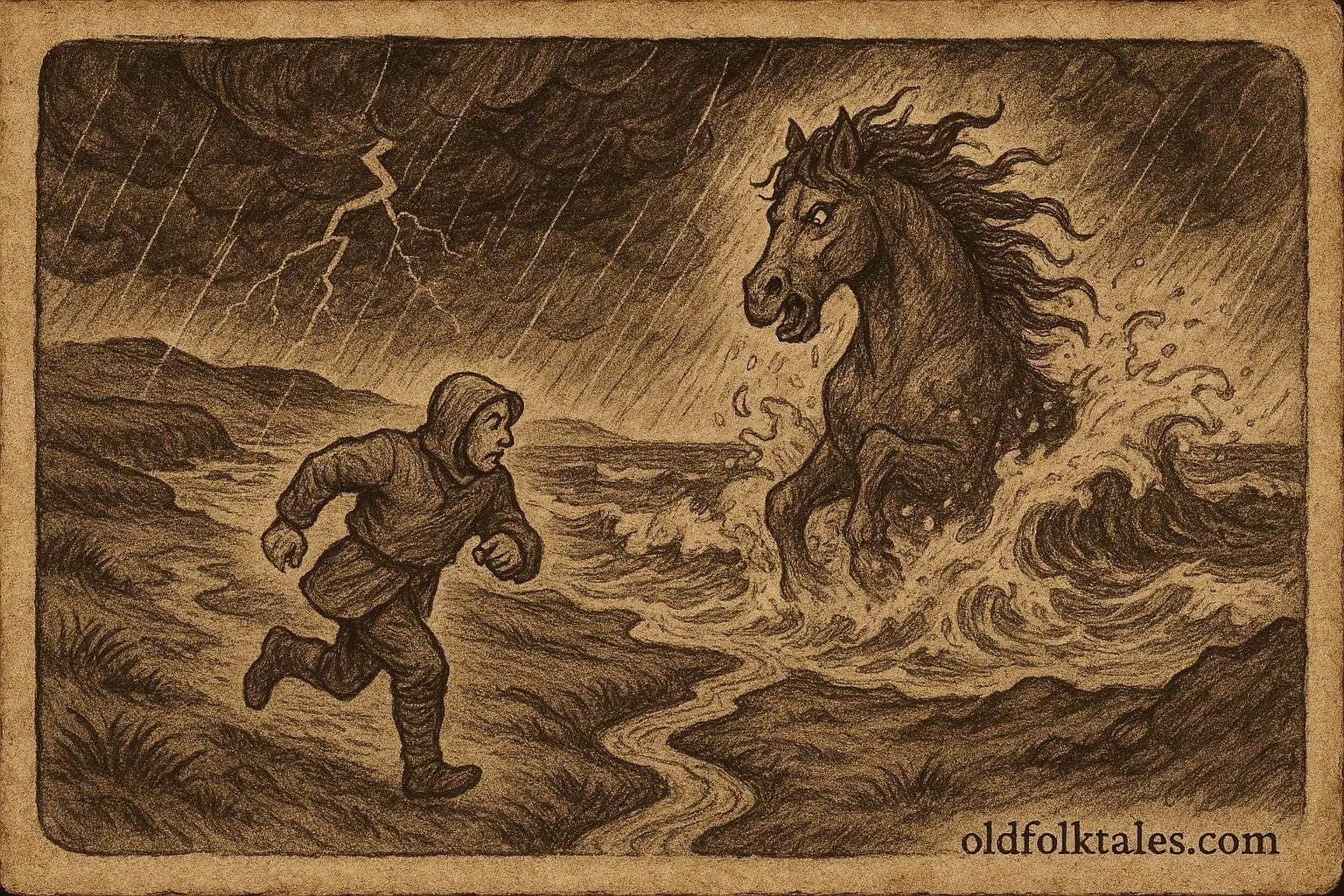
The people of the Orkney Islands still whisper of the Nuckelavee, the most dreaded of all sea spirits. It is said to rise from the dark waters on moonless nights, its monstrous form half man, half horse, with raw flesh glistening like wet seaweed. Its breath poisons crops, its steps dry up streams, and its presence alone fills the air with decay.
In the days when the sea ruled every life upon the islands, fishermen, farmers, and wanderers all knew the stories. The sea gave life, yet it also took without mercy. The Nuckelavee was believed to be the embodiment of that wild, ungovernable force the spirit of the ocean’s vengeance.
Long ago, before the great churches stood upon Orkney, there lived a fisherman named Tammas. He was known for his skill, yet also for his pride. When storms came and others stayed ashore, Tammas would boast that no spirit of sea or sky could frighten him. “The waves know my name,” he said. “They carry my boat like a cradle.”
Encounter dragons, spirits, and beasts that roamed the myths of every civilization
One autumn evening, the wind grew strange. The sea began to churn with a sound like distant laughter. The elders warned everyone to stay indoors, for the night belonged to the sea folk. But Tammas, emboldened by ale and pride, set out along the shore, muttering that no old tale could scare him.
As he walked near the tide line, the waves drew back unnaturally far, revealing dark stones slick with seaweed. A foul stench rose in the air, and from the mist came the sound of snorting deep, heavy, and wrong. Then he saw it.
The creature emerged from the surf, huge and glistening. Its body was that of a horse without skin, muscles moving like ropes of kelp, veins pulsing with black water. Upon its back was fused the upper body of a man, long-armed and twisted, its face stretched and dripping with sea brine. Eyes red as embers fixed upon Tammas.
The Nuckelavee spoke in a voice that seemed to come from the sea itself. “You walk upon my shore without fear, mortal man. Then fear I shall give you.”
Tammas turned and fled, his heart pounding. Behind him came the thunder of hooves and the hiss of waves striking stone. He ran toward the inland hills, gasping for breath as the creature’s voice echoed closer. “You boast to the wind, you steal from the sea, and yet you show no thanks. The sea remembers all debts.”
Tammas stumbled toward a narrow stream, the only barrier between the coast and his village. In Orkney, it was said that no spirit of the sea could cross fresh water. He leapt over it just as the creature’s breath touched his back, hot and vile. The Nuckelavee screamed in fury as it halted at the bank, the water hissing beneath its touch.
“Another night, mortal,” it roared, “the tide will take you.”
When Tammas reached home, he collapsed, trembling and weak. His skin burned where the Nuckelavee’s breath had touched him, and his fields lay withered the next morning. The villagers, frightened, brought the priest to bless the waters and burned seaweed as an offering to appease the spirit.
From that day onward, Tammas never mocked the sea again. He poured the first catch of every fishing trip back into the tide as a gift, whispering, “To the sea that spares us.” Others followed his example, and peace returned to the island for a time.
The elders explained that the Nuckelavee was not pure evil but a force of balance punishment for human arrogance. They told that during long droughts, people burned too much seaweed for fuel, angering the ocean spirits. The Nuckelavee rose to remind them that nature was not to be consumed without gratitude.
In every generation, someone would claim to have glimpsed its shadow, especially when storms rolled over the islands and the air smelled faintly of sulfur. Those who saw it never spoke lightly of the sea again. Fishermen poured a little ale into the waves before launching their boats, and farmers left offerings of bread near springs to keep the spirit’s anger at bay.
Even now, old folk say that when the wind turns warm in winter, it is the Nuckelavee breathing over the land, searching for signs of human arrogance once more. Yet, as terrible as it is, its legend endures as a reminder that nature must be respected for it can protect or destroy with equal might.
The sea is still there, endless and cold. And somewhere beneath its dark surface, the Nuckelavee waits for those who forget humility.
Author’s Note:
The tale of the Nuckelavee reflects the ancient Orkney Islanders’ profound respect for the natural world. It warns against pride and careless exploitation of nature’s gifts. Every element of this legend mirrors the deep interdependence between humanity and the forces that sustain life an understanding too easily forgotten in modern times.
Knowledge Check
1. What is the Nuckelavee in Orcadian folklore?
It is a sea demon combining horse and human features that brings sickness and destruction.
2. Why is the Nuckelavee feared by islanders?
Its breath poisons crops and livestock, and its presence represents the wrath of the sea.
3. How does Tammas escape the Nuckelavee?
He crosses a stream of fresh water, which the sea spirit cannot pass.
4. What moral does the story teach?
It warns against pride and disrespect toward nature and the unseen powers of the sea.
5. What offering do villagers make to appease the spirit?
They bless the waters and offer gifts from their catch and crops.
6. How does the Nuckelavee symbolize balance?
It reminds humans that nature can both give life and bring ruin when disrespected.