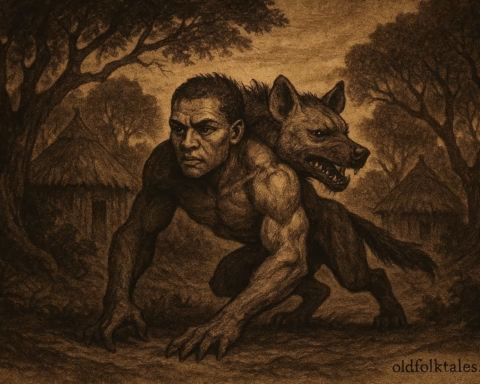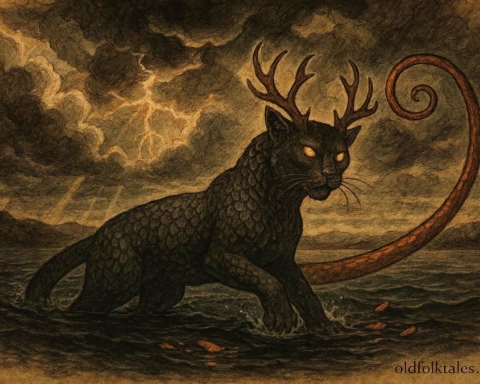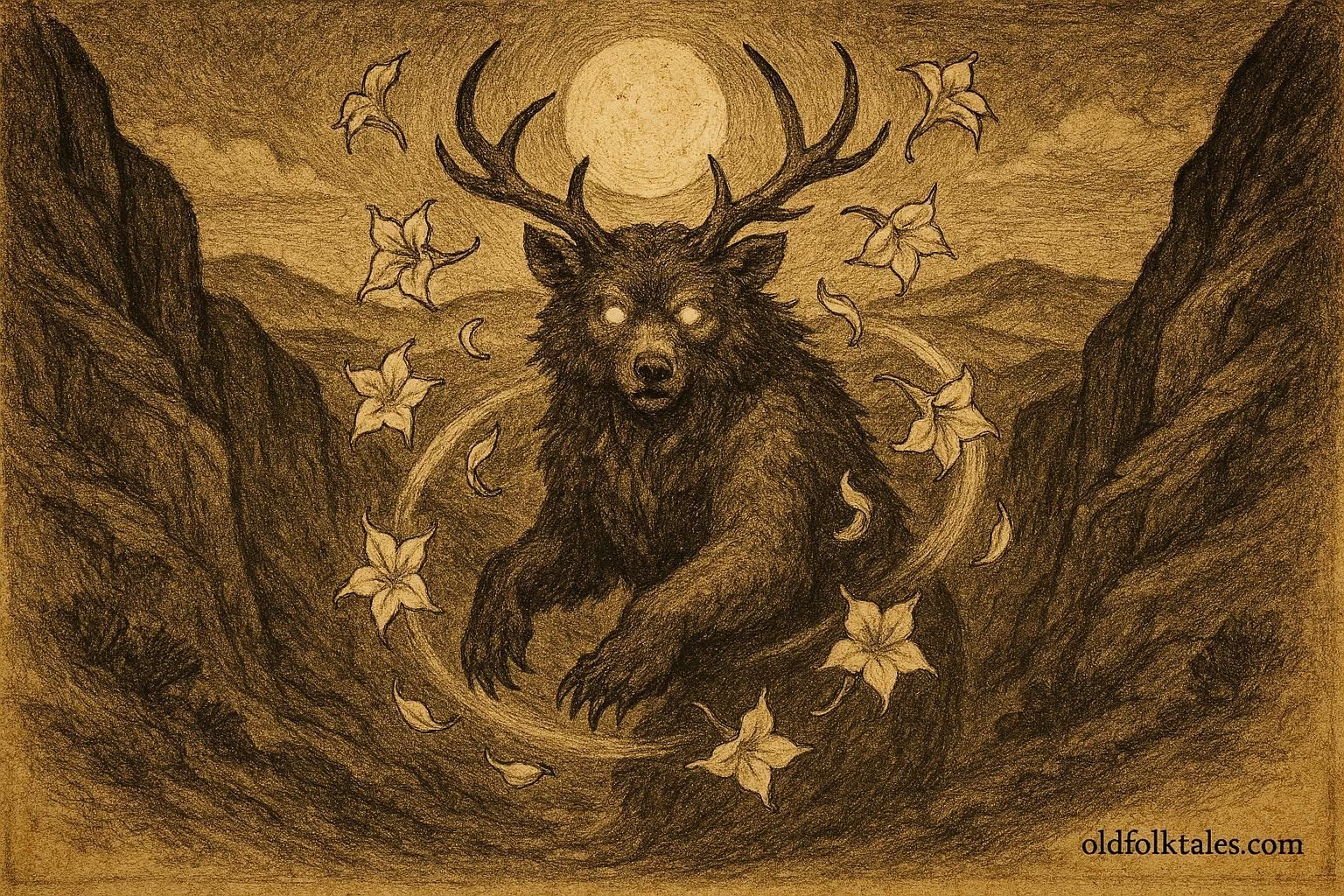
Among the Chumash of Southern California, Nunasis (also spelled Nunasís) are a class of dangerous spiritual beings, not a single creature. They appear in stories as bear-like demons, deer-spirits, coyote-shapeshifters, or hybrid entities that blend animal and supernatural traits. Unlike physical animals, they are not constrained by the body. Their forms are fluid, unstable, and deceptive, living embodiments of the spiritual dangers that exist at the boundaries of human perception.
In many Chumash references, a Nunasis is described as a predator of souls, a being of distortion and trickery. Their eyes glow, their voices shift, and their bodies transform unexpectedly. Some versions emphasize a “Horned Nunasis” (Hap or Haphap), whose horns are symbolic rather than purely physical, a supernatural marker of a creature linked to the otherworld, vision states, and forbidden knowledge.
Relive the heroic sagas of every age – stories of triumph, tragedy, and timeless valor
The Nunasis are also associated with psychotropic plants, particularly datura (momoy), which in Chumash culture was used in important but dangerous spiritual rites. Exposure to these beings was said to occur when travelers, young initiates, or shamans entered altered states without proper guidance. In these stories, the Nunasis appear at the edges of visions, half in this world, half in another, taking the shape of animals familiar to the Chumash but behaving in ways that no living creature would.
They dwell in caves, remote canyons, dark brushlands, and the spiritual landscape beneath the visible world. Travelers reported hearing them rustling at night, mimicking human voices or moving silently behind them. In stories, they may stalk a hunter, confuse a traveler, or attempt to lure someone deeper into a dangerous canyon where the boundary between worlds thins.
Though dangerous, they are not always malevolent. Like many Indigenous spiritual entities, the Nunasis embody natural forces and spiritual lessons rather than simplistic good-versus-evil dichotomies.
Cultural Role (Symbolism, Meaning, Purpose)
Nunasis are best understood as warnings, mythic embodiments of spiritual imbalance, carelessness, arrogance, and unpreparedness. Their appearance in stories teaches listeners to respect the natural world, maintain discipline in spiritual practices, and avoid overstepping boundaries they do not understand.
- Guardians of Spiritual Boundaries: In Chumash cosmology, the world is layered: the land of humans, the land of spirits, and the hidden world beneath. The Nunasis occupy the unstable spaces between these worlds. They remind people that vision-quest rituals, especially those involving datura, require humility, guidance, and ceremonial framing. Without discipline, the initiate becomes vulnerable to Nunasis influence, confusion, hallucination, spiritual harm, or loss of clarity.
- Manifestations of Fear and Chaos: As shapeshifters that appear as bears, deer, or coyotes, the Nunasis represent the familiar turned strange. They express the idea that nature contains forces humans cannot fully understand. In this way, Nunasis stories teach respectful caution, particularly for children and youths, who are often the subjects of tales told by elder women, or “grandmother” figures, warning them not to wander or meddle with spiritual forces.
- Teachers Through Danger: While terrifying, Nunasis also guide people indirectly. Their presence in stories emphasizes:
- Self-awareness
- Community protection
- Recognition of personal limits
- Responsibility in spiritual endeavors
To survive an encounter with a Nunasis, a person must remain calm, grounded, and respectful of the unseen world.
- Embodiments of the Land Itself: Because Nunasis appear as animals native to Chumash territory, they symbolically represent the land’s sacredness and unpredictability. They remind the community that the environment is alive, inhabited by spirits, and requires respectful behavior.
Author’s Note
Nunasis should not be misunderstood as “monsters” in the Western sense. They belong to a highly structured Chumash spiritual worldview in which beings can be dangerous without being evil, and even frightening creatures teach moral or social lessons. Their connection to altered states, especially datura practice, makes them uniquely important for understanding how the Chumash conceptualized vision, danger, and spiritual knowledge. Their stories preserve the idea that the unseen world demands respect, and that spiritual power must be handled with caution, ceremony, and community guidance.
Knowledge Check (Q&A)
- What are Nunasis in Chumash folklore?
They are dangerous shapeshifting spirit-beings that appear in animal or hybrid forms. - What animals do Nunasis commonly take the form of?
Bear, deer, and coyote are the most commonly reported forms. - What plant is strongly associated with Nunasis encounters?
Datura (momoy), used in vision and initiation rituals. - What concept do Nunasis symbolize culturally?
Spiritual imbalance, danger, and the consequences of approaching sacred power without caution. - What is one variant of the Nunasis mentioned in Chumash texts?
The Horned Nunasis (Hap or Haphap). - Why are Nunasis stories told in the community?
To teach caution, discipline, and respect for spiritual boundaries and the natural world.
Source: Based on Chumash ethnographic demonology manuscripts and interpretive anthropological studies (e.g., “Chumash Demonology,” John Anderson Library; references to Nunasis / Haphap in Chumash narratives).
Origin: Chumash Peoples; Southern California (pre-contact oral tradition through 20th-century ethnographic documentation)