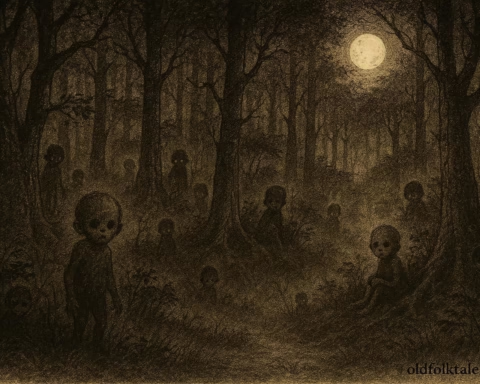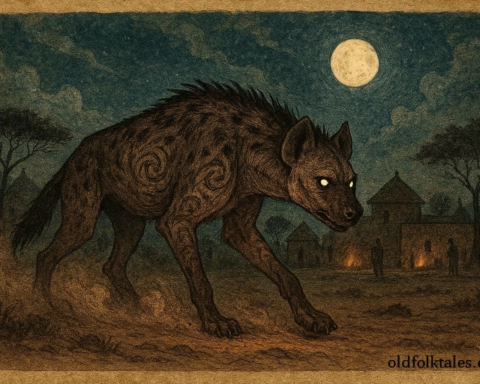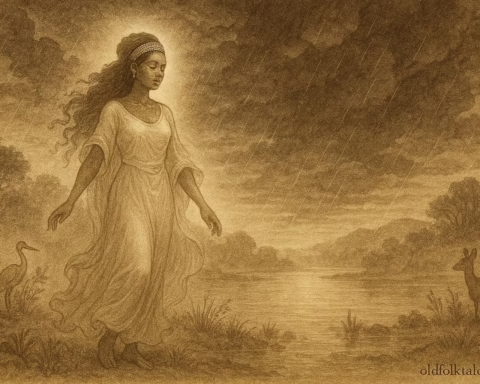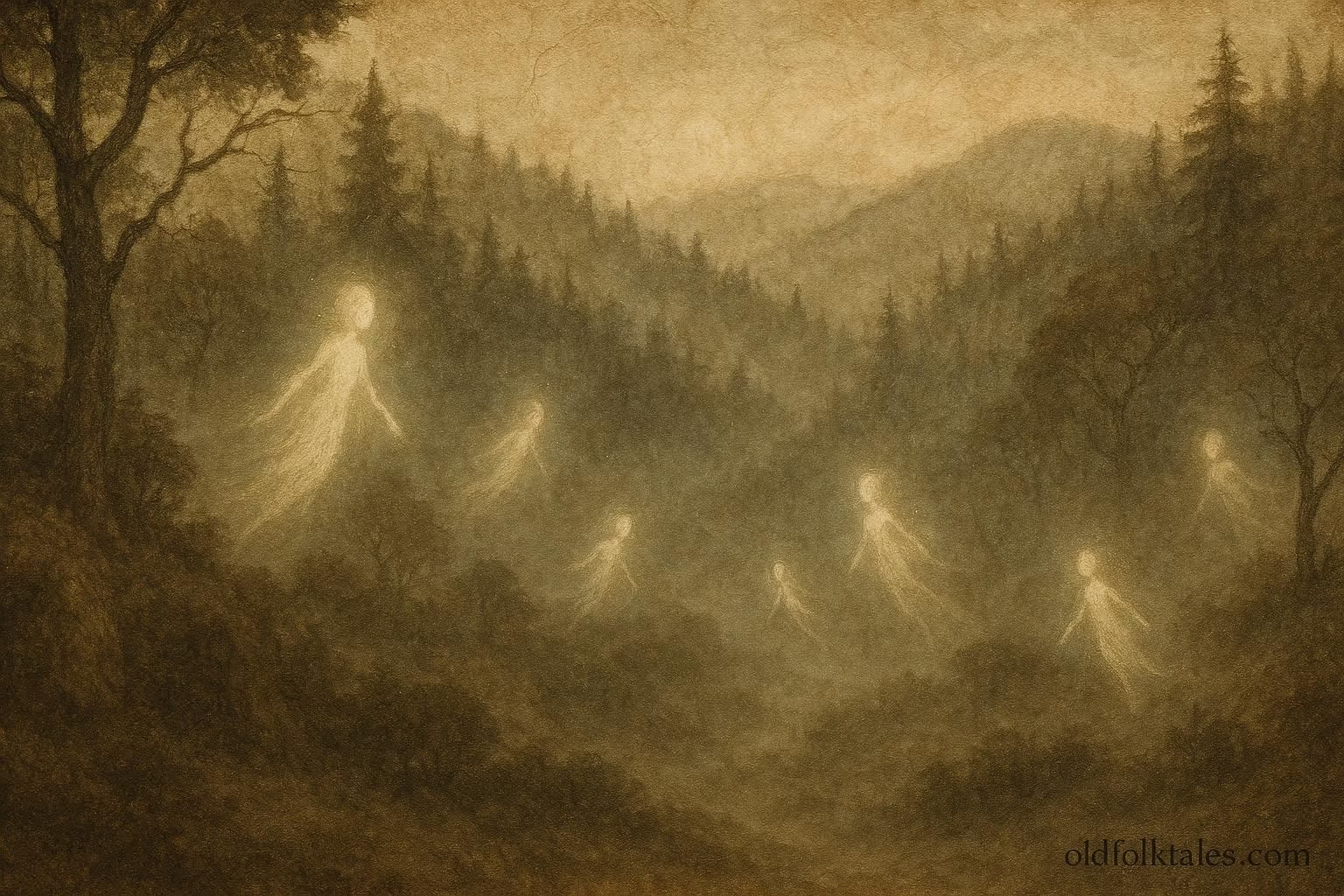
The Nunnehi are ethereal beings in Cherokee folklore, known as the “People Who Live Anywhere.” Unlike malevolent spirits or monstrous creatures, they are generally benevolent, though ambivalent, embodying the liminal space between the human world and the spirit realm. Nunnehi are often described as human-like in appearance, sometimes small like children or little people, and sometimes tall and regal. Their features are generally ordinary, which allows them to blend into the natural world, though their otherworldly aura distinguishes them to sensitive humans.
They inhabit remote, sacred, or liminal spaces, hills, caves, mountaintops, deep forests, and sometimes the mists of river valleys. Occasionally, they appear near villages, inviting humans to join them, but their world is hidden from ordinary perception, accessible only to those chosen, worthy, or in need of protection.
The Nunnehi are renowned for their musicality and song, often heard at dusk or dawn. Travelers may hear flute-like melodies or faint singing in the hills, and these sounds are a sign of Nunnehi presence. Their movement is described as graceful and silent, gliding through forests or along streams, sometimes accompanied by strange lights, faint laughter, or the scent of wildflowers, a folkloric signature marking their liminality.
Powers and Behavior
The Nunnehi possess supernatural abilities rooted in folklore:
- Invisibility or selective perception: Humans often cannot see them, though they may hear or sense their presence.
- Healing and protection: They occasionally intervene to save lost travelers or heal the sick.
- Guidance and teaching: Stories recount the Nunnehi leading humans to safety, hidden food sources, or secret paths.
- Time distortion:Time spent with Nunnehi can pass differently, a common folkloric motif suggesting contact with the Otherworld.
- Hospitality and testing: Some tales describe humans invited to feasts in Nunnehi dwellings; these invitations test the visitor’s respect, humility, or honesty.
Behavior varies across stories. Some Nunnehi are playful tricksters, guiding or misleading humans for moral lessons, while others are strictly guardians of sacred spaces. They are rarely aggressive but may enforce boundaries if humans act disrespectfully toward the land, the spirits, or each other.
Myths and Beliefs
Nunnehi appear across Cherokee oral tradition in multiple contexts:
- Helpers of humans: Many stories depict lost hunters or travelers saved by Nunnehi, who appear mysteriously and guide them home.
- Otherworldly dwellers: Tales often describe humans being invited to live with Nunnehi, only to return to the human world years later, finding that decades have passed, a folkloric motif of time distortion.
- Guardians of sacred spaces: Hills, caves, or forests inhabited by Nunnehi are often taboo or treated with reverence, warning humans to respect the natural and spiritual world.
- Moral educators: In some stories, humans interacting with the Nunnehi are tested for humility, generosity, or obedience, reflecting cultural values.
- Overlapping beings: Some tales link Nunnehi with Deer Woman, spirits, or fairies, illustrating their role in the Cherokee cosmology as a bridge between humans, nature, and the spiritual realm.
Unlike monsters or demons, Nunnehi are rarely malevolent. Instead, they reflect the moral and spiritual balance of nature, encouraging humans to respect forests, rivers, and sacred sites, while rewarding humility, courage, and kindness.
Cultural Role
In Cherokee folklore, the Nunnehi are protectors, teachers, and guides, embodying:
- Harmony with nature: Their presence in untouched landscapes underscores reverence for wilderness and ecological balance.
- Otherworldly connection: They symbolize the porous boundary between mortal life and the spirit world.
- Moral education: Through subtle testing or guidance, they transmit lessons on respect, humility, and ethical behavior.
- Spiritual resilience: Their invisibility and mysterious nature remind humans that much of the spiritual realm operates beyond ordinary perception.
Their tales are part of oral narrative cycles used to explain the natural world, sacred geography, and human relationships with the spirit realm. In some stories, failing to respect Nunnehi leads to misfortune, reinforcing social and environmental norms.
Encounter dragons, spirits, and beasts that roamed the myths of every civilization
Author’s Note
This entry emphasizes the folkloric richness of the Nunnehi. Unlike monsters or cryptids, they are ambivalent, morally instructive beings rooted in Cherokee cosmology. Scholars and storytellers alike highlight their liminality: dwellers of hidden landscapes and the spiritual world, yet intimately connected to human morality and the natural order. In retelling these stories, care should be taken to preserve their cultural context, respecting Cherokee oral tradition and worldview.
Knowledge Check (Q&A)
- Q: Where do Nunnehi primarily dwell?
A: Hills, caves, forests, and other liminal natural spaces. - Q: Are Nunnehi inherently malevolent?
A: No, they are generally benevolent or ambivalent, guiding or testing humans. - Q: What is a common folkloric motif associated with time spent among Nunnehi?
A: Time distortion: humans may return to find many years have passed. - Q: How do Nunnehi teach moral lessons?
A: Through tests of humility, respect, honesty, and ethical behavior. - Q: In Cherokee belief, what natural principle do Nunnehi symbolize?
A: Harmony with nature and respect for sacred landscapes. - Q: Which Cherokee stories or beings sometimes overlap with Nunnehi?
A: Deer Woman, other spirits, and fairies in oral tradition.
Source: Mooney, Myths of the Cherokee; Project Gutenberg; Pioneer Woman Museum summaries
Origin: Cherokee (Southeast U.S.), collected in the late 19th century; oral tradition dating centuries earlier