
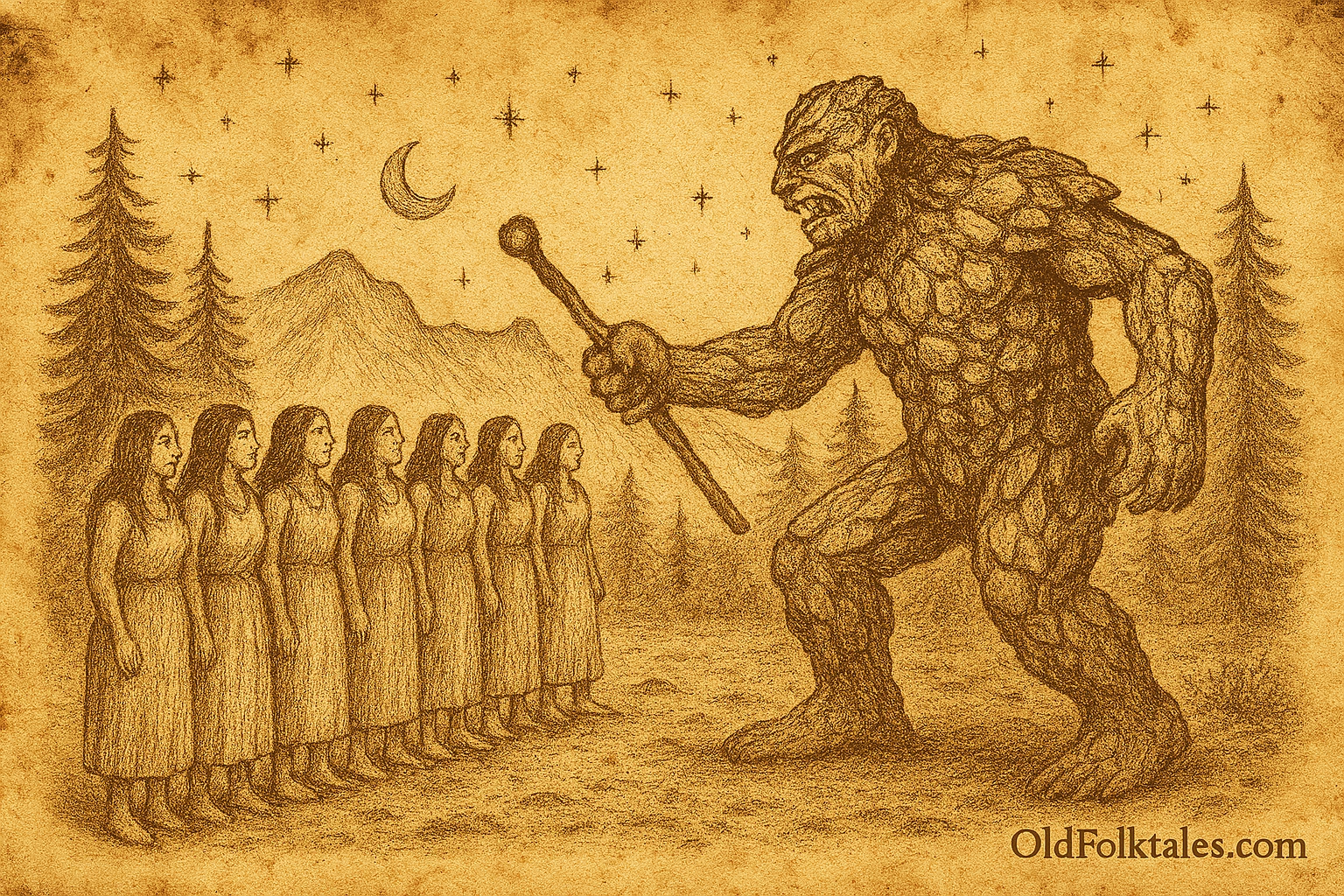
In the days when the Cherokee people lived in the shadow of the Great Smoky Mountains, when the mist still carried the voices of the spirits and every creature had its place in the sacred balance, there came a terror that threatened to tear apart the very fabric of their world. Its name was whispered with dread around the council fires: Nun’Yunu’Wi, the Stone-Clad One.
The monster moved through the ancient forests like a walking mountain; its body covered in skin as hard and impenetrable as the granite cliffs that crowned the highest peaks. No weapon fashioned by human hands could pierce that stony armor. Arrows shattered against it like twigs. Spears bent and broke. Even the strongest war clubs bounced away, leaving not so much as a scratch upon that terrible hide.
But it was not just the creature’s invulnerability that struck fear into the hearts of the people. Nun’Yunu’Wi carried with it a magical cane, a staff of power that could point unerringly toward its victims. Some said the cane could see through walls and darkness. Others claimed it could freeze a person where they stood or drain the courage from even the bravest warrior’s heart. Whatever its exact powers, all agreed that once the cane pointed at you, escape was nearly impossible.
Word spread from village to village like wildfire racing up a dry mountainside. The Stone-Clad Monster had been seen moving through the valleys, leaving devastation in its wake. Hunters who ventured into certain areas never returned. Families living on the forest’s edge vanished without trace. The creature seemed unstoppable, an embodiment of primordial chaos, a force from the time before order came to the world.
In one particular village, nestled in a valley where the mountains rose like protective walls and the river sang its eternal song over smooth stones, the people gathered to face their fate. The council house filled with worried voices as families debated what should be done. Some argued they should flee deeper into the wilderness, abandoning their homes and corn fields. Others insisted they must stand and fight, though their faces betrayed their doubt. How does one fight stone itself?
The arguments continued long into the night, firelight flickering across anxious faces, until finally the village medicine man rose to speak. He was an elder whose hair had gone white as winter snow, whose eyes held the accumulated wisdom of many lifetimes. For three days and three nights, he had fasted in isolation, seeking guidance from the spirits that moved between the seen and unseen worlds. Now he returned with an answer that surprised them all.
“Hear me,” he said, and his voice carried the weight of sacred knowledge. “The Stone-Clad One cannot be harmed by any weapon we possess. Its skin is harder than anything our hands can make. But the spirits have shown me a truth this monster has a weakness that no warrior’s strength can exploit.”
The people leaned forward, hope kindling in their hearts like the first spark in dry tinder.
“The creature,” the medicine man continued, “is vulnerable to the sacred power of women in their moon time those who carry the blood of life within them. When Nun’Yunu’Wi sees seven such women standing together, its terrible strength will drain away like water poured upon thirsty ground. Only then can it be destroyed.”
A profound silence filled the council house. The people understood. In Cherokee tradition, menstruating women possessed a powerful medicine, a sacred force connected to the mysteries of creation and the cycles of life itself. This power was so potent that women in their monthly time observed special rituals and separations, for their medicine could affect warriors preparing for battle, hunters preparing for the chase, and ceremonies of great importance. It was a force both revered and carefully respected neither good nor evil, but mighty beyond measure.
Now, that very power would become their salvation.
The call went out through the village, and seven brave women stepped forward. They knew the danger that awaited them. If the medicine man’s vision was mistaken, they would be the first to fall before the monster’s wrath. But they also knew their people needed them, and courage wears many faces. These women wore theirs with quiet determination, understanding that sometimes the greatest strength lies not in the arm that wields a weapon but in the sacred power carried within the body itself.
The village prepared. Warriors took positions not to fight but to finish what the women would begin. Fires were built in a great circle. The seven women stood in the center of the village square, neither armed nor armored, clothed only in their ceremonial dress and the invisible mantle of their sacred power.
As the sun climbed toward its peak, the earth itself seemed to tremble. Through the forest came Nun’Yunu’Wi, massive and terrible, its stone-covered body pushing aside trees as if they were mere saplings. The magical cane swept back and forth, pointing, searching, leading the monster toward its prey. The sound of its footsteps was like boulders rolling down a mountainside.
The people held their breath as the creature emerged into the clearing. Its eyes the only soft part of its body gleamed with hunger and malice. The magical cane swung toward the assembled villagers, and for a moment, all seemed lost.
Then Nun’Yunu’Wi saw the seven women standing fearlessly in the center of the village. The creature stopped. Its stone-clad body seemed to ripple, as if the very granite were becoming sand. The magical cane fell from its grip, clattering uselessly to the ground. The monster tried to move forward but could not. It tried to retreat but found its feet rooted to the spot.
The sacred power of the seven women had done what no weapon could do it had stripped the Stone-Clad One of its terrible strengths.
The warriors moved quickly, bringing wood and tinder. They piled it around the helpless monster and set it ablaze. The fire burned hot and fierce, fed by the people’s relief and righteous fury. All through the day and into the night, the flames consumed Nun’Yunu’Wi, and when the ashes finally cooled with the morning dew, the people discovered something wondrous.
Within the remains of the monster lay treasures a great jewel that caught the light like captured sunlight, and lumps of red paint, sacred ochre that would be used in ceremonies for generations to come. The chaos that had threatened to destroy them had been transformed into gifts of beauty and spiritual power.
Order was restored. The villages were safe. And the people remembered the lesson: that true strength comes not from stone or steel alone, but from understanding the sacred powers woven into the fabric of life itself, and from honoring the wisdom that knows where true vulnerability lies.
Click to read all Myths & Legends – timeless stories of creation, fate, and the divine across every culture and continent
The Moral Lesson
The legend of Nun’Yunu’Wi teaches that brute force alone cannot solve every problem, and that true wisdom lies in understanding hidden vulnerabilities and sacred knowledge. The Cherokee people could not defeat the monster through conventional warfare, but by respecting and utilizing the sacred power of women’s life-giving cycles, they achieved victory. This story emphasizes the value of cultural wisdom, ritual knowledge, and humility recognizing that sometimes the answer lies not in meeting force with force, but in understanding the deeper spiritual and natural powers that maintain balance in the world. It also honors the sacred role of women and the power inherent in the cycles of life.
Knowledge Check
Q1: What was Nun’Yunu’Wi in Cherokee mythology? A: Nun’Yunu’Wi, meaning “Stone-Clad” or “dressed in stone,” was a monstrous creature in Cherokee folklore with impenetrable stone-like skin that no weapon could pierce. The monster carried a magical cane that could point out victims and possessed supernatural powers, making it a nearly invincible threat to Cherokee villages.
Q2: Why couldn’t Cherokee warriors defeat the Stone-Clad Monster with weapons? A: The monster’s entire body was covered in skin as hard as granite rock. Arrows shattered against it, spears bent and broke, and war clubs bounced off without leaving a mark. The creature’s stone armor made it completely invulnerable to any conventional weapons the Cherokee people possessed.
Q3: How did the medicine man know how to defeat Nun’Yunu’Wi? A: The village medicine man fasted in isolation for three days and nights, seeking spiritual guidance. Through his communion with the spirits that move between the seen and unseen worlds, he received a vision revealing that the monster was vulnerable to the sacred power of menstruating women.
Q4: What was the significance of the seven women in Cherokee culture? A: In Cherokee tradition, women during their monthly menstrual cycle possessed powerful sacred medicine connected to the mysteries of creation and life cycles. This power was so potent it required special rituals and respect. The seven women represented this sacred feminine power that could affect spiritual forces in ways physical weapons could not.
Q5: What treasures were found after Nun’Yunu’Wi was destroyed? A: After the monster was burned, the people discovered a great jewel and lumps of red paint (sacred ochre) within its remains. These treasures symbolized how chaos and destruction, when properly overcome, can be transformed into gifts of beauty and spiritual value for the community.
Q6: What does the Nun’Yunu’Wi legend teach about Cherokee values and wisdom? A: The legend emphasizes that brute force isn’t always the answer and that true wisdom comes from understanding hidden spiritual powers and vulnerabilities. It shows the value of ritual knowledge, cultural wisdom, respect for sacred feminine power, and humility. The story teaches that maintaining order and defeating chaos requires understanding the deeper spiritual dimensions of existence.
Source: Adapted from Myths of the Cherokee by James Mooney (Bureau of American Ethnology, 1900)
Cultural Origin: Cherokee Nation, Southeastern United States






