Within Cherokee oral tradition, few beings are as feared, enigmatic, and symbolically potent as Nun’Yunu’Wi, literally “Dressed-in-Stone,” often translated as the Stone-Coat Being. Unlike many monstrous figures of world mythology, Nun’Yunu’Wi is not simply a brute force creature. He is a sorcerer, a shape-shifting, mind-bending, almost human-like entity whose power springs from ancient mystery rather than bestial strength.
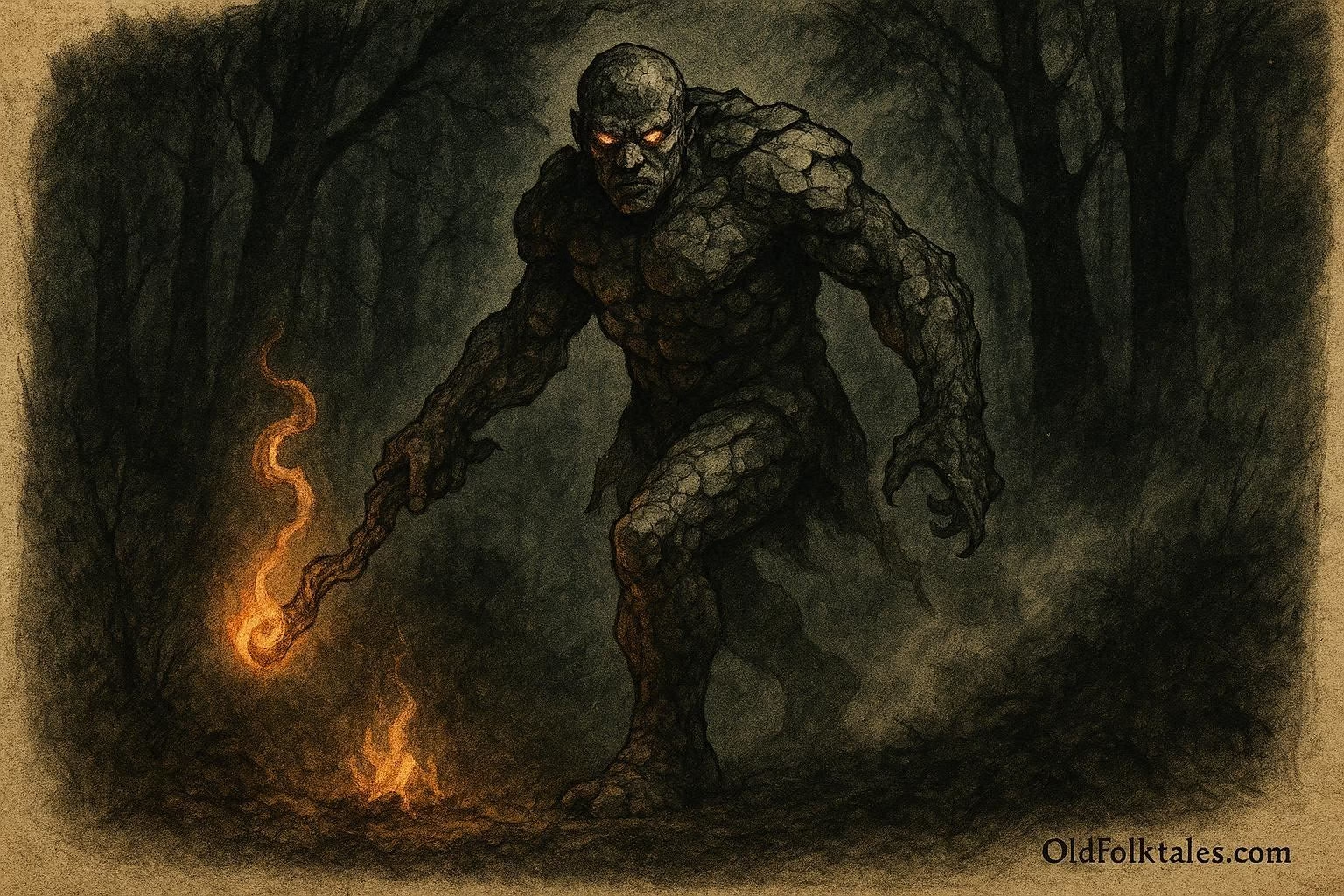
The core of his identity is his stone skin, a supernatural armor that no ordinary arrow, spear, or blade can pierce. In many retellings, he appears as a tall, gaunt figure with gray, rock-hardened flesh and eyes that glow with a cunning intelligence. His body is sometimes described as rough like granite, sometimes smooth like river-worn stone, and sometimes covered in a thin, shimmering coat that clinks like pebbles when he moves. This texture symbolizes not just invulnerability but connection to primordial, earth-born forces.
Follow the paths of legendary warriors, kings, and demigods who defined ancient honor
Nun’Yunu’Wi wields a magical cane or walking staff, a detail preserved in several ethnographic summaries. This cane points directly toward the person he intends to hunt or devour. In some stories, it bends or twists of its own accord, indicating where his next victim is hiding. This makes him not simply a predator, but a tracker with supernatural precision, no one can escape once the cane has chosen them.
Equally terrifying is his capacity to influence the mind. Many sources describe him as capable of hypnotic suggestion, mental domination, or causing victims to wander willingly into danger. Those who meet him often feel a sense of confusion, dread, or compulsion. These details reflect a broader Cherokee understanding of powerful sorcerers, elders whose knowledge could transform minds, bodies, and landscapes.
Nun’Yunu’Wi is said to devour human beings. His hunger is not animalistic but ritualistic: he consumes flesh as a way of absorbing vitality or spiritual essence. Sometimes he hunts entire villages; other times, he seeks individuals who wander too far from community protection. He is a walking embodiment of danger outside boundaries.
Yet despite his overwhelming power, traditional stories emphasize that Nun’Yunu’Wi can be defeated, but only through knowledge, ritual, and community cooperation. In one of the better-known versions, he is undone not by weapons but through a ceremonial act involving menstruating women, whose presence and power weaken him. This narrative highlights not only Cherokee understandings of ritual purity and taboo, but also the sacred and protective power of women, a theme common in Indigenous cosmologies.
His death is not simple. In some versions, he is burned to prevent regeneration; in others, he collapses into dust the moment the spell is broken. Even in defeat, he remains a figure of awe, representing the triumph of ritual power over brute supernatural force.
Cultural Role
- A Warning Against Wandering Beyond Community: Cherokee oral traditions frequently carry layered meanings about safety, community cohesion, and the importance of boundaries. Nun’Yunu’Wi is often invoked as a story to prevent children and adults alike from venturing alone into dangerous wilderness areas. His presence is a reminder that forests, mountains, and night-time trails require caution and respect.
- Symbol of Forbidden or Dangerous Knowledge: As a sorcerer, Nun’Yunu’Wi represents power without community authority. Cherokee tradition distinguishes between the medicine person who works for the good of the people and the sorcerer who misuses spiritual knowledge. Nun’Yunu’Wi embodies the latter, someone who has tapped into old, wild knowledge and become corrupted by it.
He is a cautionary reflection of what happens when spiritual power is wielded selfishly or violently.
- Embodiment of Stone: Endurance, Hardness, Immutability: Stone in Cherokee symbolism has deep meaning, durability, connection to the underworld, elemental endurance, and the boundary between life and death. A being covered in stone is a being beyond natural aging or hurt. Nun’Yunu’Wi symbolizes the unyielding obstacles humanity faces: sickness, spiritual danger, predatory outside forces.
His stone body also signifies dangerous permanence, a cosmic force that cannot be swayed by pleading or bargain.
- Moral and Social Teaching About Women’s Sacred Power: The fact that only women in menstruation, a state considered ritually powerful in many Indigenous traditions, can weaken or kill Nun’Yunu’Wi is significant. It reinforces:
- Respect for women’s spiritual authority
- Recognition of female-centered ritual power
- The moral idea that community strength comes from all roles, not just warriors
This teaching situates women not as passive figures but as essential defenders of cosmic and communal balance.
- Symbol of Predation and Danger Outside Harmony: In Cherokee worldview, humans must stay in harmonious relation with the natural and spiritual world. Nun’Yunu’Wi stands outside that harmony. His cannibalistic hunger reflects disruption, absence of order, imbalance, and disharmony. He is a living lesson about spiritual ethics and the consequences of stepping outside sacred law.
Explore the mysterious creatures of legend, from guardians of the sacred to bringers of chaos
Author’s Note
Nun’Yunu’Wi is one of those beings whose story changes subtly from community to community, and from storyteller to storyteller. This summary is grounded in documented retellings but cannot replace the cultural context, language, and ceremonial framing that Cherokee knowledge holders bring. Treat this figure with respect, he carries lessons far deeper than the label “monster” implies.
Knowledge Check
- What does the name Nun’Yunu’Wi mean?
“Dressed in Stone” or “Stone-Coat Being.” - What is his primary supernatural feature?
His stone-hard skin, invulnerable to ordinary weapons. - What tool does he use to find victims?
A magical cane that points toward the person he intends to hunt. - What power does he have over humans?
Mind-control or hypnotic influence that confuses or draws victims toward him. - How is he defeated in some traditions?
Through a ritual involving menstruating women, whose presence weakens his stone power. - What moral lesson does he represent?
The dangers of wandering outside community protection, the misuse of spiritual power, and the importance of ritual balance.
Source: Cherokee oral tradition; ethnographic summaries derived from James Mooney’s field notes; modern scholarship (AICRJ); Wikipedia
Origin: Cherokee (Aniyvwiyai) oral tradition, Southeastern Woodlands, pre-contact cosmology