In the quiet corners of Japan where old streets still hold the weight of forgotten footsteps, there are stories whispered from one generation to the next. These stories speak of beings who emerge whenever humans abandon their responsibilities. Among these cautionary spirits is one both unsettling and important, known as the Nuppeppō. It is a creature born not from malice but from decay itself, carrying the scent of humanity and the shape of something that once resembled a person.
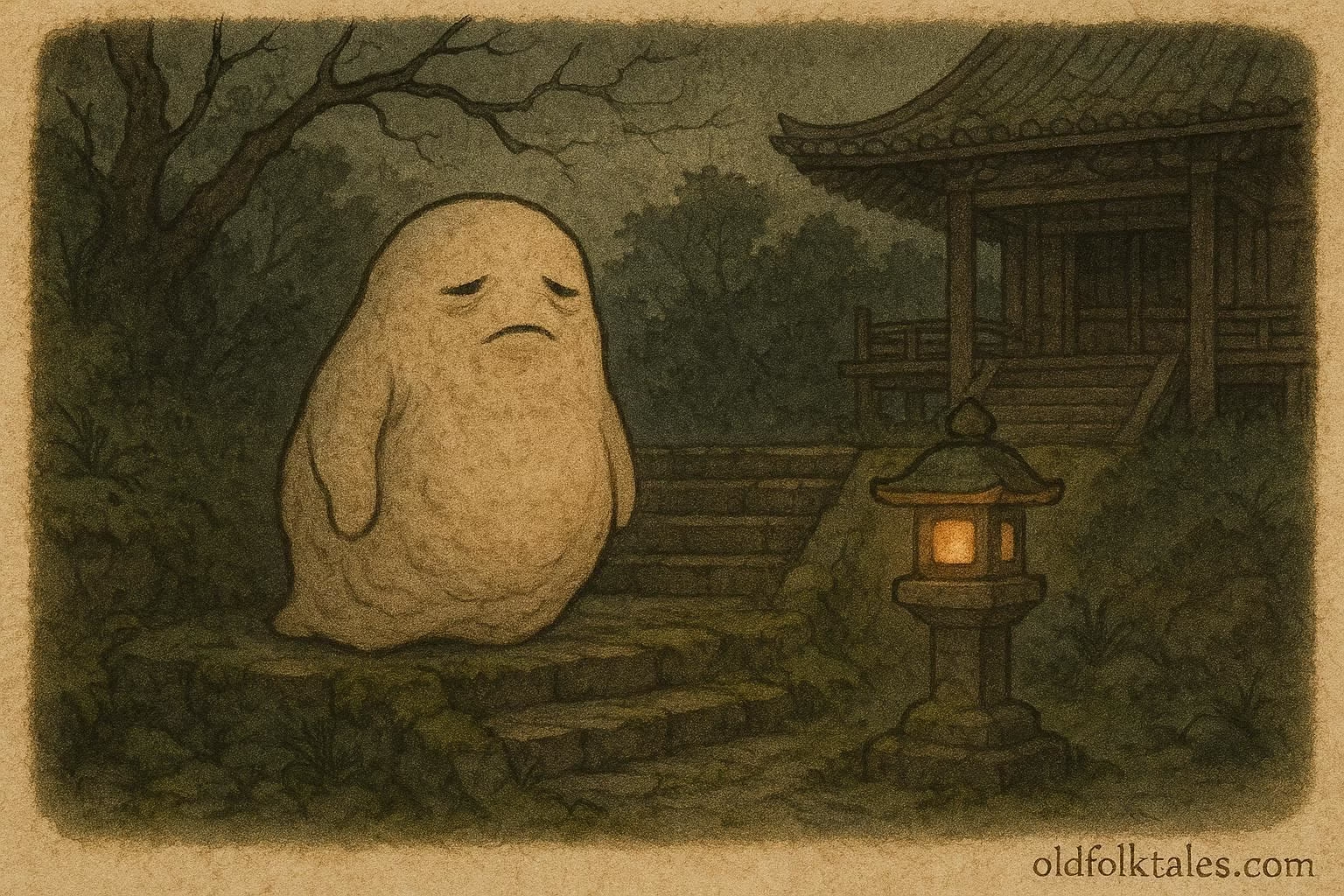
People describe the Nuppeppō as a mound of soft flesh, folding upon itself like melted wax. It waddles slowly, leaving no footprints, as though drifting across the ground. Though its appearance is grotesque, those who smell it recognize something disturbingly familiar. It bears the faint scent of human skin, reminding anyone who crosses its path that it is tied to the world of people more than the world of monsters.
Long ago in a small village near Edo, there stood a temple that had once been full of life. Villagers came to sweep the grounds, light incense, and greet the spirits with prayers. Monks tended the halls, polished the floors, and rang the great bell that echoed across the valley. But as years passed, new roads formed, younger families moved away, and responsibilities shifted. Bit by bit the temple grew quiet. Leaves gathered at its entrance. Dust settled on its altar. Weeds rose through old stone paths. What was once a sacred place slowly faded from memory.
Encounter dragons, spirits, and beasts that roamed the myths of every civilization
The village elders worried about this change, but no one felt truly responsible for restoring the temple. Days turned into months, and seasons passed without a single offering left at the shrine. The forgotten halls held silence, thick and heavy, like a breath waiting to be exhaled.
One summer evening, as the last light of day stretched along the abandoned streets, a young delivery boy named Haru rushed past the old temple. His errands kept him busy, and he rarely paid attention to anything beyond his path. But that night an unusual sound drifted from behind the temple gates. It was a soft dragging noise, like something heavy being pulled along the ground.
Curiosity tugged at Haru. He stepped closer and peered through the wooden slats. At first he saw nothing, only the dim glow of the setting sun on the empty courtyard. Then a shape moved. A mound of flesh shifted in the shadows, wobbling forward with slow deliberate motions. Haru froze. The creature had no face, no eyes, and no mouth that he could see. Its form glistened faintly, as though covered in soft moisture. And then the scent reached him. It was not rotten or monstrous, but strangely human. It reminded Haru of the smell of old skin warmed by the sun, something familiar yet deeply unsettling.
He stumbled back, dropping his delivery basket. The creature turned slightly, though it had no clear head. It seemed aware of him. Haru fled without looking back, running until he reached the village lanterns.
The next morning he told the elders what he had seen. They listened with grave expressions. One elder, a man named Jisaburō, nodded slowly.
“It is the Nuppeppō,” he said. “A spirit that appears when we neglect what should be cared for. It does not harm people, but its presence warns us that decay has taken root in our lives.”
The villagers murmured nervously. Some dismissed the story as imagination, but others felt a stirring of responsibility. The temple had been abandoned for too long.
Jisaburō gathered the people. “If the Nuppeppō walks near our temple, it means the place suffers from our neglect. We must restore what we have forgotten.”
That very day the villagers returned to the temple with brooms, buckets, and cloths. Children gathered fallen leaves. Women washed the stone steps. Men repaired the broken roof tiles. The air filled with the sound of sweeping, scrubbing, and laughter as memories of old traditions resurfaced.
As the sun began to set, Haru felt a presence watching. He turned toward the rustling of nearby trees. A shadow moved along the edge of the courtyard. The Nuppeppō stood there quietly, its form soft and shifting. For a moment Haru feared it would approach, but instead it remained still, as though observing the work being done.
Jisaburō stepped forward with calm respect. “Spirit born of neglect,” he said, “we thank you for reminding us of our duty. You have shown us what happens when we forget the places that hold our history.”
The Nuppeppō made no sound. It only swayed gently. Then, as if satisfied, it turned toward the darkened path and drifted away, leaving no mark behind. Haru watched it disappear into the distance like a dissolving mist.
From that day onward the village cared for its temple with renewed devotion. Offerings were made. Festivals were restored. People visited not out of obligation but out of gratitude for the reminder the spirit had brought. And though the Nuppeppō was never seen again, its memory lingered, encouraging vigilance and responsibility.
Parents told their children that the Nuppeppō is not a demon but a mirror. It shows humans the consequences of their neglect and urges them to repair what they have allowed to decay. In this way the formless spirit became a guardian of renewal, teaching the value of remembering what should never be forgotten.
Explore the shadows of world mythology, where demons test the soul and spirits watch over mankind
Author’s Note
The Nuppeppō appears in Japanese folklore as a reminder of the consequences of neglect. This story emphasizes the importance of restoring what has been forgotten and tending to the spaces that carry community memory and spiritual meaning.
Knowledge Check
-
What is the Nuppeppō known for?
A formless spirit that appears when places are neglected. -
Where did the Nuppeppō appear in the story?
At an abandoned temple near the village. -
Why was the spirit attracted to the temple?
Because the temple had been forgotten and left in decay. -
What did the villagers do after learning about the spirit?
They cleaned and restored the temple. -
What lesson does the Nuppeppō teach?
To take responsibility for caring for sacred and communal places. -
How did the Nuppeppō react after the temple was restored?
It quietly left, showing its warning had been understood.