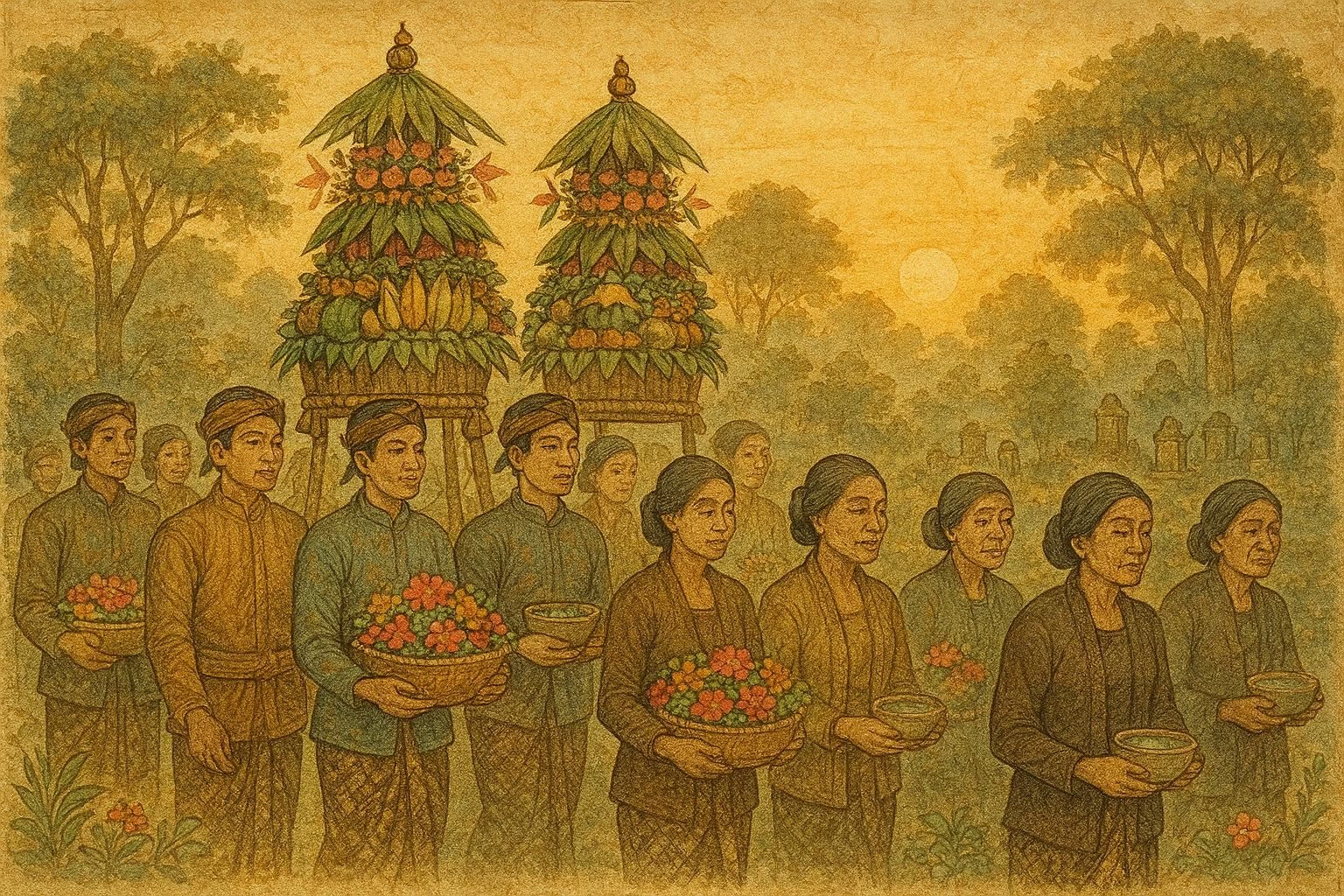
Nyadran Sonoageng is a Javanese ritual deeply rooted in Central Java and Yogyakarta, shaped by the blending of local Javanese spirituality and Islamic cultural practice. The word nyadran likely derives from the Sanskrit sraddha, meaning “acts of remembrance,” reflecting its long pre-Islamic foundation. Over centuries, this ancestral rite adapted within the Islamised Javanese world, becoming a communal tradition that unites spiritual devotion, cultural identity, and social harmony. Today, Nyadran Sonoageng stands as a living example of how Javanese ritual life continuously evolves while preserving its symbolic core.
Description
Nyadran Sonoageng usually occurs ahead of Ramadan, although in some villages it aligns with local calendars or agricultural cycles. At dawn, families gather at ancestral graves, carrying offerings in woven containers known as jolen, each decorated according to local custom. These jolen often contain rice, fruit, flowers, sweet cakes, and symbolic foods that represent gratitude, sustenance, and purity.
The procession begins with rhythmic chanting or Qur’anic recitation, depending on the village. Participants walk together from the village centre to the cemetery, creating a moving line of colour, sound, and shared intention. The arrival at the graves marks a moment of quiet devotion. Families clean the tombs, plant flowers, sprinkle scented water, and offer prayers for forgiveness, protection, and blessings. This act is not only spiritual but emotional, a way of strengthening bonds between the living and the dead.
After the cemetery rites, villagers return home or gather at the community hall for the kenduri, a communal feast in which food from the jolen is shared equally. The kenduri reinforces solidarity; each dish symbolises unity and shared responsibility. In some regions, elders deliver short speeches encouraging mutual care and cultural preservation.
Modern versions of Nyadran Sonoageng sometimes include folk markets, local performances, and children’s competitions. While these additions reflect social change, they remain anchored to the ritual’s underlying values: gratitude, remembrance, harmony, and continuity. The adaptability of Nyadran is one reason it has survived for centuries while remaining meaningful to each new generation.
Mythic Connection
Nyadran Sonoageng reflects the Javanese worldview in which the boundary between seen and unseen worlds is permeable. Although shaped by Islamic teaching, the ritual continues older Javanese cosmology where ancestors, spirits of place, and the natural world must remain in balance. The cemetery becomes a sacred meeting point between realms. Cleaning the graves symbolises restoring cosmic order, while offerings in the jolen echo ancient practices of giving thanks to unseen guardians who ensure prosperity and protection.
The use of flowers and water connects the ritual to the Javanese belief that purity and beauty attract spiritual harmony. The communal procession mirrors the traditional idea that society must move as one body to maintain balance. Even the timing, near the start of Ramadan or before major seasonal changes, aligns the village with a cosmic cycle of renewal.
In this way, Nyadran Sonoageng serves not only as an act of prayer but as a reenactment of the Javanese understanding of interconnectedness. The living honour the dead; the community strengthens its unity; and nature, through flowers, earth, and water, witnesses the ritual exchange. This layered symbolism is why the tradition endures, it expresses the Javanese belief that life, spirit, and heritage form one continuous thread.
Author’s Note
Nyadran Sonoageng represents the heart of Javanese cultural continuity. Its blend of Islamic devotion, ancestral remembrance, and village solidarity reveals how rituals carry history into the present. By walking together, sharing food, and tending to ancestral graves, communities reaffirm the enduring ties between people, place, and spirit. The ritual persists not because it is preserved unchanged, but because each generation reinterprets it while protecting its essence, gratitude, harmony, and collective identity.
Knowledge Check
1. What is the main purpose of Nyadran Sonoageng?
To honour ancestors, strengthen community bonds, and prepare spiritually for seasonal or religious renewal.
2. Why are jolen offerings important?
They symbolise gratitude, purity, and the sharing of blessings within the community.
3. What role does the cemetery play in the ritual?
It serves as a sacred space where the living connect with ancestors and restore spiritual harmony.
4. How does Islam influence Nyadran Sonoageng?
Through Qur’anic recitations, prayers, and its timing near Ramadan, blending with older Javanese customs.
5. Why is the kenduri significant?
It reinforces unity by sharing food as a symbol of communal responsibility and harmony.
6. How has Nyadran adapted in modern times?
By incorporating markets, performances, and social events while preserving its symbolic core.