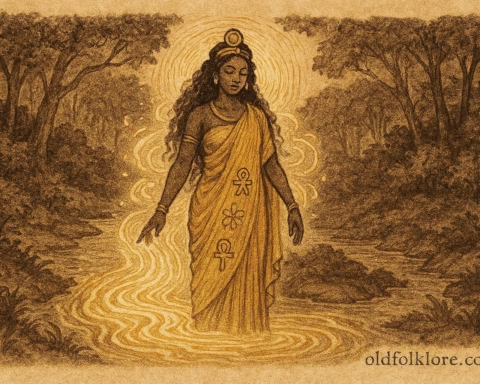
Nzambi Mpungu is the transcendent, supreme creator of the Bakongo people. As the ultimate source of life, he governs the sky, cosmic order, morality, and the cycle of life and death. In Kongo cosmology, he fashioned the first humans and the world itself, yet chose to withdraw to the heavens, leaving the guidance of daily affairs to lesser spirits called bakisi.
Nzambi Mpungu embodies omnipotence and moral authority. While he remains invisible and distant, he is ever-present, observing human conduct and maintaining the balance between the physical and spiritual realms. Worship of Nzambi Mpungu is expressed through ritual offerings, veneration of spirits, and ceremonies that honor life, death, and natural phenomena. His symbolic consort, the earth goddess Nzambici, complements his role, linking fertility and earthly abundance to the cosmic order.
Mythic Story: How Nzambi Mpungu Sent the First Humans to Earth
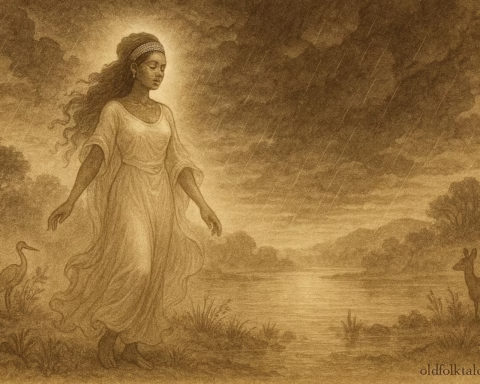
In the beginning, when the universe was an empty expanse of potential, Nzambi Mpungu gazed upon the void and resolved to fill it with life. From the fertile clay of the riverbanks, he shaped the first man and woman, delicate yet strong, their forms imbued with the breath of the divine. As his fingers traced the contours of their bodies, Nzambi whispered the essence of life into them, and their hearts began to beat with the rhythm of the cosmos.
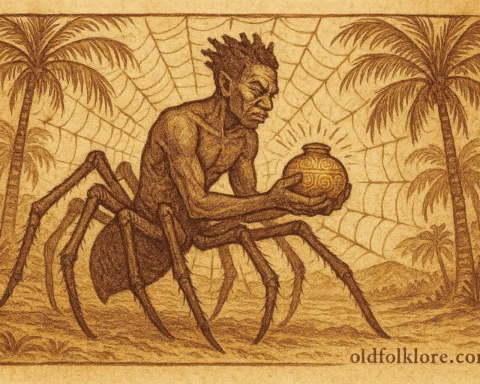
Nzambi placed the first humans upon the earth he had prepared, a land of rich soil, flowing rivers, and verdant forests. At first, they wandered bewildered, unknowing of how to sustain themselves. Nzambi observed their struggle with compassion. Though he could provide all necessities by mere thought, he understood the value of learning and effort. To teach them survival and mastery of the world, he summoned the bakisi, spirits of knowledge and skill.
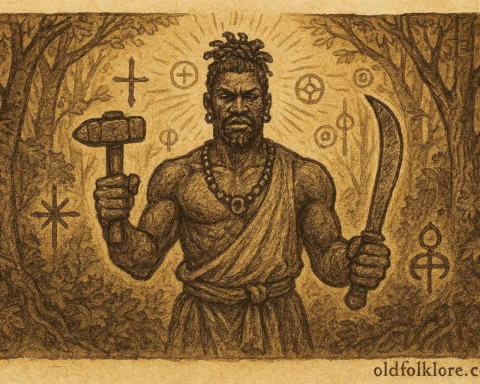
From the heavens, Nzambi instructed these spirits to show humans the secrets of farmin, the tilling of soil, the planting of seed, and the harvest of crops. Other spirits imparted the arts of metalwork and tool-making, enabling humans to forge implements of strength and utility. Healing and medicinal knowledge were taught as well, as Nzambi foresaw the ailments and dangers that life would bring. Through these gifts, humanity learned the harmony between labor, wisdom, and the natural order.
As the humans flourished, Nzambi observed their moral choices. He did not intervene directly, for he wished for humanity to develop a sense of ethical responsibility. The bakisi became intermediaries, guiding humans toward justice, community cohesion, and reverence for the unseen forces that shaped their existence. Nzambi’s omnipresence reminded mortals that their actions mattered, that the cosmic balance depended on both divine will and human diligence.
Eventually, Nzambi withdrew entirely to the heavens, leaving the earth to its inhabitants but remaining ever-watchful. He became invisible, distant yet accessible through ritual, prayer, and offerings. Humans came to understand that while Nzambi did not walk among them as before, his influence permeated all aspects of life, from the rising sun to the flow of rivers, from birth to death. The balance of existence, the moral order, and the cycle of life rested in their hands, tempered by the guidance of the bakisi and the enduring presence of Nzambi Mpungu above.
This withdrawal became a foundational lesson for the Bakongo: divine power requires reverence, moral behavior, and ceremonial acknowledgment. Humans learned that the cosmos, though vast and mysterious, was structured and ordered, and that their choices contributed to the stability of life itself. The story of Nzambi Mpungu continues to inspire awe and respect, reminding all who hear it that creation is both gift and responsibility.
Learn the ancient stories behind deities of light, storm, and shadow from cultures across the world
Author’s Note
The myth of Nzambi Mpungu highlights the interplay between divine authority and human agency. By withdrawing after creation, Nzambi demonstrates that moral and practical order is maintained not merely by divine intervention but by human diligence and respect for the spiritual hierarchy. The tale teaches reverence for life, the importance of skill and knowledge, and the understanding that all existence is part of a broader cosmic balance.
Knowledge Check
Q1: Who is Nzambi Mpungu in Kongo mythology?
A: He is the supreme creator deity, governing the sky, life, cosmic order, and morality.
Q2: How did Nzambi create the first humans?
A: He formed them from clay and breathed life into them, giving them the divine spark.
Q3: Why did Nzambi send spirits (bakisi) to guide humans?
A: To teach farming, metalwork, healing, and moral guidance, enabling humans to thrive independently.
Q4: What role does Nzambici play in some traditions?
A: She is the earth goddess and consort of Nzambi Mpungu, linking fertility and earthly abundance to cosmic order.
Q5: What happened after Nzambi withdrew to the heavens?
A: Humans were left to act responsibly, with bakisi as intermediaries and rituals needed to connect with him.
Q6: What moral lesson does the myth convey?
A: Respect for life, ethical conduct, and reverence for divine and spiritual order are essential for cosmic balance.
Source: Among Congo Cannibals, Kongo
Source Origin: Kongo (Democratic Republic of the Congo, Angola, Congo-Brazzaville)