Among the Dinka of South Sudan, pastoralists of the Nile floodplains whose cosmology interweaves cattle, sky, and ancestral spirits, few beings inspire deeper dread than Biton (also spelled Beeton, Betón), sometimes called the Obsidian Butterfly in poetic or interpretive anthropology. Biton is not a butterfly in the natural sense; rather, this title reflects his symbolic tendencies: dark, cutting, glinting, and death-bearing. He is a primordial being who roams the earth as an omen, a presence, and in some accounts, a monstrous entity that ushers death wherever it moves.
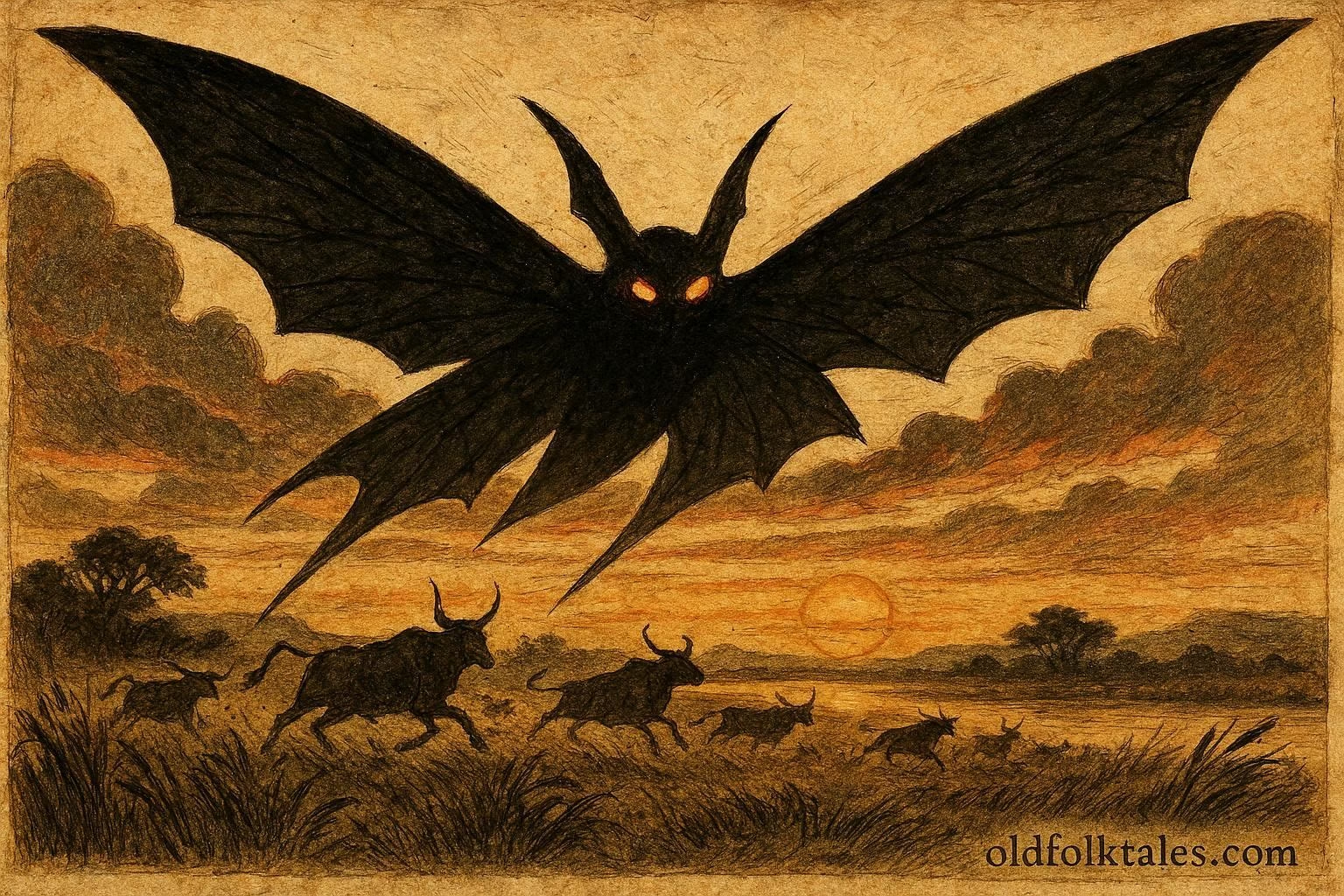
Early scholarly notes and translated Dinka hymns describe a black, winged, or shape-shifting figure that glides between the realms of the living and the dead. In some stories Biton is a massive shadow-beast with razor-thin, obsidian-like wings that shimmer as though carved from volcanic glass. In others, he is a shifting silhouette: now like an enormous insect, now like a cloaked spirit, now like a skeletal creature whose wings scrape the air. The term “butterfly” arises from the way he travels, fluttering, drifting, or appearing suddenly like a dark shadow cast from above.
Biton’s appearance is almost always a sign of mortality. His body is described as impossibly dark, absorbing light instead of reflecting it. Elders say his wings whisper like rustling reeds or dry grass, the sound growing louder as he draws near. His eyes glow faintly, sometimes red, sometimes pale white, and his breath is said to chill the cattle, making them restless and uneasy long before humans detect him.
According to traditional accounts, Biton is not simply a monster but a cosmic agent of death connected to Nhialic, the supreme sky deity of the Dinka. At the beginning of time, when humans and gods still communicated directly, death was not permanent. People grew old, shed their skin like snakes, and renewed their lives. But when humanity disobeyed divine instruction—depending on the version, through mistakes, disrespect, or arrogance, Nhialic withdrew, and death became final.
It is in this shift that Biton emerges: a manifestation of the new law of mortality.
Some narratives claim Biton was once a messenger spirit between realms, shaped from darkness to carry sacred messages. After the cosmic rift, he took on a harsher role: enforcing the finality of death, severing the link between the world of the living and the ancestral place. From that moment, wherever Biton passes, life withers. His wings cut the threads of vitality, symbolically severing individuals from their breath, their cattle, and their lineage.
In another branch of myth, Biton predates even the ancestral split, existing as a primordial creature formed from the night of creation, embodying the inevitability that all life must someday return to shadow. In this version, he resembles the Ethiopic or Nilotic concept of the giant spirit that devours light and travels in the spaces between breath and silence.
Biton’s behavior is unpredictable but purposeful. He wanders the open plains, especially at dusk, when cattle return to their kraals and the sky glows orange. Tales describe him moving like a wave of darkness across the grasslands, casting a chilling silence where birds stop calling and livestock huddle nervously. People who feel Biton’s presence describe an overwhelming sense of heaviness, as if grief has entered before any loss occurs. This sensation is known among some Dinka clans as the “shadowing”, an intuitive understanding that death walks nearby.
Dinka cosmology places great emphasis on cattle, which are living wealth and spiritual companions. Biton’s arrival near a cattle camp is considered a dire omen. Some say he can sap the life from the strongest ox, others that he marks the household where death will strike next. In rare tales, he appears above a hut where a person is close to dying, acting as a herald or psychopomp. His wings “carry” the soul through the divide where ancestors receive the newly departed.
Although terrifying, Biton is not evil in a moral sense. He is the embodiment of an unavoidable cosmic truth. His presence ensures balance, life, death, rebirth, cattle cycles, and the transference of lineage from one generation to the next. Dinka stories emphasize that without death, earthly life would overflow into chaos, and the spiritual order would break.
Some clans consider Biton a necessary force who reminds humans of humility. Others view him with fear, believing that speaking his name at night invites misfortune. Children are warned never to wander away from the cattle camp at dusk, for Biton travels silently then. Women gathering firewood at twilight are exhorted to return before darkness falls. Hunters must respect certain boundaries and sacred groves so as not to encounter him in the liminal spaces between day and night.
In certain ritual songs, Biton is described as “the one who divides breath” and “the shadow that follows the final footstep.” His wings are likened to obsidian blades, sharp enough to sever the cord between body and spirit. Yet even here, he is not a villain but a role-filler, carrying out the decree of Nhialic that mortality shapes the human experience.
Mythologically, Biton is also a reminder that death is not random; it is woven into cosmic order. When cattle die unexpectedly, when a river claims a life, when famine takes root, people may say Biton passed unseen, marking the land with his dark shadow. In poetic laments, the grieving sometimes refer to Biton as a butterfly whose wings darkened their home.
Among certain Dinka storytellers, Biton is said to be visible only to the dying or to great spiritual adepts such as spear-masters. Others maintain that he can be sensed but never seen directly, that his form is too primordial, too ancient.
Ultimately, Biton is not just a creature but a concept personified: the inescapable fact of mortality, the final presence that ushers souls from the plains of life to the ancestral cattle-camps of the spirit world.
Cultural Role & Symbolism
-
Cosmic Symbol: Represents mortality and the divine decree that death is permanent.
-
Natural Symbol: Embodies dusk, shadows, and the quiet moments when life transitions toward night.
-
Moral Symbol: Teaches humility, respect for cosmic boundaries, and awareness of life’s fragility.
-
Social Symbol: Reinforces caution around liminal times (dusk) and sacred spaces.
Explore the mysterious creatures of legend, from guardians of the sacred to bringers of chaos
Author’s Note
The Obsidian Butterfly / Biton is rarely documented in mainstream folklore collections but survives vividly in oral tradition. It should not be interpreted through Western monster lenses; he is a cosmological force, not a villain. As with many Nilotic myths, symbolism is key: Biton is the presence that shapes human understanding of life, death, and cosmic balance.
Knowledge Check
-
Q: What is Biton’s primary role?
A: He is a primordial being associated with death and the severing of life from body. -
Q: Why is he called the “Obsidian Butterfly”?
A: Because his dark, glinting wings resemble obsidian and move like a drifting shadow. -
Q: What natural time of day is connected to Biton?
A: Dusk, when transitions between realms symbolically occur. -
Q: Is Biton considered morally evil?
A: No, he represents cosmic order rather than malice. -
Q: How does Biton affect cattle?
A: His presence can make them fearful or signify impending death. -
Q: Who might see Biton directly?
A: The dying or highly spiritual individuals like spear-masters.
Source: Dinka oral tradition (South Sudan; Nilotic narratives)
Origin: Dinka (Jieng) people of South Sudan