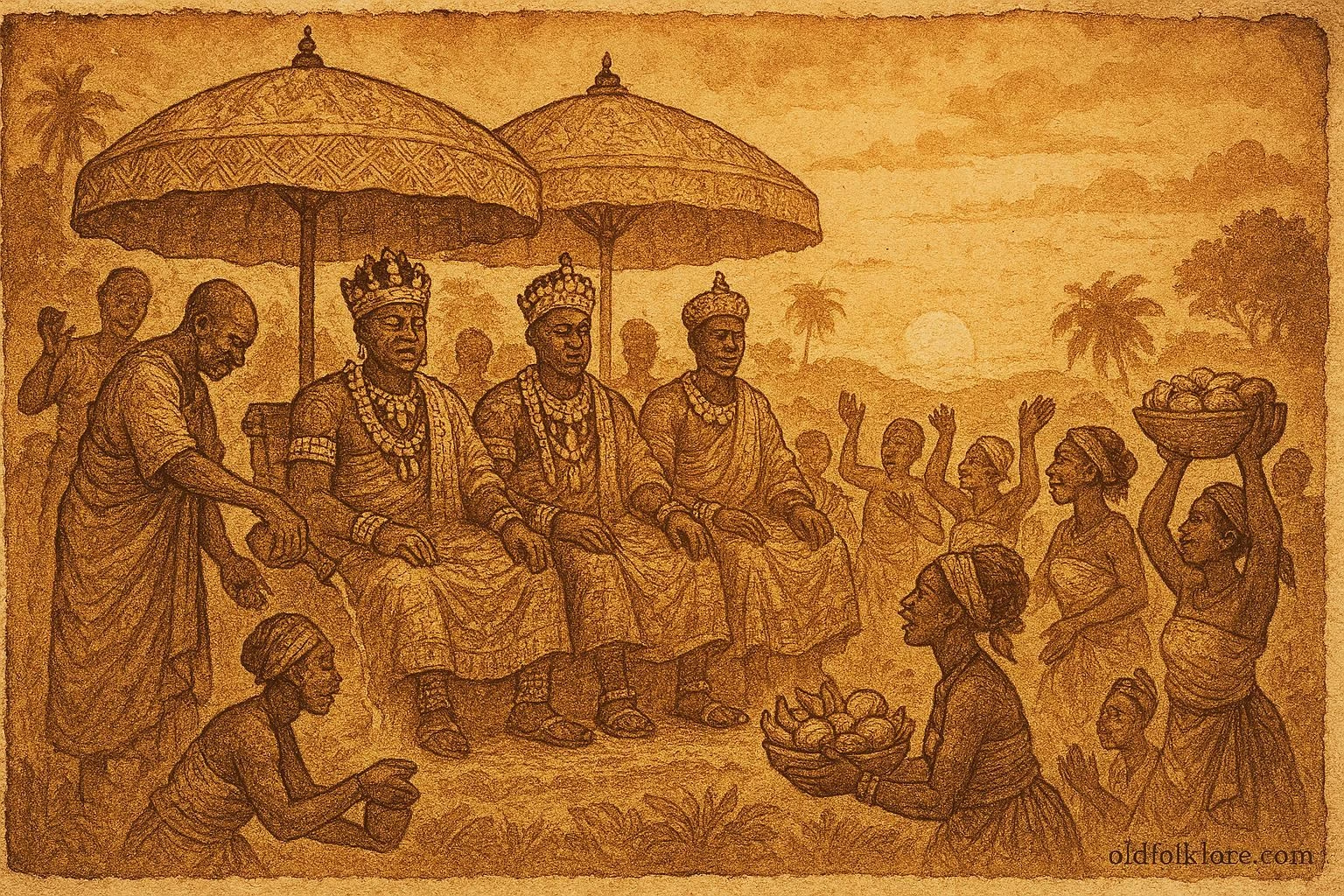
Among the Akan peoples of Ghana, Odwira stands as one of the most revered and spiritually rich ancient rituals, a celebration of purification, thanksgiving, and the renewal of sacred covenants between humanity and the divine. The word Odwira, meaning “purification” or “cleansing,” encapsulates the festival’s deep moral and cosmic purpose: to cleanse the community of spiritual and social impurities, express gratitude for the year’s harvest, and restore harmony between the living and the ancestral world.
Observed annually, particularly in Akuapem-Akropong and neighbouring towns such as Aburi, Larteh, and Mamfe, Odwira is far more than a festive event. It is a moral and cosmic recalibration of the Akan world. The festival unfolds after the harvest season, when the barns are full and the rains have ceased, a time chosen for reflection, renewal, and reaffirmation of collective bonds.
At the heart of the Odwira ritual lies the purification of sacred stools, the symbolic seats of ancestral spirits and chiefly authority. These stools are believed to hold the life-force (sunsum) of the ancestors and serve as vessels of lineage memory. Before purification, the elders and priests prepare offerings, libations of palm wine, mashed yam, and the first fruits of the harvest. Through rhythmic prayers and drumming, the living invoke the spirits, calling upon them to accept the offerings and cleanse the town of any impurity or misfortune carried over from the past year.
Mythic Connection
The Odwira festival embodies the Akan worldview that life is cyclical and sustained through continuous reciprocity between the seen and unseen realms. The gods (abosom) and the ancestors (nsamanfo) are believed to guide the destiny of the living, protecting them in exchange for respect, remembrance, and ritual observance. Failure to perform purification or thanksgiving would risk spiritual imbalance, inviting drought, disease, or social disorder.
In mythic terms, Odwira echoes the Akan creation belief that the world was once united with the divine until human disobedience brought separation. The festival’s ritual cleansing symbolically bridges this divide each year, restoring contact between heaven and earth. The pouring of libations recalls the original cosmic offering that sustained harmony among all beings.
The stool purification, a central rite of Odwira, is not merely political ceremony, it is myth enacted. Each stool represents a continuum of spirit, a reminder that every chief and elder is the living embodiment of the ancestors. By washing and anointing these stools with special herbs and food, the Akan reaffirm their sacred lineage and the eternal cycle of life, death, and rebirth.
Equally significant is the ritual of public remembrance. The Akan recall heroic ancestors and events, such as ancient battles or the founding of towns, integrating mythic history into civic identity. These narratives are recited not only as memory but as moral instruction: to live with integrity, courage, and reverence for communal harmony, virtues upheld by the gods themselves.
The entire community participates, drummers, dancers, chiefs, women bearing offerings, and children learning sacred songs. Every gesture reinforces the Akan understanding of the universe as an ordered family of beings, where humans, spirits, and gods coexist through the rhythm of offering and renewal.
Cultural and Spiritual Significance
Spiritually, Odwira is a collective act of cleansing both body and soul. Before the ceremonies, individuals are encouraged to reconcile quarrels, repay debts, and forgive wrongs. This moral preparation is seen as vital, for impurity in the heart is as harmful as impurity in the town. Thus, Odwira serves as a ritual of ethical purification as much as a religious one.
Socially, the festival reinforces Akan political order and unity. Chiefs and elders lead the ceremonies, reaffirming their legitimacy through sacred duty rather than mere authority. In the great durbar (public gathering), the paramount chief appears adorned in ceremonial gold regalia, symbols of continuity and divine approval. Offerings to the gods and ancestors are made not only for personal blessings but for the peace and prosperity of the entire land.
In modern times, Odwira continues to bridge the old and new. Though Christian and modern influences have transformed certain practices, its essence, gratitude, renewal, and unity, remains unchanged. Today, it is both a religious and cultural celebration, drawing Ghanaians from the diaspora back home to honour their roots and ancestors.
Author’s Note
The Odwira festival of the Akan people reflects a profound philosophy of balance, between the human and the divine, the past and the present, the individual and the community. Through the washing of stools, pouring of libations, and offering of harvest fruits, the Akan reaffirm that life itself is sacred continuity. In an age of forgetfulness, Odwira remains a powerful reminder that purification is not only ritual but renewal of spirit and society.
Knowledge Check
1. What is the main purpose of the Odwira festival?
The Odwira festival serves to purify the community, renew ancestral covenants, and give thanks for the harvest.
2. Why are stools important in the Odwira ceremony?
They represent ancestral spirits and authority; cleansing them renews the bond between the living and their forebears.
3. What does the pouring of libation symbolize?
It expresses communication and gratitude to the gods and ancestors, invoking their blessings and forgiveness.
4. How does Odwira reflect Akan cosmology?
It enacts the belief that harmony between the human, spiritual, and natural realms must be maintained through ritual renewal.
5. How has Odwira adapted in modern Ghanaian society?
While retaining its core rituals, Odwira now includes cultural displays, civic events, and diaspora reunions alongside its sacred rites.
6. What moral lesson does Odwira teach?
That purity, gratitude, and respect for ancestors sustain both spiritual and social order within a community.