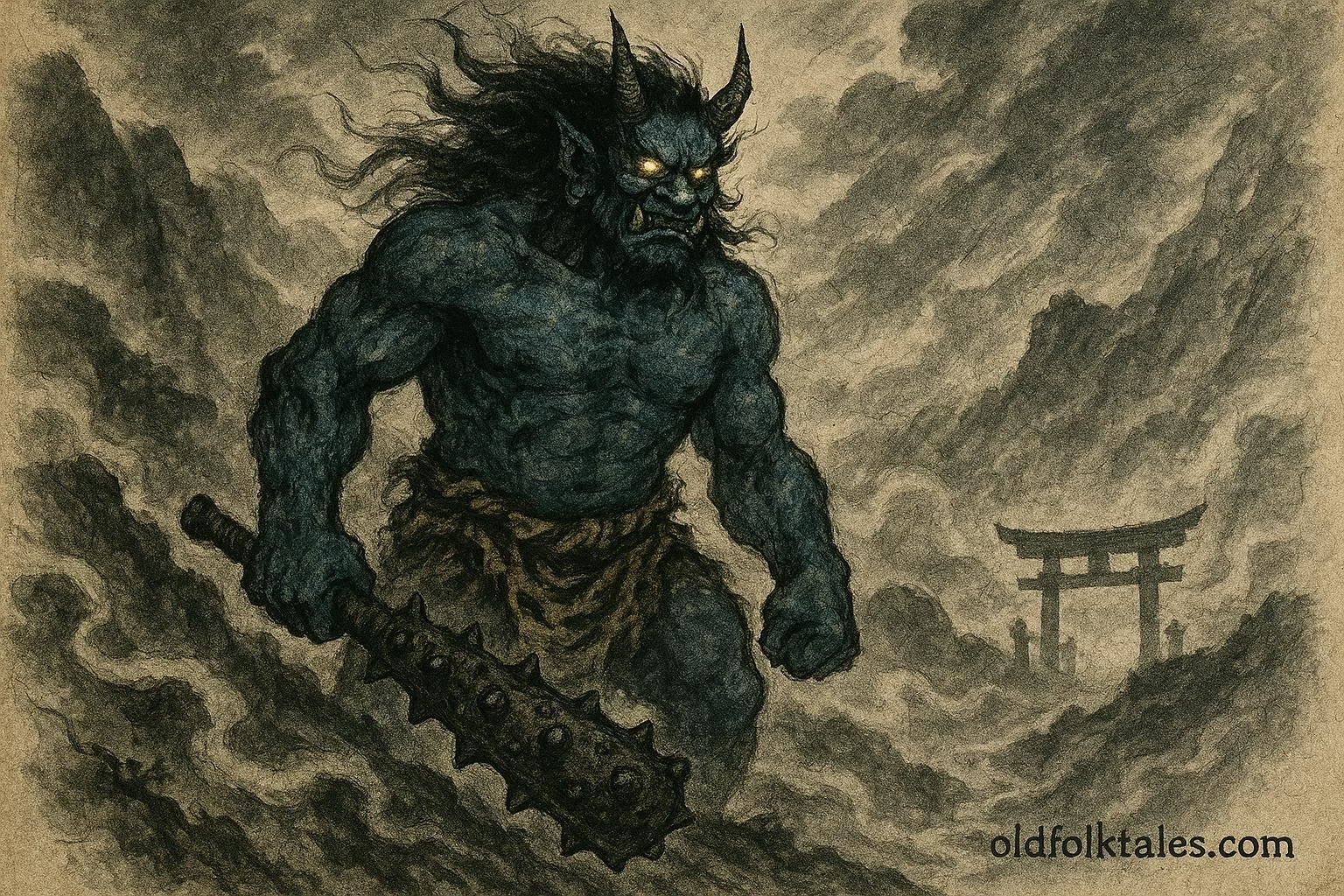
Few figures in Japanese folklore are as iconic, or as adaptable, as the Oni (鬼). Instantly recognizable by their fearsome forms, oni appear as hulking giants with brightly colored skin, usually red, blue, or sometimes black, with wild hair, prominent fangs, and one or two sharp horns curling from the top of their heads. They often carry iron clubs (kanabō), emblems of brute strength and violent justice. A common folkloric description summarizes them in twenty-five words: “Oni … horned demons … red or blue skin … iron clubs … punish evildoers.”
Yet the reality of oni is far more complex than a simple image of monstrous violence. The idea of the oni sits at the crossroads of indigenous Japanese spirituality, Buddhist cosmology, imported Chinese demonology, moral education narratives, and local regional folklore. As a result, the oni has never been a single creature, but rather an entire category of beings, ranging from flesh-eating giants of mountain lore, to demonic tormentors in Buddhist hells, to tragic or even redeemable spirits whose monstrous appearance hides a story of suffering.
Discover the gods, goddesses, and divine spirits who ruled the heavens and shaped human fate
Mythic Origins and Historical Development
The earliest roots of the oni lie in ancient Japanese conceptions of invisible malevolent forces. The Old Japanese reading of 鬼 (oni or ki) once meant “hidden spirit,” a being unseen rather than overtly monstrous. Over time, especially through the influence of continental Buddhist texts and Chinese demonological imagery, the oni transformed from an invisible spirit into a more concrete, physical ogre.
By the Heian period (794–1185), oni were fully developed as horned giants in literature. Works like Konjaku Monogatarishū (今昔物語集) and other setsuwa (anecdotal tales) often depict oni abducting maidens, punishing the wicked, or creeping into the world during nights of spirit visitation. Medieval war tales such as the Heike Monogatari describe warriors battling oni on remote mountains or encountering them as omens of moral decline.
Buddhist texts further expanded the oni’s role, casting them as:
- Guardians or jailors in hell (gaki-dō)
- Embodiments of human sins such as greed, anger, gluttony, and violence
- Agents of karmic punishment
Some stories blend Buddhist and folk motifs: humans overcome by desire or rage transform into oni, illustrating that demonic form can be the end result of moral corruption.
Appearance and Iconography
The classical oni image is intentionally exaggerated, embodying the extremes of destructive potential. Their usual features include:
- Enormous height and muscular build
- One or two horns
- Red or blue skin (symbolizing passion or cold cruelty)
- Huge mouths with sharp fangs
- Tiger-skin loincloths (a motif stemming from esoteric Buddhist iconography)
- Iron clubs used to “break all resistance”
But oni are not restricted to a single appearance. Some regions depict them with multiple eyes, extra limbs, or the heads of animals. In certain folk tales, oni can shapeshift, disguising themselves as monks or travelers before revealing their monstrous form.
Behavior and Encounters
Oni are typically aggressive, chaotic, and dangerous. They kidnap villagers, devour livestock, raid human settlements, and ambush travelers in isolated mountains. These behaviors often symbolize:
- Fear of the wilderness
- Social boundaries (mountains as liminal spaces)
- Consequences of venturing into forbidden areas
But oni can also be moral punishers. In many Buddhist tales, an oni appears only to strike down those whose wickedness has brought karmic retribution upon them. Unlike purely evil Western devils, oni sometimes act as cosmic enforcers, balancing scales that humans cannot.
In a few tales, oni even display emotional complexity. Some repent, converting to Buddhism after encountering a compassionate monk. One famous example is the story of an oni who protects a temple after being shown kindness, suggesting that even demons have the potential for transformation.
Symbolic and Moral Role
The oni’s role in Japanese culture ranges from symbol of terror to vehicle of social education. They embody:
- Human vices: anger, greed, excess, cruelty
- Consequences for wrongdoing
- Fear of outsiders or chaotic influences
- The boundary between civilized society and wild nature
Their presence in children’s stories, such as “Momotarō,” where the hero defeats island-dwelling oni, provides lessons on bravery, justice, and obedience. In Setsubun, a seasonal festival, people throw beans and chant “Oni wa soto!” (“Demons out!”) to cleanse evil influences from the home.
Yet oni are not merely villains. They reflect the Japanese notion that good and evil are not fixed states. Humans can become oni, and oni can sometimes recover their humanity. Thus the oni becomes a mirror of the self: a reminder of the dangers of unrestrained emotion and the possibility of redemption.
Regional Variations
Because oni are a broad category, different regions offer distinct versions:
- Mountain Oni who lure travelers with illusions
- Sea Oni associated with storms
- Village-haunting onirepresenting disease or famine
- Buddhist Oni who torture souls in hell
- Shapeshifting Oni who mimic humans
- Female oni (kijo)such as the tragic figure Ibaraki-dōji
These variations reflect the diverse landscape of Japanese folklore, adapted to local fears, geography, and spiritual beliefs.
Cultural Role
Oni symbolize the dangerous potential within and around humanity. They embody chaos, excess, and moral collapse, but also serve as instruments of karmic balance. Their presence reinforces community boundaries, moral rules, and spiritual awareness.
In festivals, theatre (Noh and Kyōgen), art, and popular culture, oni represent both fear and familiarity, monsters that terrify, teach, and laugh alongside us.
Explore the mysterious creatures of legend, from guardians of the sacred to bringers of chaos
Author’s Note
In crafting this entry, I prioritized the enormous range of oni traditions across Japanese history. Oni are not easily confined to a single definition; instead, they are a rich tapestry of fear, folklore, religious imagination, and moral allegory.
Knowledge Check (Q&As)
- Q: What is the typical appearance of an oni?
A: A horned, red or blue demon giant carrying an iron club. - Q: Which literary period solidified the oni’s iconic form?
A: The Heian period, through setsuwa and early Buddhist tales. - Q: What moral role do oni often play?
A: Punish evildoers and enforce karmic justice. - Q: Can humans become oni?
A: Yes, stories describe humans transformed into oni by extreme vice or emotion. - Q: What festival involves driving away oni with bean-throwing?
A: Setsubun. - Q: What do oni symbolize in Japanese culture?
A: Human vices, chaotic forces, and moral boundaries.
Source: Japanese Buddhist tales, setsuwa literature, Heike Monogatari, folkloric compendia
Origin: Japan (classical to early modern)