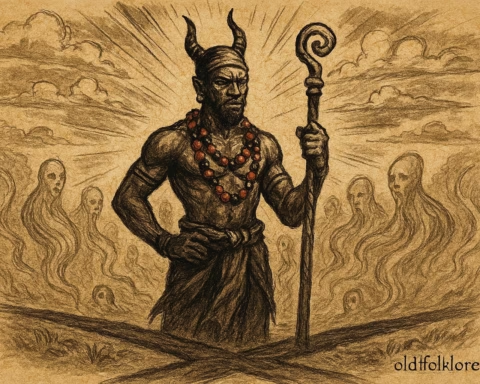
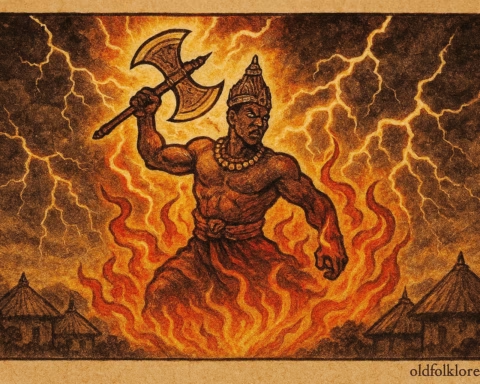
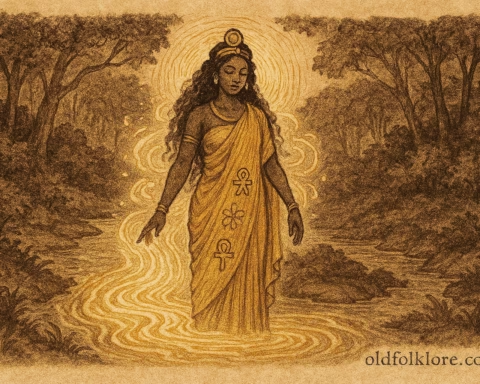
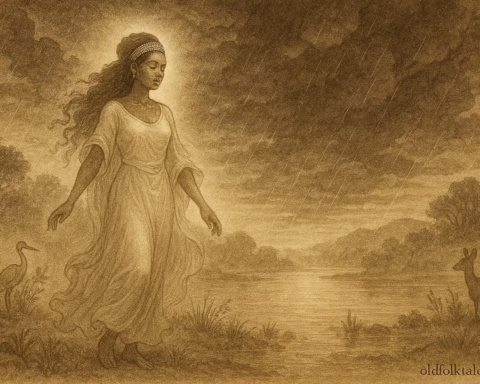
Ọya is the elemental Orisha of wind, lightning, storms, and transformation. She embodies the power of change, both destructive and renewing, and governs life’s transitions, marketplaces, and the ancestral realm. As guardian of cemetery gates, she guides the spirits of the dead (Ẹ̀g̣úngún) and mediates between the living and the afterlife.
Her sacred symbols include the sword or machete (representing lightning), iron implements, and the nine-colored horse (symbolizing her mastery of storms). Colors associated with Ọya are red, purple, and burgundy, reflecting her fiery energy. Ritual offerings of red or multicolored foods, fabrics, and iron objects honor her power, while songs and dances celebrate her dynamic and protective nature.
Ọya occupies a crucial role in the Yoruba pantheon, balancing destruction with renewal, guiding humanity through change, and preserving cosmic and ancestral order. In Afro-diasporic traditions, including Candomblé and Santería, her worship continues, often syncretized with Catholic saints representing storms, change, or death.
Mythic Story
Long ago, before the wind stirred across the land and lightning illuminated the sky, Ọya’s power lay dormant, waiting for the hour of her manifestation. It is said that Olódùmarè, the supreme deity, entrusted her with the forces of storms and transformation, making her the Orisha of winds, tempests, and the threshold between worlds.
As the tale is told, there was a village trapped in stagnation, where fields lay fallow, waters grew stagnant, and spirits lingered, unsettled between life and death. Ọya descended with sudden gusts, lightning flashing from her hands, scattering dried leaves and clearing the air. Her presence was violent yet purifying: she tore down the old, uprooted what was corrupt, and swept in renewal.
But Ọya’s power was not only of destruction. At the village cemetery, she stood at the gates, her sword flashing like lightning, guiding the spirits of ancestors safely to their rest. Through her, the dead found peace, and the living glimpsed the sacred connection between the worlds. In one legend, it is said that without Ọya, the ancestral spirits could not traverse the threshold, leaving communities without guidance or protection.
She is also the guardian of marketplaces, which, like her winds, are ever-changing spaces. Merchants, travelers, and ordinary folk call upon her to cleanse disputes, ensure fair trade, and invite new opportunity. The tale emphasizes her duality: the same storm that can destroy can also refresh the earth, and the same wind that scatters seeds can carry them to fertile soil.
In Afro-diasporic adaptations, Ọya’s fierce power merges with other cultural elements. She becomes the embodiment of hurricanes, sudden change, and transformative energy, reminding devotees that life is a constant interplay of endings and beginnings. Her oríkì (praise names) celebrate her courage, swiftness, and protection: she is “Iyáńsán-án,” the mother of winds; “Iyáńjá,” the spirited whirlwind; and “Oyá,” the formidable warrior.
Her narrative portrays the sacred balance of destruction and protection, chaos and guidance. Storms are not random; they are Ọya’s will, reshaping the world, defending life, and guarding the spirits who have passed on. She teaches that transformation requires courage, that endings make room for new beginnings, and that the power of change is divine.
Through centuries, Yoruba oral tradition has preserved Ọya’s story, performing her praises through songs, dances, and rituals during festivals, market openings, and funerary ceremonies. Even today, her worship spans continents, from Yoruba lands in West Africa to Brazil, Cuba, and the Caribbean, demonstrating the enduring resonance of her transformative power.
Learn the ancient stories behind deities of light, storm, and shadow from cultures across the world
Author’s Note
Ọya’s myth reminds us that life is in constant flux. Destruction and creation are intertwined, and transformation, though sometimes frightening, is necessary for renewal. Her guidance between worlds illustrates the sacred continuity between the living and the ancestors, and her fierce protection teaches that embracing change with courage is a divine principle.
Knowledge Check
Q1: What domains does Ọya govern?
A: Winds, storms, lightning, transformation, death, marketplaces, and ancestral thresholds.
Q2: What symbols are associated with Ọya?
A: Sword or machete, iron objects, nine-colored horse, red/purple fabrics.
Q3: What role does Ọya play at cemeteries?
A: She guides the spirits of the dead and mediates between life and the afterlife.
Q4: Which colors represent Ọya?
A: Red, purple, and burgundy.
Q5: How is Ọya’s duality expressed in her myths?
A: She can destroy through storms but also purify, protect, and bring renewal.
Q6: In diaspora traditions, how is Ọya often represented?
A: Syncretized with Catholic saints and as a force of hurricanes, death, and transformation.
Source: Yoruba Mythology, Nigeria
Source Origin: Yorùbá lands (present-day Nigeria and Benin)