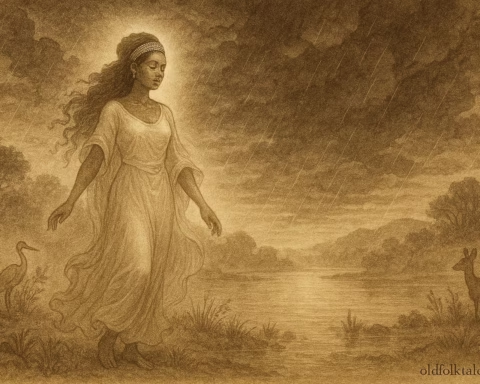
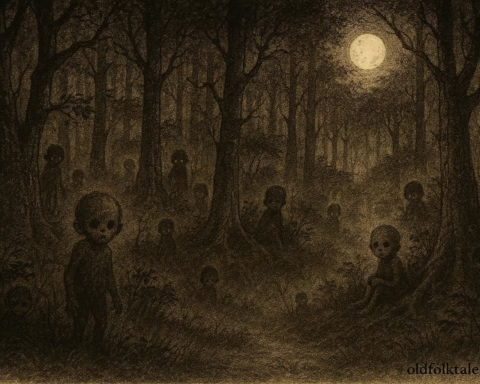
Patupaiarehe are supernatural people of Māori myth who inhabit forests, misty hills, and isolated mountain tops, places deliberately kept separate from ordinary human settlements. These beings are often described as pale-skinned, with hair ranging from white to reddish-brown, glowing or luminescent eyes, and a grace that suggests ethereal or otherworldly origins.
Their physical stature varies depending on iwi accounts: some describe them as slightly taller than ordinary humans, while others note a slender, almost delicate build, with movements silent and gliding, enhancing the sense of mystery surrounding them. Their clothing is said to be finely woven, luminous, and elegant, reflecting both status and supernatural nature.
Patupaiarehe are almost always nocturnal, rarely appearing in daylight. When they emerge, they are often associated with mist, fog, or other liminal phenomena, which not only hide them from humans but also symbolize the threshold between the mundane world and the spiritual realm. Their presence is accompanied by haunting melodies or flute music, which can both delight and ensnare human listeners.
Powers and Behavior
Patupaiarehe are highly skilled in mystical arts and are frequently depicted as teachers and manipulators of spiritual and practical knowledge:
- Music and Song: Their voices are described as haunting, angelic, or eerie. Flutes, small harps, and other instruments are often used to entrance humans, either as a test or as a means of sharing cultural knowledge. Music from patupaiarehe is sometimes considered a form of prophetic or ritual instruction, revealing secrets of ancestral lore, war chants, or weaving patterns.
- Craft and Weaving: Several iwi traditions credit patupaiarehe with teaching weaving, carving, and other crafts, often through secretive nocturnal lessons. The knowledge imparted is both practical and symbolic, emphasizing harmony with nature and respect for sacred tools.
- Illusions and Abductions: Patupaiarehe are said to abduct humans, particularly children or talented adults, leading them into misty valleys or hilltop enclaves. While not all encounters are fatal, those who do return are often changed in subtle ways, such as acquiring enhanced skill, spiritual insight, or, in some stories, mysterious ailments.
- Weather and Mist Manipulation: They are associated with fog, clouds, and cold air, which can obscure paths, hide their movements, or protect their territories from intrusion. This emphasizes their liminality, guarding thresholds between ordinary reality and the spiritual world.
Behavior is highly place-specific. Certain hills, forests, and rivers are sacred or taboo, and patupaiarehe enforce these boundaries. Humans may offer rituals, prayers, or gifts to ensure safe passage or to honor their presence. Ignoring these customs is believed to bring misfortune, illness, or entrapment.
Myths and Beliefs
Patupaiarehe stories perform multiple cultural functions:
- Cultural Transmission: They often teach skills, stories, and songs that form part of the iwi’s ancestral knowledge. Learning from patupaiarehe marks someone as spiritually attuned, capable, or privileged.
- Abduction and Testing: Tales of human abduction convey lessons in humility, obedience, and respect for the unknown. Those who disobey protocol or venture recklessly may be kept by patupaiarehe indefinitely.
- Place-Based Spirituality: Many stories are tied to specific mountains, hills, and forests, giving sacred character to the land. These tales reinforce the Māori principle that land is alive, inhabited by spirits, and requires care and respect.
- Connection to Cosmology: Patupaiarehe mediate between the human and spiritual worlds, highlighting that certain knowledge or power must be earned through ritual and proper conduct.
- Moral Instruction: Their narratives emphasize ethics, caution, and respect, reflecting the wider Māori worldview that the spiritual realm must be treated with care.
- Guardianship: Patupaiarehe act as protectors of liminal zones, warning humans against exploitation of sacred spaces or overstepping social and environmental boundaries.
Some stories describe patupaiarehe marriages with humans, resulting in offspring with enhanced skill or mysterious traits. Others describe humans tricking patupaiarehe to obtain magical objects, secret songs, or knowledge, reflecting complex interactions between human cleverness and spiritual power.
Cultural Role
Patupaiarehe occupy complex roles in Māori society:
- Teachers: Imparting songs, weaving, and sacred lore.
- Moral Authorities: Enforcing proper behavior and caution in sacred spaces.
- Guardians of Nature: Protecting forests, hills, and liminal zones from human abuse.
- Cultural Mediators: Linking humans to ancestral and spiritual knowledge, reinforcing identity and historical continuity.
These roles show how Māori myth blends entertainment, spirituality, ethics, and environmental awareness. Patupaiarehe stories are not merely supernatural; they are vehicles for cultural memory, ecological stewardship, and spiritual instruction.
Variants
Different iwi depict patupaiarehe differently:
- Benevolent Teachers: Some iwi emphasize their role as guides, teachers, and transmitters of knowledge.
- Dangerous Glamour: Others focus on their abduction, seduction, or enchantment, emphasizing risk and moral lessons.
- Regional Place Traditions: Distinct hills, rivers, or caves are said to be home to different patupaiarehe, each with unique characteristics and behaviors.
Despite these differences, all accounts emphasize separation from humans, nocturnal activity, and supernatural skill.
Author’s Note
Patupaiarehe are far more than simple “fairy” analogs. They embody Māori spiritual philosophy, liminality, and cosmology, linking humans with ancestors, sacred places, and secret knowledge. European fairy tropes cannot fully capture their ethno-cultural significance, which blends spiritual authority, environmental guardianship, and moral instruction. Reading early ethnographies alongside iwi oral history reveals a deeply indigenous conceptualization of landscape and agency, where supernatural beings regulate human interaction with sacred and liminal realms.
Knowledge Check
- Where do patupaiarehe primarily dwell?
Misty forests, hills, and mountain tops, isolated from human settlements. - How are they visually described?
Pale skin, white to reddish hair, glowing eyes, delicate and ethereal. - What skills do they teach humans?
Song, flute playing, weaving, ritual craft, and ancestral lore. - What moral lessons do patupaiarehe convey?
Respect sacred spaces, follow ritual etiquette, humility, and ethical behavior. - How do humans interact with them?
Through offerings, rituals, respectful avoidance, or, rarely, apprenticeship in arts. - Are patupaiarehe influenced by European fairies?
No; they are indigenous to Māori culture with unique traits tied to landscape, song, and ritual.
Source: Elsdon Best, Forest Lore of the Maori & Related Essays; Te Ara Encyclopedia of New Zealand
Origin: Māori (Aotearoa/New Zealand); pre-European oral traditions, collected in the 19th–early 20th century