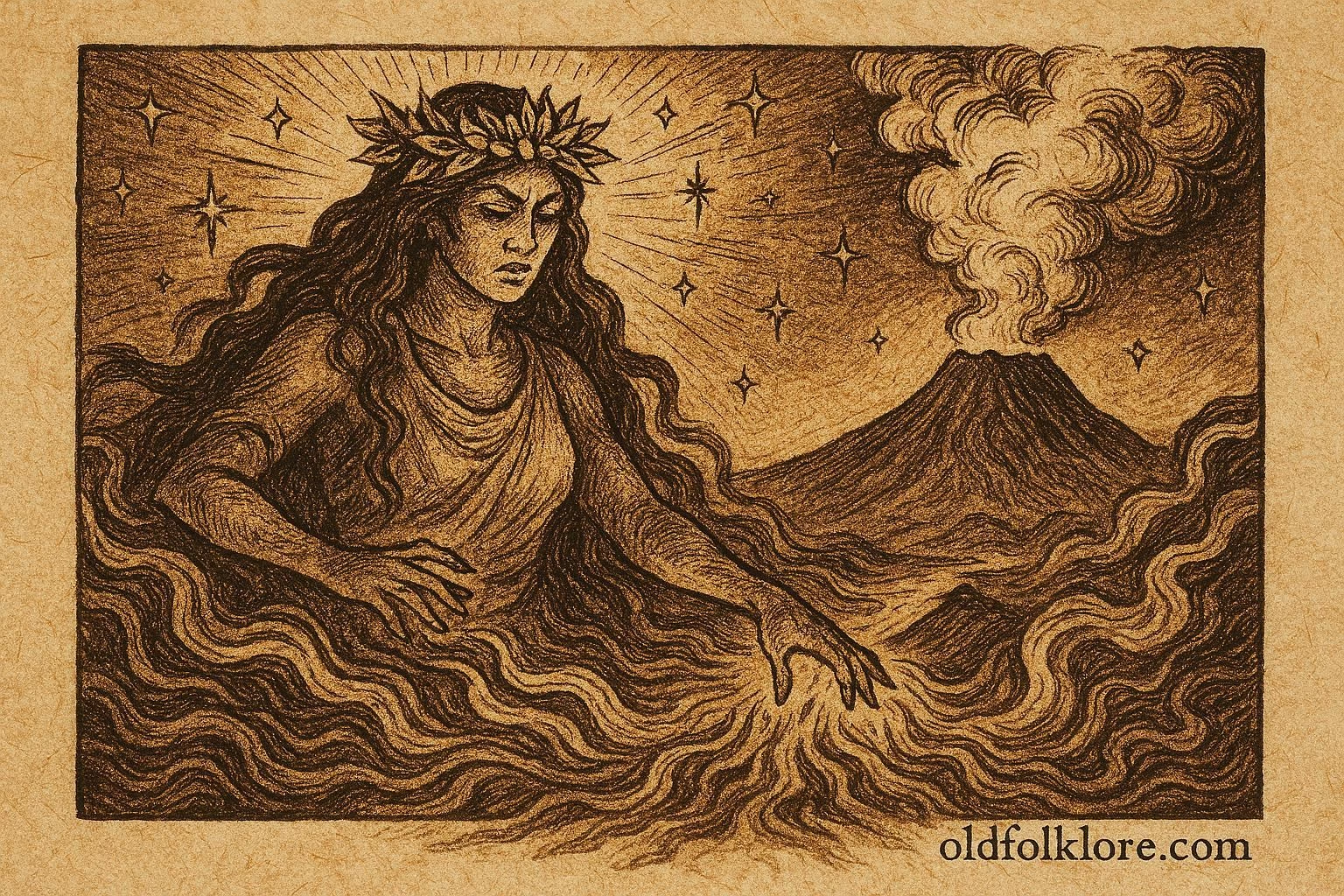
Pele, known as Pelehonuamea (“Pele of the Sacred Earth”), is the Hawaiian goddess of volcanoes, lightning, wind, and fire — the embodiment of creation through destruction. She is both revered and feared: a deity of furious temper and immeasurable creative power. Her molten rivers form new land, even as they consume the old. Through her, the islands themselves breathe, grow, and change.
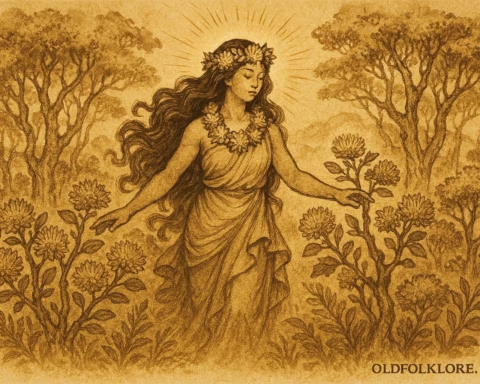
Pele’s home is Halema‘uma‘u Crater at the summit of Kīlauea, one of the world’s most active volcanoes. Her presence is felt in every tremor, every burst of flame, every glowing flow of lava. She is often depicted as a radiant woman with flowing hair of fire, or as an old wanderer cloaked in white, testing the hearts of mortals. Those who honor her are protected; those who boast or take her gifts lightly often find ruin.
In Hawaiian genealogical chants, Pele descends from Haumea, the earth mother, and Kānehoalani, the sun. Her many siblings include Hi‘iaka (goddess of forests and hula) and Nāmakaokaha‘i (goddess of the sea). Their rivalries, fire against water, creation against erosion, are woven into the very geography of the islands.
Among her many legends, one stands above all: the tale of Pele’s journey and her battle with her sister Nāmaka, a myth of exile, creation, and divine fire.
The Mythic Story: Pele’s Journey Across the Islands
In the time before time, when the ocean was endless and the islands still unborn, Pele lived with her family in Kahiki, the ancestral homeland across the sea. Fierce and brilliant, she was gifted with the flame of the earth, a spark of living magma. But Pele’s passion burned too brightly. She quarreled often with her elder sister, Nāmakaokaha‘i, the sea goddess whose cool waves subdued the fiery earth.
When Pele took the husband of Nāmaka as her lover, the sea goddess’s fury rose like a storm. Waves shattered upon cliffs, and lightning struck the mountains. Pele, sensing her sister’s wrath, fled from Kahiki in a great canoe, carrying with her the sacred fire of creation, ka wahine ‘ai honua, the woman who devours the land.
She journeyed eastward across the endless Pacific, guided by the stars and the song of her mother’s spirit. At each island she landed, she thrust her digging stick, Pā‘oa, into the ground, searching for a place her fire could dwell. But wherever she rested, Nāmaka followed, sending floods and waves to quench her flames.
On Kaua‘i, the sea engulfed her pit of fire. On O‘ahu, her lava was cooled by rain and surf. She fled again, leaving trails of cinder and stone, the first volcanic ridges of the islands. At Maui, she found brief refuge on Haleakalā, the “House of the Sun,” where her red rivers once poured into the sea. Yet again, her sister came, rising in a towering wall of foam and thunder. Their battle shook the heavens. Pele was struck down, her body consumed by the waters, but her spirit, her divine essence, was not destroyed.
Her mana, her sacred power, rose anew in Hawai‘i Island, the youngest and largest of the chain. There, within the great crater of Kīlauea, she found her final home. The earth opened to receive her, and from its heart she sent forth fountains of fire, creating new land from molten stone. Nāmaka, defeated, withdrew to rule the waves beyond the shore.
From that time, Pele has dwelled within Halema‘uma‘u, the pit of everlasting flame. The smoke that rises from the volcano is her breath; the glow of lava, her glance. She is worshipped in chant and offering, ‘ōhelo berries cast into the crater, songs of mele pule (sacred prayer) sung to appease her. Even today, locals speak of her as a living presence, wandering the roads as a woman in white, accompanied by a small white dog. Those who offer kindness are blessed; those who mock her face her wrath.
Through Pele’s ceaseless fire, the Hawaiian Islands are renewed. Each eruption is her act of creation, a reminder that destruction and rebirth are one.
Learn the ancient stories behind deities of light, storm, and shadow from cultures across the world
Author’s Note
Pele embodies the primal truth of the Hawaiian cosmos: that life and death, birth and ruin, are inseparable forces. Her flame is both terror and blessing, a power that teaches humility before nature’s cycles. In the chants and stories preserved by generations of kūpuna (elders), Pele’s fire reminds humanity that creation always begins with surrender. To live upon her land is to live upon the edge of her heart, where beauty and danger are the same divine gift.
Knowledge Check
Q1. Title: What domains does Pele govern?
A: Pele rules over volcanoes, lightning, fire, and creative destruction, the forces that form and reshape the Hawaiian Islands.
Q2. Title: Where is Pele’s sacred home?
A: Her home is Halema‘uma‘u Crater at Kīlauea Volcano on Hawai‘i Island.
Q3. Title: Who are Pele’s key siblings?
A: Her sisters include Hi‘iaka, goddess of forests and dance, and Nāmakaokaha‘i, goddess of the sea.
Q4. Title: What myth explains the creation of the islands?
A: Pele’s journey from Kahiki to Hawai‘i, pursued by her sea-goddess sister, symbolizes the birth of each island through volcanic fire.
Q5. Title: What offerings are made to Pele?
A: ‘Ōhelo berries, chants (mele), and respectful words are offered at volcanic sites to honor her spirit.
Q6. Title: What lesson does Pele’s story teach?
A: That creation and destruction are sacred twins, and that passion, when balanced with respect, sustains life.
Source: Hawaiian Mythology, Hawai‘i.
Source Origin: Hawai‘i (Native Hawaiian oral tradition)