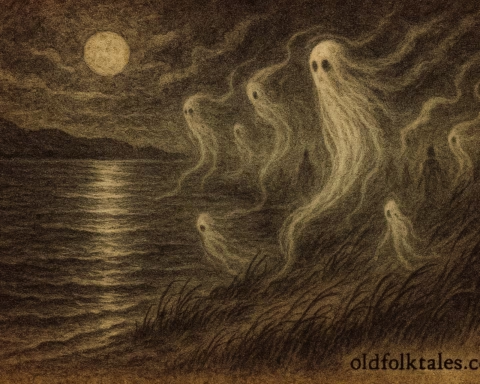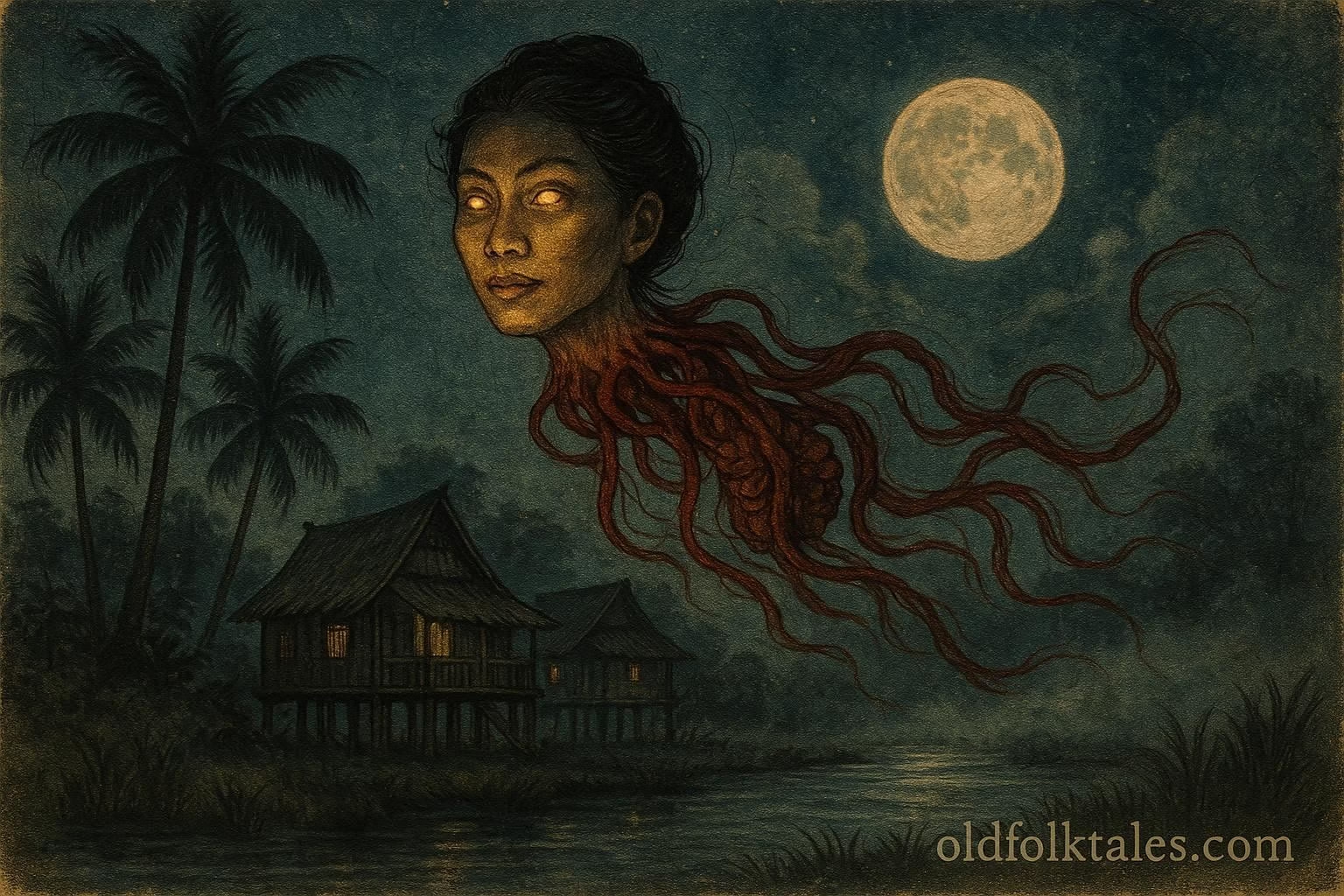
The Penanggalan, also known regionally as the Pontianak or Hantu Penanggal, is one of the most haunting and distinctive spirits in Malay folklore. By day, she is said to appear as a beautiful woman, calm, graceful, and modest, blending seamlessly into village life. But at night, she undergoes a terrifying transformation: her head detaches from her body, and with her entrails trailing glistening behind her like crimson vines, she soars into the dark skies, glowing faintly or emitting an eerie light.
According to Walter W. Skeat’s 1900 ethnography “Malay Magic,” villagers described the Penanggalan as “a woman’s head flying by night, trailing its entrails, seeking the blood of infants and women in childbirth.” This vampiric image was not purely for fright; it served as both myth and moral tale, a symbolic warning about jealousy, impurity, and the dangers of forbidden or neglected ritual.
Follow the paths of legendary warriors, kings, and demigods who defined ancient honor
The creature’s viscera, often depicted as lungs, stomach, and intestines, remain connected to the head, dripping with luminous blood as she drifts through swamps or over the roofs of houses. In some accounts, she must soak her entrails in vinegar each dawn to shrink them back into her human body before sunrise. Should she fail to do so, she will perish or be trapped between worlds, neither spirit nor woman, cursed for eternity.
Her hunger is deeply specific: the Penanggalan preys upon life-giving blood, particularly from mothers during childbirth and from infants. She hovers unseen in the rafters or hissing softly outside a window, her scent, sour, fish-like, a signal of her approach. The moment she drinks the warm blood of her victim, disease and death often follow.
The Pontianak variant (more common in Indonesia) shares this vampiric femininity but appears as a ghostly woman in white, her face obscured by long black hair, attacking men or those who wronged her. Scholars suggest both figures are regional expressions of the same core archetype: a spirit born from female suffering, shame, or childbirth trauma.
Myths and Beliefs
Ethnographers recorded several creation myths explaining how a woman becomes a Penanggalan:
- Midwife’s Curse: A traditional midwife who breaks purity taboos or uses black magic for beauty may be cursed to become one.
- Forbidden Ritual Violation: A woman practicing dark arts who is caught during ritual purification may have her head violently separate from her body.
- Vengeful Spirit: A wronged or murdered woman whose death involves childbirth or deceit may return in this horrific form.
Villagers developed elaborate protective measures: hanging thorns, pandan leaves, and shards of glass around windows or doorways so that the spirit’s dangling entrails would snag and tear. New mothers stayed indoors for forty days, guarded with ritual fire and prayer. Bowls of pineapple vinegar or saltwater placed at entrances were thought to repel her by stinging her exposed flesh.
In older accounts, the Penanggalan was also linked to ritual impurity and bodily liminality, an image of the female body’s power and danger. Her separation of head and body symbolized the separation between spirit and flesh, between purity and taboo.
While modern horror cinema has reimagined her as a shrieking ghost, traditional narratives portray her as a warning against moral imbalance: vanity, secrecy, and misuse of power. Her hunger is spiritual as much as physical, a craving for what she lost in her own transgression.
Cultural Role and Symbolism
The Penanggalan is not merely a monster; she embodies deep cultural reflections on womanhood, blood, and taboo in the Malay worldview. Blood, both life-giving and polluting, is sacred in traditional belief. The act of childbirth, the spilling of blood, and the transformation of the body were surrounded by rituals of purification and protection. The Penanggalan dramatizes what happens when those boundaries collapse.
- Female Agency and Danger: She represents the fear and awe surrounding female spiritual power. In patriarchal village structures, her nocturnal freedom challenges social norms, yet also punishes transgression.
- Moral and Ritual Hygiene: The story reinforces the importance of observing taboos, ritual cleanliness, and the communal safeguarding of mothers and infants.
- Natural Symbolism: Her nightly flight mirrors natural cycles: death, renewal, the moon’s phases, and menstrual symbolism.
- Spiritual Ecology: The Penanggalan inhabits liminal places, swamps, rivers, treetops, that in Malay cosmology are thresholds between the human and the unseen worlds.
Over time, especially in modern Malaysia and Indonesia, the Pontianak figure has evolved into a symbol of repressed trauma and vengeance. In popular films and literature, she exacts justice against male violence or betrayal, transforming from a moral warning into a symbol of empowerment and haunting memory.
Thus, the Penanggalan endures across generations as both nightmare and mythic mirror, reflecting society’s shifting understanding of gender, purity, and power.
Encounter dragons, spirits, and beasts that roamed the myths of every civilization
Author’s Note
The Penanggalan legend reveals how folklore encodes psychological truths and social ethics. Beneath the monstrous imagery lies a community’s fear of bodily vulnerability and a reverence for the mysteries of life and death. In my view, she is not only a figure of horror but a mythic teacher, warning us that power without humility and beauty without morality invite self-destruction.
When we read Skeat’s colonial description alongside modern reinterpretations, we glimpse how folklore evolves, from moral tale to feminist icon, from whispered ghost story to cinematic myth. Every retelling re-stitches her entrails, connecting us again to the human pulse beneath the legend.
Knowledge Check (Q&A)
- What physical form does the Penanggalan take at night?
A disembodied woman’s head with trailing entrails, glowing and flying through the night in search of blood. - According to tradition, who are her main victims?
Mothers during childbirth and newborn infants. - What cultural function did the legend serve in Malay society?
It reinforced ritual purity, protection of mothers, and moral conduct, especially concerning childbirth and female behavior. - How could villagers protect themselves from the Penanggalan?
By hanging thorns, glass, or pandan leaves around windows, and using vinegar or saltwater to repel her. - What does the Penanggalan symbolize on a deeper level?
She represents fears about impurity, bodily transformation, and the misuse of spiritual or feminine power. - What is her modern reinterpretation in Southeast Asian media?
A ghostly avenger or feminist symbol reclaiming her trauma and voice through vengeance and haunting.
Source: W. W. Skeat, Malay Magic (1900, public domain)
Cultural Origin: Malay world — Malaysia, Indonesia, southern Thailand, 19th–20th-century ethnographic documentation