Persephone (Greek: Περσεφόνη, also called Kore, “the Maiden”) is the daughter of Demeter, goddess of the harvest, and Zeus, king of the gods. Her tale stands at the heart of Greek religion and mystery, a story that bridges the living and the dead, spring and winter, joy and mourning.
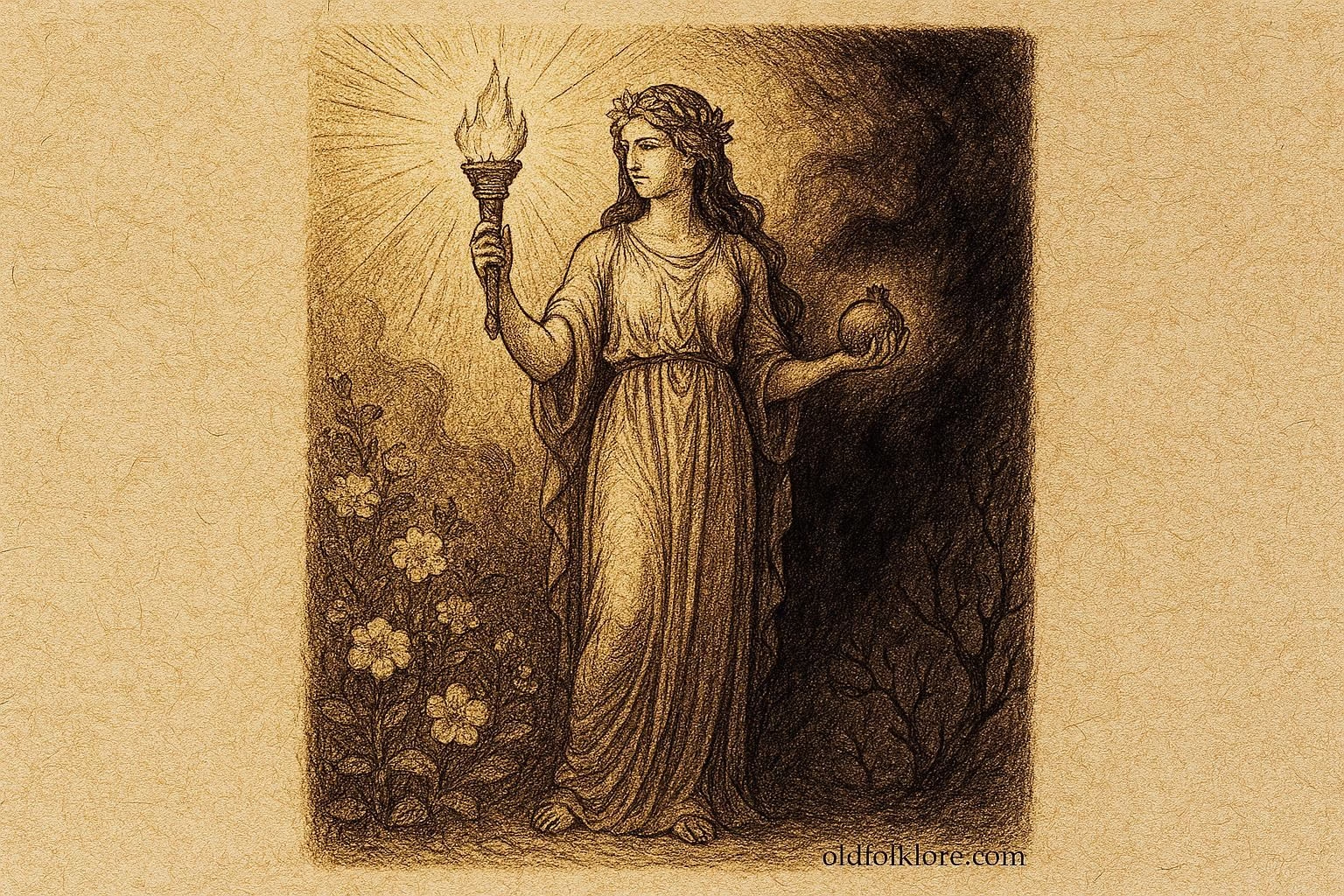
She is the Queen of the Underworld, yet also the goddess of returning life, whose yearly descent and ascent mark the rhythm of the seasons. In art, Persephone is depicted as serene and solemn, often holding a torch or sheaf of grain, symbols of both the grave’s darkness and the seed’s rebirth.
Her abduction and union with Hades, god of the Underworld, form one of the oldest sacred dramas in Greek myth. Through this union, she reigns beside him as an equal, a sovereign of hidden power and balance. Worshippers of the Eleusinian Mysteries, one of Greece’s most secretive and revered cults, honored her as the bringer of hope after death, the promise that life returns in another form.
The Mythic Story: Persephone and the Return of the Seasons
In the days when the earth was young and the gods still walked among mortals, Demeter tended the fertile fields, teaching humankind to sow and reap. Her daughter Persephone was the joy of her life, a radiant maiden whose laughter echoed across meadows bright with narcissus and crocus.
But beneath the ground, in his shadowed kingdom, Hades looked upon the world of light with longing. His eyes fell upon Persephone, and desire grew in his heart, not born of malice, but of the deep, ancient need for companionship in his lonely realm.
One day, as Persephone wandered through a field in bloom, her hands gathering fragrant flowers, the earth shuddered. A cleft opened in the soil, and from its depths thundered a black chariot drawn by immortal steeds. Hades rose from the darkness, his eyes like obsidian fire. Before the maiden could cry out, he seized her and vanished below the earth, the wound in the ground closing above them.
When Demeter heard her daughter’s fading cries, she tore her veil and cast aside her crown of wheat. For nine days she wandered the world, carrying torches, neither eating nor resting, asking every god and mortal for word of her child. None could tell her, until Helios, the all-seeing Sun, spoke gently: “Queen Demeter, it was Hades who has taken her, with the consent of Zeus.”
Betrayed and heartbroken, Demeter turned her grief into wrath. She withdrew her blessings from the earth; fields withered, seeds slept in the dust, and mankind began to starve. The gods, alarmed by this silence of life, sent messengers to plead with her, but Demeter would not relent until her daughter was returned.
Finally, Zeus yielded. He sent Hermes, the divine messenger, down into the shadowed halls to bring Persephone back. Hades received him with dignity but said softly, “If she is to return, let her go freely, yet know she has eaten of my realm.” For Persephone, before Hermes arrived, had tasted six seeds of the pomegranate, a fruit of the Underworld.
By that act, she had bound herself to both worlds, for those who partake of the food of the dead must return to them.
When Demeter embraced her daughter, the earth burst into flower again. But their reunion was shadowed by the fateful truth: Persephone could not remain above forever. A divine accord was made, for part of the year she would dwell with her mother beneath the open sky, and for part, she would return to Hades as queen of the Underworld.
So, it was ordained: when Persephone ascends, the earth awakens, the grain grows tall, and blossoms fill the air with fragrance. When she descends, the world falls silent; leaves die, and the land mourns. Her journey between realms became the eternal heartbeat of nature, the cycle of death and rebirth, of loss and return.
Through her, mortals came to understand that life’s ending is not its destruction, but transformation. The Eleusinian Mysteries taught her story as sacred truth: that the seed buried in darkness will rise again toward the light.
Learn the ancient stories behind deities of light, storm, and shadow from cultures across the world
Author’s Note
Persephone’s myth is more than a tale of abduction or divine power, it is a revelation of duality: the light that needs darkness, the mother who must let go, the life that renews itself through death. Her descent is the soul’s descent, her return, its awakening. Through Persephone, the Greeks found meaning in the cycles of nature and the human spirit, that even in sorrow, there is promise, even in death, renewal.
Knowledge Check
Q1. Who are Persephone’s parents?
A: Persephone is the daughter of Demeter, goddess of harvest, and Zeus, king of the gods.
Q2. Why did Hades take Persephone to the Underworld?
A: He desired her as his queen and took her to share his dark realm.
Q3. What did Persephone eat in the Underworld, and why is it important?
A: She ate six pomegranate seeds, binding her to return each year.
Q4. What happens on earth when Persephone is with Hades?
A: The world falls into winter, Demeter mourns, and the earth grows barren.
Q5. What festival honored Persephone and Demeter’s mystery?
A: The Eleusinian Mysteries, sacred rites of rebirth and afterlife hope.
Q6. What is the main symbolism of Persephone’s myth?
A: The eternal cycle of life, death, and renewal reflected in the seasons and the soul.
Source: Homeric Hymn to Demeter, Ancient Greece.
Source Origin: Greece