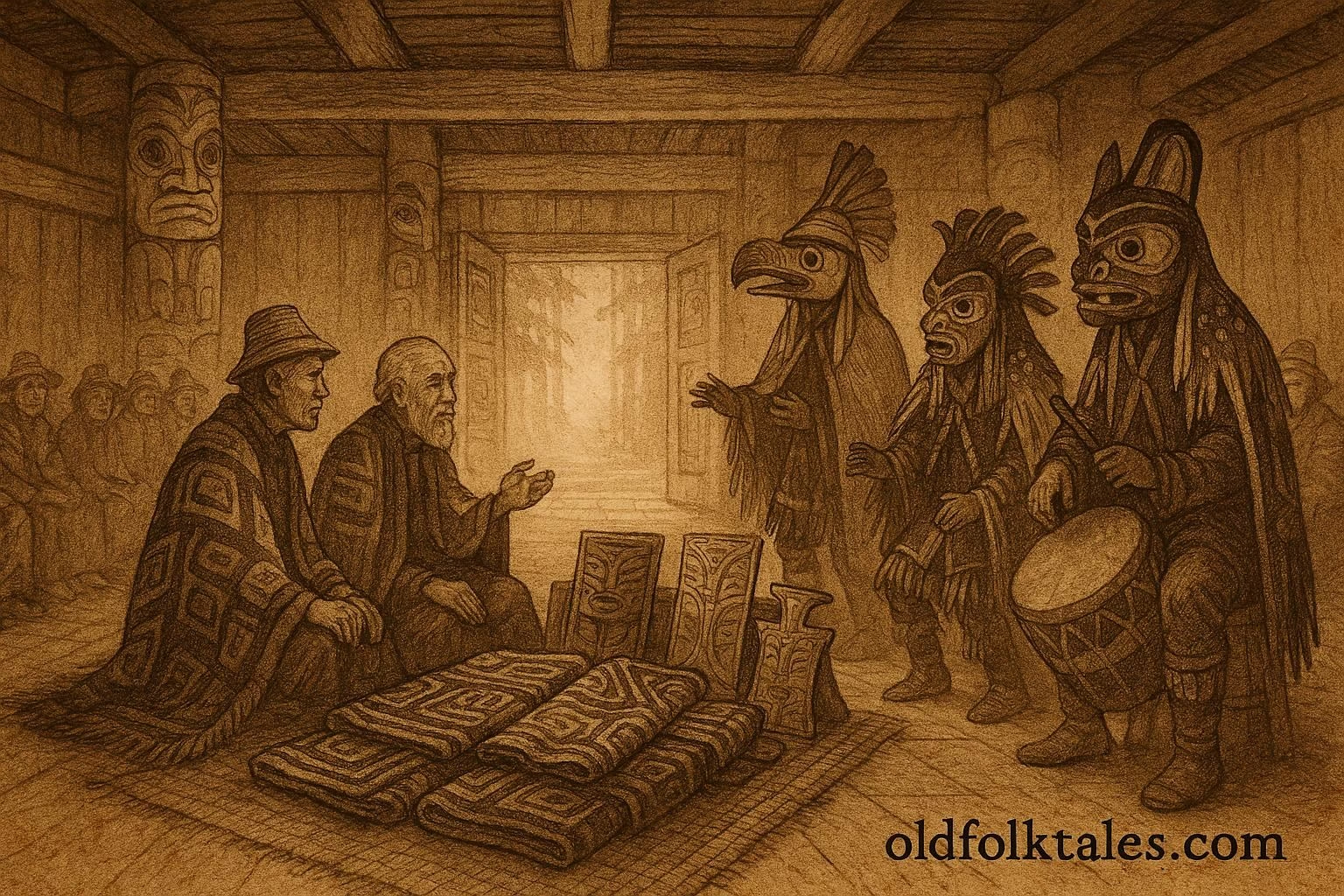
The potlatch is a ceremonial complex that organizes social life across many Northwest Coast nations. At its heart are public feasts, performance of masked dances, the formal transfer or destruction of wealth, and the assertion of genealogy, land rights, and social rank. A potlatch might mark a funeral, a name-bestowal, a marriage, or the affirmation of hereditary title. It convenes families, clans, and visiting guests. Hosts speak aloud their lineage histories. Dancers embody supernatural beings. Gifts, blankets, copper shields, food, carved masks, pass to guests as proof of the host’s authority and generosity.
Potlatch events operate as law in action. They create and record obligations: a host redistributes wealth to confirm status; recipients accept gifts and thereby accept social debts and allegiances. The ritual economy pauses ordinary exchange and replaces it with ceremonial reciprocity. Masked performances and ritual speeches encode legal testimony: who owns what, who inherits which privileges, and which stories authorize those claims.
Practice and performance
Practically, a potlatch unfolds over days. Elders prepare song cycles and speeches. Host families erect ceremonial houses or clear village plazas. Guests arrive with offerings. A master of ceremonies calls witnesses; speakers recite genealogies and origin songs. Masked dancers, sometimes representing clan ancestors, animal spirits, or mythic figures, enter dramatic sequences. In some traditions, the hamatsa dance (among Kwakwaka’wakw) dramatizes a powerful ravenous spirit that must be tamed; that drama enacts social renewal, teaching limits and restoring balance.
Gifts move in marked ways. A host may present an elaborately patterned blanket to a named guest while speaking the reason for the gift and the name invoked. The gift becomes public evidence: the record of the transaction exists in speech and in the redistributed objects. Wealth may be publicly destroyed, broken copper, cut blankets, making the host’s generosity conspicuous by loss. Observers remember the event and the obligations created; they tell the story to future generations.
Mythic meaning and cosmology
Potlatch performance rests on a cosmology where human affairs and the spirit world interweave. Origin songs recount the deeds of culture heroes—transformations, migrations, and the granting of privileges by supernatural beings. Masked dances enact those stories, re-opening mythic time so that ancestral precedents authorize present claims. A naming potlatch does more than honor a person: it inserts that person into a mythic lineage, making their rights legible and enforceable.
The ritual also expresses a moral universe where status obliges stewardship. Rank is not mere privilege; it entails responsibility for guests, dependents, and the land. Generosity proves the moral fitness to hold power. Conversely, stinginess marks a loss of legitimacy. In this way, potlatch dramatizes a polity where social order and ecological stewardship are inseparable: leaders must redistribute surplus, support clan members, and maintain ceremonial knowledge.
Historical disruption and revival
Colonial authorities, missionaries, and settler governments misunderstood potlatch as wasteful or pagan. From the late 19th century into the mid-20th, Canadian and US policies criminalized potlatching and seized ceremonial objects. These bans sought to dismantle Indigenous governance and to make communities conform to settler legal and economic forms. Many potlatch houses were emptied; objects were sold or placed in museums. Families hid songs and masks underground or continued rites in secret.
Despite repression, potlatch survived. Elders preserved knowledge orally; material culture passed covertly by kin networks. From the late 20th century onward, legal reforms and Indigenous cultural revival enabled a resurgence. Communities reclaimed objects, revived protocols, and reasserted potlatch as central to governance, law, and artistic practice. Museums and universities now collaborate in ethically guided repatriation projects. Revival emphasizes the potlatch as living law and a repository of memory, an instrument for adjudicating land, rights, and history in Indigenous terms.
Social and ecological meaning
Ceremonial redistribution discouraged accumulation for its own sake. It reinforced communal resilience in an environment of seasonal abundance and scarcity. Public display of wealth and its disposal held leaders accountable: they had to sustain dependents and support ceremonial life. The potlatch thus maps an ethic where material culture, performance, and speech together steward social life and the living landscape.
Author’s Note
I have written this account to honor potlatch as a living legal and spiritual practice. Potlatch traditions differ across nations; what I describe is an overview grounded in museum, community, and scholarly sources. Much ritual knowledge remains community-restricted; any public description must respect those boundaries. When nations reclaim objects and revive ceremonies, they restore more than artifacts, they restore frameworks of law, memory, and relationship.
Knowledge Check
Q1: What is the primary social function of a potlatch?
A potlatch publicly affirms genealogy, transfers or destroys wealth to create obligations, and confirms social rank and land rights.
Q2: Which activities commonly occur at a potlatch?
Feasting, the recitation of lineage histories, masked dances, gift-giving, and formal speeches/witnessing.
Q3: How does potlatch serve as a form of law?
Speech acts during potlatch establish public records of titles, inheritances, and obligations recognized by the community.
Q4: What was the effect of colonial bans on potlatch?
Bans criminalized ceremonies, dispossessed communities of objects, and attempted to erase Indigenous legal and cultural systems.
Q5: What role do masked dances play in potlatch?
They enact origin stories and spirit-figures, linking present claims to mythic precedent and renewing social order.
Q6: Why did communities destroy wealth publicly at some potlatches?
Public destruction signaled the host’s extraordinary generosity and validated status by making the sacrifice visible and unforgettable.