The Rai stone money system of Yap is one of the world’s most unique ceremonial traditions. Found across the island in sizes that range from palm-sized disks to towering stones taller than a person, Rai function not as everyday currency but as sacred objects of prestige, alliance, and memory. Their origins trace back centuries, when Yapese navigators set sail across open ocean to quarry limestone from distant islands, especially Palau, because their own volcanic homeland possessed no such stone. These journeys were dangerous, long, and spiritually guided. Oral histories tell of chiefs, skilled navigators, and supernatural helpers who calmed storms or illuminated hidden passages on the sea.
The very act of acquiring Rai became a mythic narrative of courage, skill, and divine assistance. Because the stones were quarried far away and transported by canoe over vast distances, their value reflected the difficulty and danger of the voyage. The Yapese recognized each Rai as more than an object; it was a vessel carrying the story of its creation, transport, and ownership. These stories were preserved through generations, giving the stones a life that extended beyond physical form.
Description
Rai stones rarely move. They stand upright beside pathways, under village trees, and near meeting houses, some glowing pale in the sunlight, others darkened by age. Although they remain physically still, their ownership is dynamic. Transfers happen not through carrying the stones away but through ceremony. In Yapese society, value is rooted not in possession but in shared knowledge. A stone may belong to a family miles away, even though it never leaves the village in which it stands. What matters is that everyone knows who owns it.
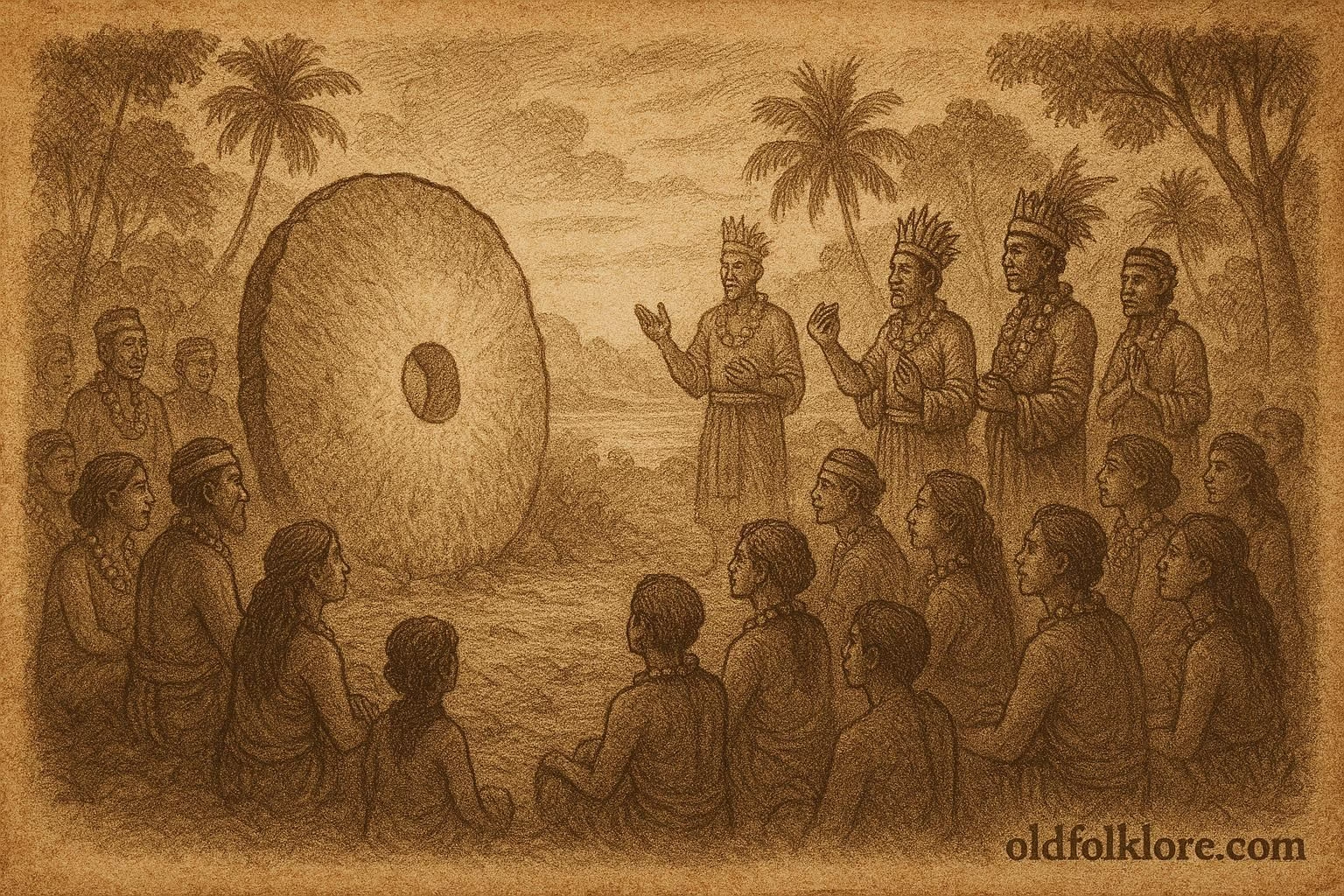
A Rai transaction begins with a gathering of community members. The exchange may commemorate marriage, political alliance, compensation for wrongdoing, or the strengthening of ties between clans. Elders, chiefs, and family heads assemble in a formal space. The atmosphere is solemn. Ritual speeches recount the story of the stone—where it came from, which navigator transported it, which chief previously claimed it, and how it came to rest in its current position.
When a transfer is made, the new ownership is declared publicly. The stone remains in place, sometimes untouched for generations, but its story changes. That shift in story is the true moment of exchange. It is a ritual of memory, responsibility, and honor. Through these ceremonies, the community reinforces social hierarchy, lineage prestige, and the bonds that keep villages interconnected.
Rai are also categorized by size and story. Smaller stones have everyday ceremonial value, while large stones, sometimes weighing several tons, are associated with major events such as high-ranking marriages or the resolution of significant disputes. The larger the stone, the more powerful its narrative. A stone that required immense effort or supernatural intervention carries spiritual weight equal to its physical grandeur.
Women, too, play important roles in the system. While men often recount and negotiate the stones’ histories, women are central to alliance-building occasions such as marriage, where Rai serves as a binding symbol between families. In these moments, the stone is not simply an object of value but a marker of unity.
Even today, Rai remain active. Modern Yapese continue to use them for ceremonial exchanges, though less frequently. Yet their spiritual significance endures, because each stone represents not wealth in a material sense but the memory and identity of an entire people.
Mythic Connection
Yapese cosmology views the ocean as a realm filled with ancestral spirits and guiding forces. Voyaging, therefore, is both a test of skill and a sacred act. The journeys to quarry limestone in Palau are remembered as spiritual epics, where navigators relied on star-paths, intuition, and ancestral support. Some oral histories describe moments when spirits calmed angry seas or revealed the correct direction through subtle signs. Because of this, Rai stones are considered infused with the blessings of those ancestors who safeguarded the journey.
The stones’ immobility also reflects the belief that place and memory must remain intertwined. When a stone stays rooted in one location, it becomes a witness to generations of life, carrying the voices of the past. Transfers do not disrupt this spiritual stability, because the community records the stones’ lineages through ritual speech. In this way, myths, ancestors, and human relationships remain woven together.
Rai ceremonies mirror the Yapese understanding of social balance. A broken alliance disturbs spiritual order. A gift of Rai restores it. Each public declaration renews the relationship between people, land, and the spiritual forces that guard both. Through these exchanges, Yapese society maintains harmony with the natural world and honors the cosmic rhythms that shape life across the islands.
Author’s Note
This article explores the ceremonial and mythic importance of Rai stone money in Yapese culture. It emphasizes how the stones preserve ancestral memory, reinforce social ties, and reflect the deep spiritual connection between people, history, and the sea.
Knowledge Check
1. Why are Rai stones significant?
They represent prestige, alliance, and ancestral memory rather than material wealth.
2. Why were the stones quarried in Palau?
Yap lacks limestone, so navigators traveled to Palau to obtain it.
3. How is ownership transferred?
Through public ceremony and spoken acknowledgment, not physical movement.
4. What gives a stone its value?
The difficulty of its voyage and its historical story.
5. Why are stones left in place?
Immobility preserves communal knowledge and ancestral connection.
6. How do the stones reflect Yapese spirituality?
They embody ancestral guidance and maintain harmony between people and nature.