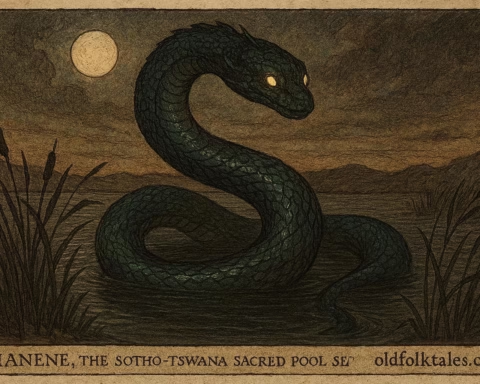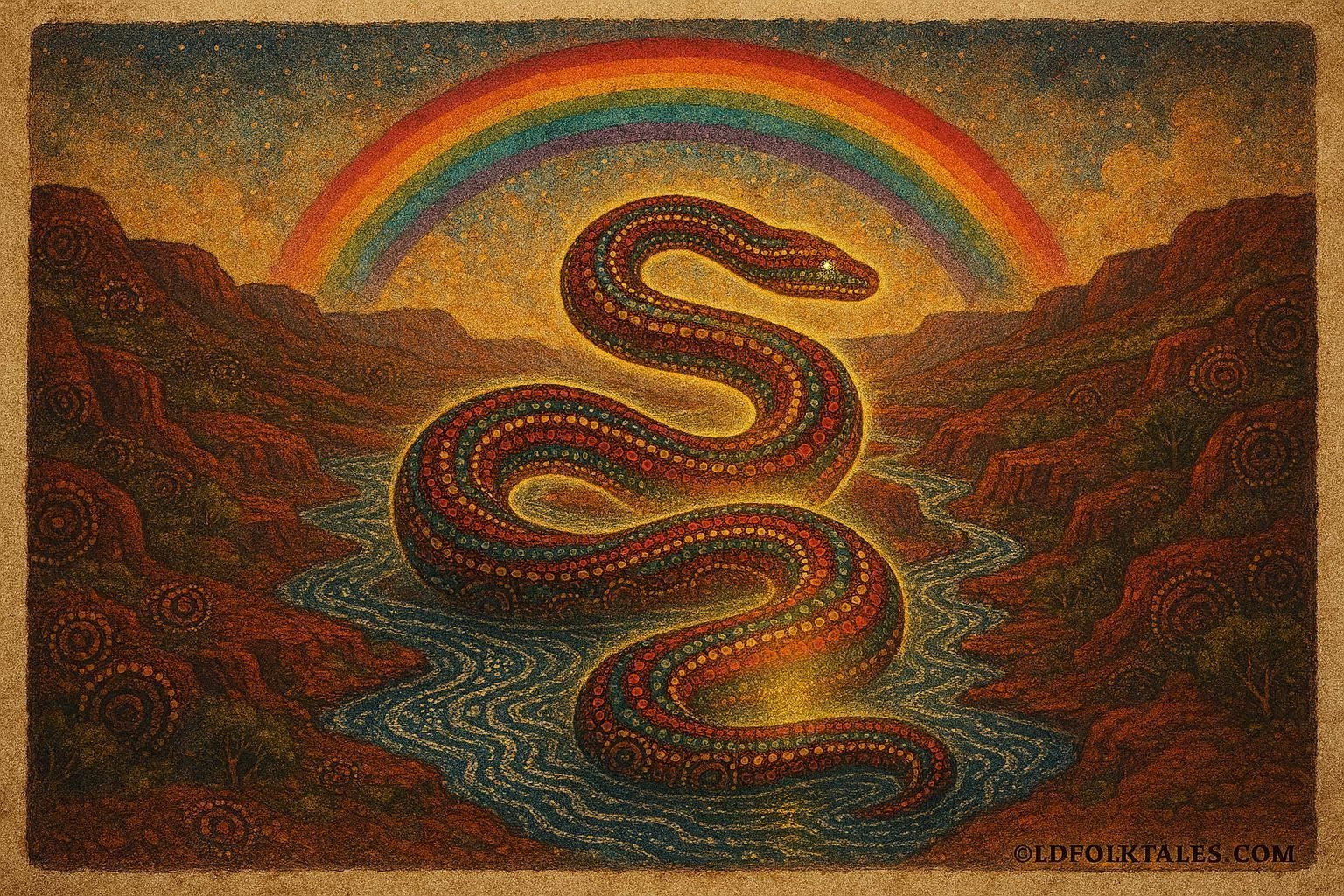
The Rainbow Serpent is one of the most ubiquitous and powerful Dreaming beings in Aboriginal Australia, known for its ability to shape the land, control water, and enforce moral and social laws. Physical depictions vary by region, but it is generally described as a gigantic serpent, often multicolored or rainbow-hued, with a body so long and sinuous that it traverses rivers, gorges, and mountain valleys. In some accounts, it is part-mammalian, part-serpentine, with attributes such as horns, ridges, or scaled patterns representing ancestral power and fertility.
The Rainbow Serpent is not merely a natural force but a spiritual custodian. Its movements are said to form rivers, billabongs, and waterholes, and it is often depicted coiled around sacred sites, guarding the life-giving water that sustains humans, animals, and plants. Some regions describe it as gendered (male or female); in others, it is androgynous, embodying both creative and destructive potential.
While the creature is primarily associated with water and creation, it can also be punishing. Those who disrespect sacred sites, break social laws, or misuse water sources may encounter its fierce, terrifying aspect, reminding humans of their responsibility to maintain balance and respect the land.
Powers and Behavior
The Rainbow Serpent’s abilities are mythically expansive:
- Creation of Landscape: Its coiling and slithering movements carve rivers, valleys, gorges, and billabongs, giving rise to fertile lands and life-sustaining waterways. Local communities interpret these features as both physical and spiritual manifestations of the Serpent’s presence.
- Water Control: As a water spirit, it governs the availability of fresh water, ensuring survival in arid landscapes. Rain, floods, or droughts are seen as manifestations of its will.
- Law Enforcement: The Serpent enforces moral and ceremonial codes, punishing those who violate kinship obligations, sacred-site protocols, or hunting/foraging rules.
- Fertility and Life: In some traditions, the Rainbow Serpent is associated with fertility, pregnancy, and agricultural abundance, linking human reproduction and food security to spiritual stewardship.
- Shapeshifting: Some stories describe it as able to transform into a rainbow, cloud, or water flow, blending into the environment and demonstrating its omnipresence.
Behavior is highly regionalized. In Arnhem Land, Ngalyod is sometimes depicted as a benevolent law-giver, instructing humans and spirits in proper conduct, while in south-west Western Australia, Wagyl can be dangerously protective, striking intruders or those who disrespect its waterholes.
Myths and Beliefs
The Rainbow Serpent features in diverse narratives:
- Creation Myths: Many Aboriginal groups describe it as emerging from the underworld or ancestral waters, creating rivers and shaping the landscape. Its body is often said to form the very topography seen today.
- Moral Allegories: Stories reinforce responsibility, respect, and adherence to law. Transgressions against the land or kin are punished by the Serpent, making it a guardian of social and ecological order.
- Sacred Sites: Certain billabongs, waterholes, or gorges are identified as the Rainbow Serpent’s dwelling, and rituals or ceremonies are performed to honor it and ensure communal survival.
- Cultural Transmission: Songlines and oral narratives about the Rainbow Serpent often encode ecological knowledge, law, and history, serving as mnemonic devices for generations.
- Duality of Power: While it gives life, fertility, and guidance, it can also cause floods or calamities, embodying the balance between creation and destruction inherent in Dreaming cosmology.
Some oral histories include human-patupaiarehe-like interactions: humans may witness it during vision quests, or shamans may call upon it to intervene in water scarcity or conflict resolution.
Cultural Role
The Rainbow Serpent is more than a myth; it is a core component of Aboriginal cosmology and environmental stewardship:
- Creator: Shapes the physical and spiritual world, particularly water systems.
- Custodian: Protects sacred waterholes, sacred mountains, and ancestral lands.
- Lawgiver: Enforces ethical and social codes.
- Teacher: Through songlines, myths, and ceremonial practices, it imparts knowledge about ecology, kinship, and ritual.
- Symbol of Continuity: Its presence links past, present, and future generations, ensuring ecological and social sustainability.
Respecting the Rainbow Serpent reinforces the Aboriginal worldview that humans, animals, land, and spiritual entities are interconnected. Ignoring its laws or sacred sites is a serious offense, as the Serpent may withdraw resources or enact punitive manifestations.
Variants
Regional names and traits vary widely:
- Ngalyod (Arnhem Land): Often benevolent, associated with ceremonial instruction and spiritual law.
- Wagyl (south-west WA): Aggressively protective of waterholes and sacred sites; sometimes depicted with a humped or ridged back.
- Ungud (Kimberley): Associated with creation, fertility, and sometimes dreaming animals.
Names, gender, appearance, and moral emphasis differ, reflecting the diversity of Aboriginal cultures while retaining core attributes: connection to water, creation, and law.
Explore the mysterious creatures of legend, from guardians of the sacred to bringers of chaos
Author’s Note
The Rainbow Serpent exemplifies how Aboriginal myths encode ecological, social, and spiritual knowledge. Its presence in multiple regions, reflected in rock art, ceremonial lore, and oral history, demonstrates a deep cultural continuity predating European contact. Ethnographers like Morphy and regional art centers document these stories responsibly, but site-level knowledge is sacred, so consulting local custodians is essential. Far from a generic “serpent myth,” it embodies creation, law, water stewardship, and human responsibility in Aboriginal cosmology.
Knowledge Check
- What is the Rainbow Serpent primarily associated with?
Water, creation, law enforcement, and landscape formation. - Name three regional variants of the Rainbow Serpent.
Ngalyod (Arnhem Land), Wagyl (south-west WA), Ungud (Kimberley). - What moral or ecological lesson does it convey?
Respect sacred sites, care for water resources, follow ancestral law. - How does it manifest physically in stories?
Giant, rainbow-colored serpent; may have horns, ridges, or other spiritual attributes. - Why are Rainbow Serpent stories site-specific?
Each waterhole, river, or hill is associated with local custodians and Dreaming lore. - Is the Rainbow Serpent a European import?
No; it is indigenous, pre-contact, and deeply embedded in Aboriginal Dreaming.
Source: Aboriginal oral traditions; Morphy & regional ethnographies; Japingka Aboriginal Art Gallery
Origin: Pan-Australian Aboriginal Dreaming; attested across multiple language groups (e.g., Ngalyod in Arnhem Land, Wagyl in south-west WA, Ungud in Kimberley)