
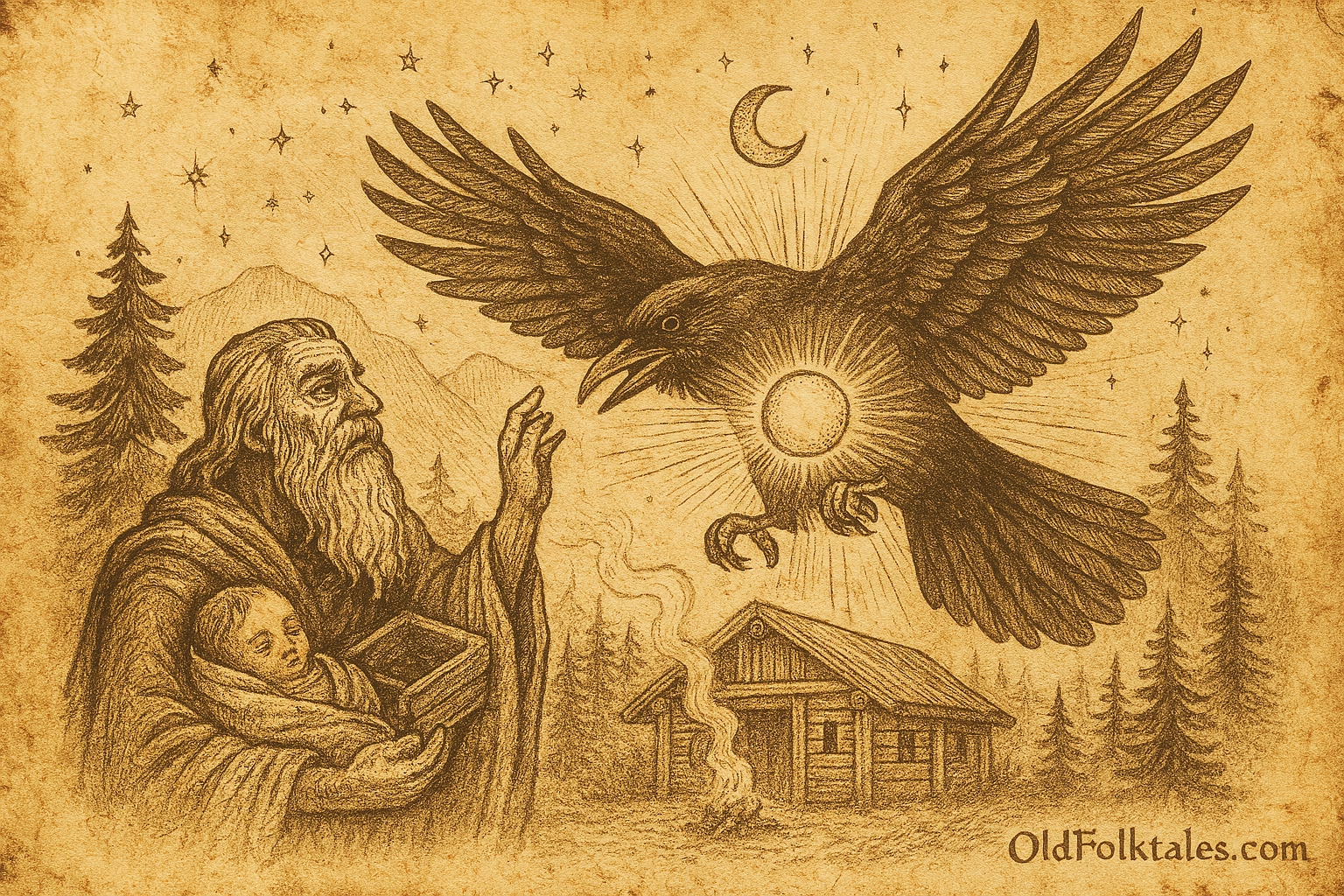
In the time before time, when the world lay wrapped in absolute darkness, the people of the Pacific Northwest coast lived without the gifts we now take for granted. There was no sun to warm the earth, no moon to guide the night travelers, no stars to tell the seasons. The world existed in perpetual shadow, cold and formless, where humans stumbled through their lives feeling their way along the edges of existence.
But high in the vast sky country, in a house that stood beyond the reach of ordinary beings, an old man possessed something precious beyond measure. Locked away in elaborately carved cedar boxes, nested one inside another, lay the light of the universe itself the sun, the moon, and all the stars that should have filled the heavens. The old man guarded these treasures jealously, keeping them hidden even from his own daughter who lived with him in that remote dwelling.
Now, Raven Yéil in the language of the Haida was no ordinary creature. He moved between worlds, wearing many forms, driven by appetites both grand and petty. Sometimes selfish, sometimes generous, always cunning, Raven possessed the kind of intelligence that could reshape reality itself. And Raven had heard whispers of the light locked away in the sky chief’s house.
The darkness bothered Raven. Perhaps it was inconvenient for his endless search for food. Perhaps he pitied the humans below. Perhaps he simply wanted what was hidden. With Raven, motivations were never simple, never pure. But whatever drove him, he decided the light must be freed.
Raven flew to the house of the old man and circled it, watching and thinking. The dwelling was well-guarded, and the old man was no fool. Direct approach would fail. Force would accomplish nothing. But Raven was a master of transformation, and he hatched a plan as clever as it was bold.
He watched the old man’s daughter as she made her daily trip to the stream that flowed near the house. She carried a carved bentwood basket to collect fresh water, moving with the grace of someone who had walked that path a thousand times. Raven waited until she dipped her basket into the clear current, and in that moment, he transformed himself into the smallest of small things a tiny hemlock needle, so light it could float on the surface of the water.
The daughter, seeing nothing amiss, lifted her basket full of fresh water and carried it back to the house. When she drank, she swallowed the needle without knowing, and inside her, Raven worked his transformation once more. He became a child in her womb, growing as human children grow, waiting with the patience that even tricksters must sometimes possess.
When the baby was born, the old man was overjoyed. A grandchild! A boy to carry on his lineage! The infant was beautiful and seemed to bring happiness to that isolated house in the sky country. The old man doted on the child, never suspecting that behind those bright eyes lay the ancient cunning of Raven.
As the child grew, he began to cry for the boxes that hung on the walls of the house. At first, the old man refused, but the child’s crying was persistent, piercing, impossible to ignore. Day and night the wailing continued until, worn down by exhaustion and love, the old man relented. “Very well,” he said, “you may play with one box. But be careful, my grandson.”
The child-Raven took the first box and rolled it around the floor, seemingly content. But he cried again the next day, and the next, until the old man opened the second box, and then the third, each one nested inside the last like secrets within secrets. Finally, the innermost box was revealed, and inside it, the light itself first the stars, brilliant and scattered like chips of ice catching fire.
The child seized the box and, in an instant, transformed back into Raven. His black wings erupted from the small body as he grasped the precious cargo in his talons. The old man shouted in rage and betrayal, reaching for the bird, but Raven was already moving. He flew toward the smoke hole at the top of the house, that opening where the cooking fire’s breath escaped into the sky.
The old man lunged, his fingers brushing feathers, and in the struggle, the first box opened. The stars tumbled out, scattering across the darkness of the sky like seeds thrown by an eager hand. They stuck to the black fabric of night, suddenly shining, suddenly beautiful, mapping patterns that humans below would learn to read and follow.
Raven burst through the smoke hole into the open air, the old man’s curses following him into the void. But Raven still had more treasures clutched in his claws. As he flew over the world, he opened the next box, and the moon rolled out, luminous and silver, taking its place in the heavens to govern the tides and mark the passing of months.
Finally, as Raven flew toward the distant mountains, he opened the last box. The sun blazed forth with such brilliance that Raven himself was caught in its radiance. His feathers, which had been white as snow, were scorched black by the sun’s fierce light and black they have remained ever since, a permanent reminder of his daring theft.
The sun rose into the sky, and for the first time, the world knew day. Light poured over the mountains and forests, the rivers and oceans, the villages of the people who had lived so long in darkness. They emerged from their houses, shading their eyes, marveling at colors they had never seen, at the green of cedar and spruce, the blue of water, the faces of their loved ones made visible at last.
The world was transformed. Order emerged from chaos. The rhythms of day and night, the cycles of the moon, the guidance of the stars all these gifts came from Raven’s trickery and cunning. The people could now hunt, gather, fish, and travel with confidence. They could see the beauty of their land, could mark time and celebrate seasons.
And Raven? He flew on, black as the darkness he had defeated, neither wholly good nor wholly bad, but forever the one who brought light to the world.
The Moral Lesson
This Haida myth teaches that transformation and progress often come through unexpected means and unlikely heroes. Raven, neither purely benevolent nor completely selfish, uses cunning and trickery to accomplish what force could never achieve. The story reminds us that intelligence and adaptability can overcome seemingly impossible obstacles, and that even those who act from mixed motives can bring great benefit to the world. It also illustrates how order and light the elements that make human life possible must sometimes be stolen from the powers that would hoard them, and that the greatest gifts often come at a personal cost.
Knowledge Check
Q1: Who is Raven (Yéil) in Haida and Pacific Northwest mythology? A: Raven is a trickster figure in Haida and Pacific Northwest Indigenous traditions a supernatural being who can transform his shape and move between worlds. He is neither purely good nor evil but uses cunning to bring about cosmic changes. In this story, he steals light from a sky chief and brings the sun, moon, and stars to the world.
Q2: How did Raven steal the light from the old man in the sky? A: Raven transformed himself into a tiny hemlock needle and floated into the daughter’s water basket. When she drank, he was swallowed and became a child in her womb. Born as the old man’s grandson, he cried until the grandfather gave him the boxes containing the light. He then transformed back into Raven and escaped through the smoke hole with the treasures.
Q3: What happened when Raven released the sun, moon, and stars? A: As Raven escaped, he opened the boxes one by one. The stars scattered across the sky and stuck to the darkness, creating patterns. The moon rolled out and took its place to govern tides and months. Finally, the sun blazed forth, bringing daylight to the world for the first time and scorching Raven’s feathers permanently black.
Q4: Why were Raven’s feathers turned black in the Haida legend? A: When Raven opened the final box containing the sun, its fierce brilliance scorched his feathers, which had originally been white. The sun’s light permanently turned them black, which is why ravens are black to this day a lasting reminder of Raven’s daring theft of light.
Q5: What does the darkness-to-light transformation symbolize in this Pacific Northwest story? A: The transformation from darkness to light represents the movement from chaos to order, from a formless world to one where human life can flourish. The light sun, moon, and stars bring structure to existence, enabling people to see, hunt, travel, mark time, and understand their place in the cosmos.
Q6: What cultural significance does the Raven Steals the Light story have for Haida people? A: This origin story is central to Haida and Northwest Coast cultures, explaining fundamental aspects of existence day and night, seasons, celestial navigation. It celebrates the trickster archetype and emphasizes the value of intelligence over force. The story is frequently depicted in traditional art, totem poles, and ceremonial objects throughout the Pacific Northwest.
Source: Adapted from Raven Tales: Traditional Stories of Native Peoples by Peter Goodchild
Cultural Origin: Haida Nation, Haida Gwaii, British Columbia, Canada, and Pacific Northwest Coast Indigenous peoples






