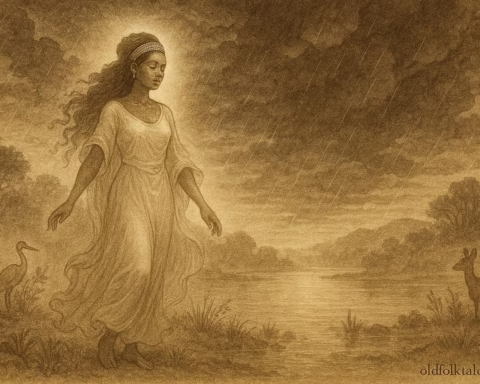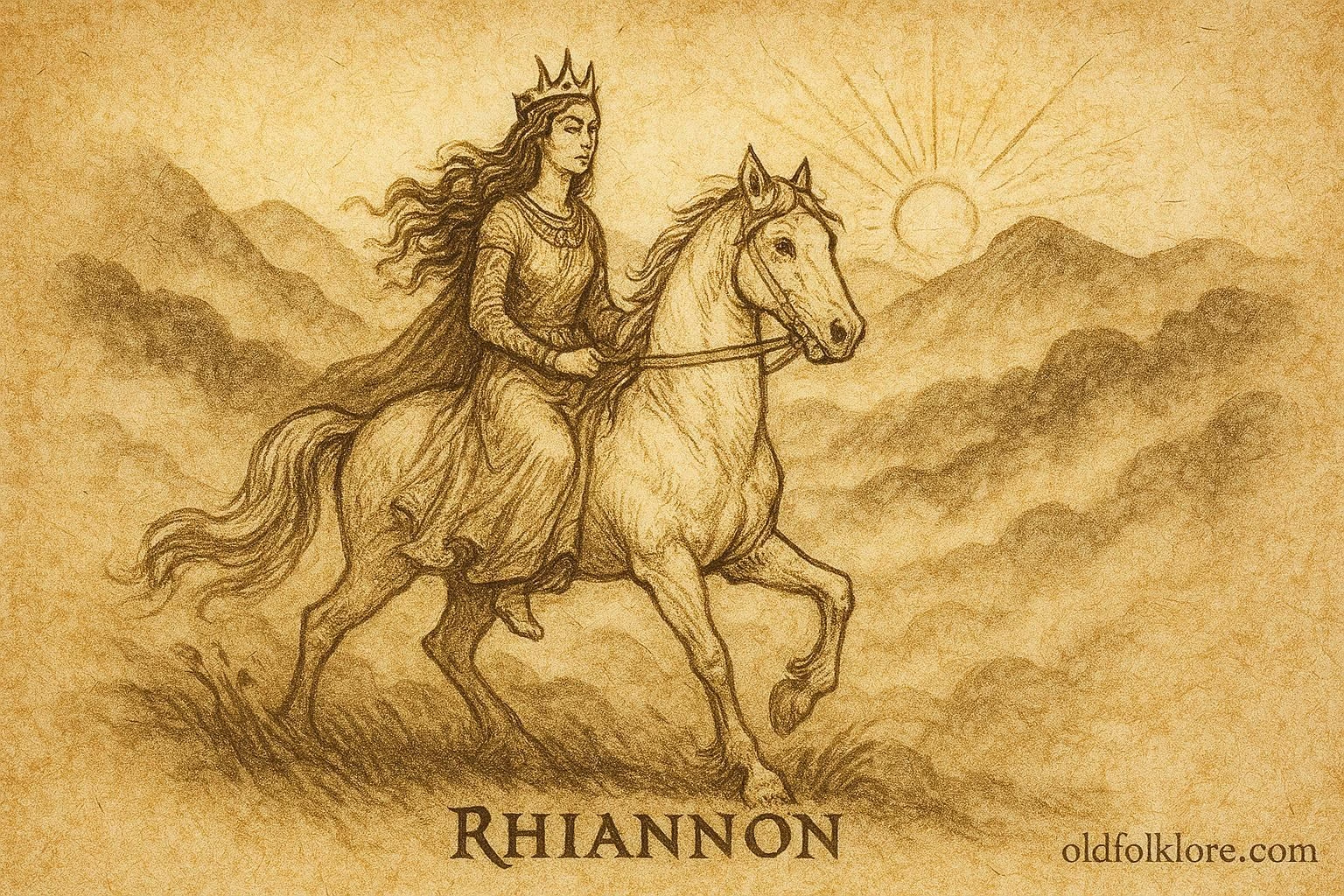
Rhiannon is a luminous figure of Welsh mythology, a queen whose dominion bridges the mortal world and the Otherworld. She embodies sovereignty, intelligence, endurance, and the mystical connection between humans and horses. Horses, sacred in Celtic tradition, serve as her symbol of power, swiftness, and mystical authority.
Rhiannon’s stories in the Mabinogion portray her as both mortal and otherworldly, a noble queen unjustly accused yet unwavering, who demonstrates patience, wisdom, and resilience. She is often associated with magical journeys, appearances that defy ordinary perception, and her unwavering ability to maintain dignity under duress.
Her worship is not clearly documented in surviving ritual records, but her representation as a horse goddess archetype suggests she was revered in pre-Christian Celtic traditions. Horses, in particular, were sacred animals connected to fertility, sovereignty, and liminal transitions, echoing Rhiannon’s role as an intermediary between worlds.
Mythic Story: Rhiannon’s Trials and Triumph
In the fertile lands of Dyfed, a kingdom ruled with grace and order, there appeared a woman of unmatched elegance and mystery. She rode upon a white horse, her arrival silent yet commanding, for no matter how swift or stealthy the riders who pursued her, none could overtake her. This was Rhiannon, queen of enduring patience, her eyes reflecting intelligence and serenity beyond mortal measure.
She chose Pwyll, prince of Dyfed, as her destined consort. Their love was both immediate and profound, yet not without challenge. Rhiannon’s path was bound with trials, for her dignity and wisdom would be tested by envy, suspicion, and misfortune.
When their first child was born, a dark twist of fate struck: the newborn vanished mysteriously. Rhiannon, accused falsely by servants who feared her Otherworldly power, endured humiliation and punishment. She was condemned to sit beside the castle gate, feeding travelers from her own hands, a symbol of both penance and grace, her every act witnessed yet her innocence unseen. Through these trials, her composure never wavered.
Meanwhile, the child had been hidden by supernatural forces and eventually returned to Rhiannon’s care, fulfilling the prophetic recognition of her role as a sovereign mother. This reunion underscored a deeper truth: that endurance, patience, and faith in the righteous path could overcome injustice, even when appearances deceived all observers.
Rhiannon’s relationship with horses was no mere adornment; it was a sacred emblem of her Otherworldly authority. Her white horse, which no ordinary rider could mount or control, mirrored her mastery of liminal space, the border between the seen and unseen, life and death, justice and misunderstanding. It symbolized her ability to traverse worlds with poise and sovereignty, an archetype of feminine power in Celtic thought.
In later tales, Rhiannon demonstrates her intelligence and cunning. She negotiates alliances, protects her lineage, and guides her family through challenges with a blend of foresight and quiet strength. Her magical appearances often serve as reminders that the world of humans is intertwined with forces beyond comprehension. A rider glimpsing her in the mist might see a queen of unmatched grace, while others may witness only the enigmatic shimmer of a horse gliding across the dawn.
Through the narratives, Rhiannon exemplifies the archetypal sovereign: patient, enduring, and wise, able to maintain moral authority even when external forces threaten her position. She represents the enduring bond between humans and the natural and supernatural worlds, where intelligence, patience, and ethical integrity ensure survival and prosperity.
Her tales also emphasize the themes of restoration and justice. Wronged, she does not retaliate with cruelty but preserves her dignity and allows truth and providence to prevail. Her Otherworldly qualities remind us that some forces, justice, wisdom, and divine authority, operate beyond ordinary perception, visible only to those attuned to virtue and patience.
By linking her narrative to horses, Celtic storytellers highlight Rhiannon’s transcendence: her sovereignty is dynamic, fluid, and intertwined with nature and the mystical. Her enduring patience, intelligence, and magical grace continue to inspire those who seek guidance through trials, reminding all that true power manifests not only in dominion but in resilience, patience, and moral clarity.
Learn the ancient stories behind deities of light, storm, and shadow from cultures across the world
Author’s Note
Rhiannon teaches that true sovereignty extends beyond authority, it encompasses patience, wisdom, and grace under trial. Her story reminds us that appearances can deceive, but endurance and integrity lead to restoration and justice. Through her trials, the Celtic imagination celebrates moral fortitude, the mystical bond between humans and animals, and the enduring power of the Otherworld in shaping human experience.
Knowledge Check
Q1: What domains is Rhiannon associated with?
A: Sovereignty, horses, and the Otherworld.
Q2: How does Rhiannon’s horse symbolize her power?
A: It represents mastery over liminal spaces, freedom, and Otherworldly authority.
Q3: What trial did Rhiannon face after childbirth?
A: Her child vanished, and she was falsely accused and punished.
Q4: How did Rhiannon respond to her false accusations?
A: She endured with patience and dignity, maintaining her moral authority.
Q5: Which text records Rhiannon’s stories?
A: The Mabinogion, a medieval Welsh manuscript collection.
Q6: What moral lesson does Rhiannon’s story convey?
A: True power and sovereignty come from patience, wisdom, resilience, and integrity.
Source: The Mabinogion, Wales.
Source Origin: Welsh / Celtic (Medieval Wales, 14th-century manuscripts)