
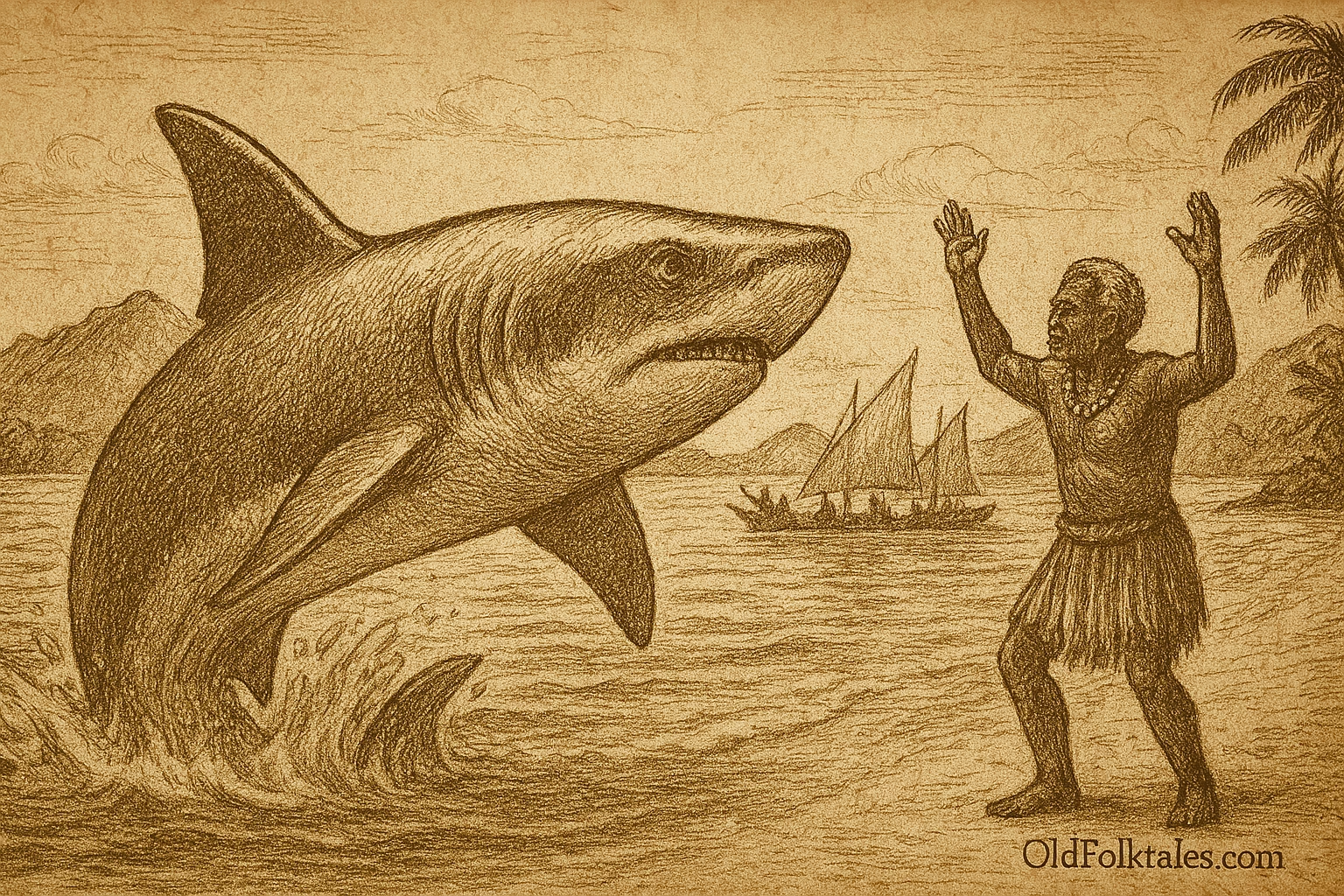
In the scattered jewels of the Lau Islands, where turquoise waters meet volcanic shores and coral reefs shimmer beneath the Pacific sun, there lived a man whose love for his people would transcend the boundaries between human and sea. His name was Rokola, and his story has been whispered from generation to generation, carried on the salt-tinged winds that sweep across Eastern Fiji.
Rokola was no ordinary man. He was a respected elder, a warrior whose strength was matched only by his wisdom, and a leader whose heart beat in rhythm with the needs of his clan. The villagers looked to him in times of peace and in moments of peril, for Rokola possessed something rare an unwavering devotion to those he called family. He would walk through fire, dive to the ocean’s depths, or face any enemy to ensure their safety.
Click to read all Myths & Legends – timeless stories of creation, fate, and the divine across every culture and continent
The islands of Lau were beautiful but vulnerable. Perched on the eastern edge of Fiji, they were exposed to raiders who came in war canoes under cover of darkness, seeking to plunder villages, capture the strong, and leave devastation in their wake. Time and again, Rokola had stood at the shore with spear in hand, rallying the warriors to defend their homes. But he knew that human strength alone might not always be enough.
One evening, as the sun melted into the horizon and painted the sky in shades of crimson and gold, Rokola stood alone at the water’s edge. The waves lapped gently at his feet, and the ocean seemed to call to him, a deep, ancient voice that spoke of transformation and sacrifice. Rokola closed his eyes and felt the pulse of the sea merge with his own heartbeat. In that sacred moment, he made a choice that would alter his existence forever.
He would become one with the ocean. He would become a guardian not bound by the limits of flesh and bone, but a spirit who could move through the waters with the power and grace of the ocean’s most formidable predator, the shark.
The transformation was neither violent nor painful. It was as natural as the tide’s pull, as inevitable as the moon’s rise. Rokola’s body shimmered and shifted, his limbs elongating, his skin becoming sleek and gray, his eyes darkening to the color of deep water. Where once a man stood, now glided a magnificent shark, powerful and eternal. But Rokola’s spirit remained intact, his consciousness clear, his purpose unshaken. He was still the protector of his people, now embodied in a form that could traverse the vast ocean and strike fear into the hearts of those who would do harm.
News of Rokola’s transformation spread through the villages like wildfire. The elders taught the children how to call upon their ancestor in times of danger. They instructed them to go to the shore when enemy canoes appeared on the horizon, to stand at the water’s edge with reverence and urgency, and to call out his name: “Rokola! Rokola! Guardian of our people, come to us now!”
It was not long before the raiders returned. Their war canoes cut through the waves under the pale light of a waning moon, their warriors hungry for conquest. But this time, the villagers were not afraid. They rushed to the shore, young and old together, and their voices rose in unison, calling across the dark waters: “Rokola! Rokola!”
The ocean stirred. From the depths, a shadow rose massive, swift, and purposeful. A great shark broke the surface, its dorsal fin slicing through the moonlit waves like a blade. Rokola had answered the call.
With terrifying speed and precision, the ancestral shark circled the invading canoes. The raiders, who had feared no human warrior, now trembled before the power of the ocean incarnate. Rokola surged forward, his powerful body ramming into the hulls. Canoes overturned, spilling warriors into the churning sea. Those who tried to swim for shore found themselves herded back, driven away by the relentless guardian. The message was clear: these waters were protected, these people were not alone.
The raiders who survived fled in terror, paddling frantically back to wherever they had come from, vowing never to return to the shores defended by the great shark spirit. The villagers stood on the beach, watching as Rokola’s fin circled one final time before disappearing beneath the waves. They knew he was still there, watching, waiting, forever vigilant.
From that day forward, the clans of Lau honored Rokola’s sacrifice. They considered sharks to be their kin, sacred relatives who shared their bloodline through the transformation of their beloved ancestor. To harm a shark was to harm family. Fishermen would offer prayers before setting out to sea, asking permission and giving thanks. Children grew up knowing the story of Rokola, learning that true love sometimes requires the ultimate sacrifice, and that protection can come from the most unexpected places.
Even today, when the descendants of those ancient clans see a shark gliding through the coastal waters of the Lau Islands, they remember Rokola. They remember the man who became something more than human so that his people might live in peace. They remember that the boundary between land and sea, between ancestor and guardian, between sacrifice and love, is thinner than we imagine.
The Moral Lesson
The legend of Rokola teaches us that the greatest love is expressed through selfless sacrifice and the willingness to transform ourselves for the protection of those we hold dear. It reminds us to honor our ancestors and recognize that guardianship takes many forms. The story also emphasizes the sacred relationship between humans and nature when we respect the creatures of the natural world as kin, we acknowledge our interconnectedness and our shared responsibility to protect one another. True courage is not the absence of fear, but the choice to become something greater than ourselves for the sake of others.
Knowledge Check
Q1: Who was Rokola in Fijian legend?
A1: Rokola was a respected elder and warrior from the Lau Islands of Eastern Fiji who transformed into a shark spirit to protect his people from enemy raiders. He became an ancestral guardian who could be summoned by his clan in times of danger.
Q2: How did the villagers summon Rokola when enemies attacked?
A2: The villagers would go to the shore and call out Rokola’s name with reverence and urgency. In response to their cries, Rokola would appear as a great shark and defend them by overturning enemy canoes and driving the raiders away.
Q3: What does the shark symbolize in the Rokola legend?
A3: In the Rokola legend, the shark symbolizes ancestral protection, transformation through sacrifice, and the sacred bond between humans and the ocean. It represents the idea that guardianship can transcend physical form and that our ancestors continue to watch over us.
Q4: Why do certain Fijian clans avoid harming sharks?
A4: Certain clans in the Lau Islands consider sharks to be their kin because of Rokola’s transformation. Since their ancestor became a shark to protect them, harming a shark would be equivalent to harming a family member. This belief reflects their deep respect for ancestral spirits and marine life.
Q5: What cultural lesson does the Rokola legend teach about sacrifice?
A5: The legend teaches that true love and devotion sometimes require profound personal sacrifice. Rokola gave up his human form to become a permanent guardian for his people, demonstrating that protecting those we love may demand transformation and the willingness to serve beyond our own lifetime.
Q6: Where does the legend of Rokola originate in Fiji?
A6: The legend of Rokola originates from the Lau Islands in Eastern Fiji, a group of islands scattered across the Pacific that have maintained rich oral traditions about ancestral spirits, ocean guardianship, and the sacred relationship between clans and sharks.
Source: Adapted from oral traditions documented in A. M. Hocart’s ethnographic study “The Lau Islands, Fiji”
Cultural Origin: Lau Islands, Eastern Fiji, Pacific Islands






