Before the dawn winds whispered across the plains of Zabulistan, before kings carved their names into stone, the heavens chose a single soul to stand between Persia and ruin, Rustam, whose story began not in battle but in miracle. For his mother, Rudabeh, carried the lineage of Zahhak’s ancient serpentine kings, and his father, Zal, bore hair as white as winter, marked at birth by the divine Simurgh itself. From this union of heaven’s favor and earth’s forgotten power came a child so mighty that even his birth bent legend.
The travail of Rudabeh’s labor grew so fierce that the mountains trembled. Zal, desperate, set timber aflame to call the Simurgh. The celestial bird descended, her feathers scattering gold across the air. She showed them the knife of salvation and taught them the birth-cut that would spare Rudabeh’s life. Thus Rustam entered the world amid firelight and feather-glow, a child foretold to shake empires and silence demons.
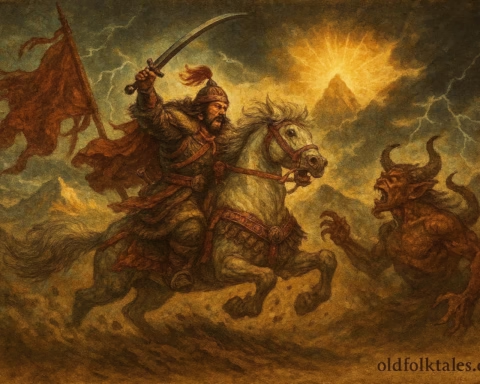
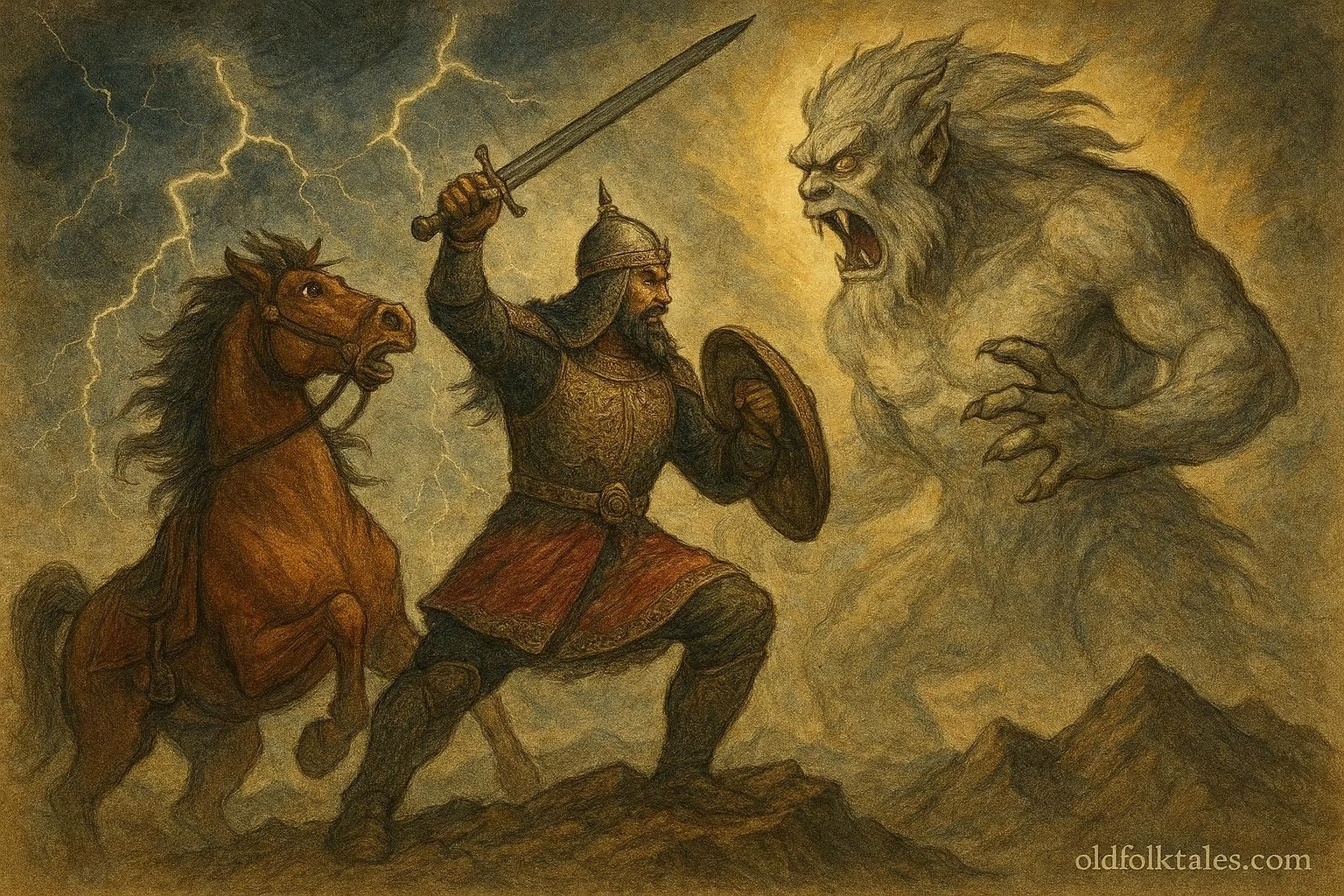
As Rustam grew, the land itself seemed to brace beneath his footsteps. At eight, he could uproot young trees. At twelve, he tamed Rakhsh, the wild, flame-colored stallion who would bear no rider but him. Together horse and hero became a single roaring force, a bond forged by destiny’s hammer.
But every favored soul must face a trial proving worth beyond divine ancestry.
Rustam’s first great challenge came in the wilderness of Mazandaran, a cursed land where demons ruled and kings fell blind. When Kay Kavus, the impulsive Shah of Iran, led his army into that land of illusions and sorcery, they were captured and struck sightless by the White Demon’s magic. Only Rustam, returning from distant hunts, heard the cries carried by desert winds.
Declaring that a king’s folly could not excuse a kingdom’s suffering, he rode forth alone, Rakhsh thundering beneath him. Six great trials awaited, each shaped by fate to test not only Rustam’s strength, but his soul.
First came the lion that leapt upon Rakhsh as night cloaked them. Rustam slept, yet the loyal horse fought until his hooves drummed the earth with fury. Rustam awoke to finish the beast, but his heart wavered. “I should have guarded you,” he whispered to Rakhsh, realizing a hero’s duty was not simply to conquer beasts, but to protect those who carried him forward.
Next came thirst, a foe greater than tooth or claw. The plains burned like heated bronze, yet Rustam pressed on, muttering prayers to Ahura Mazda. When a sacred onager led him to hidden water, Rustam understood that even in solitude, the righteous were never abandoned.
Then came the dragon, vast, night-skinned, its eyes twin furnaces of hate. It attacked in silence, the darkness itself seeming to take form. Rustam battled it thrice, for the beast could vanish from mortal sight. Only when he steadied his breath and listened not with ears but with spirit did he sense its approach and strike its heart. From that victory Rustam learned the discipline of inner stillness, a virtue rarer than valor.
His fourth and fifth trials tested mercy and justice alike, as he faced deceitful sorcerers and ravenous demons. Rustam’s blade wrought ruin, but even in wrath he paused to speak truth, warning any who would turn from wickedness. Few did. Still, he fought not for glory, but to cleanse a land drowning in illusion.
The final trial brought him to the cavern of the White Demon. The creature rose in a storm of snow-pale skin and death-cold breath. Their battle shook the mountains. Rustam landed a killing blow, tore out the demon’s heart, and brought its blood to restore the Shah’s sight.
But triumph brought unease. Rustam felt the weight of prophecy tightening around him like a noose. For every victory fed his legend, yet legend is a chain as much as a crown.
In years to come he would save Iran countless times, facing Turanian invaders, cursed sorcery, and traitors rising from within. Yet it was in the tragedy of Sohrab that Rustam’s spirit bore its deepest wound. For he unknowingly slew his own son in combat, each refusing to reveal their identity, blinded by honor’s cruel demands. When Sohrab died in his arms, the giant warrior wept as though the mountains themselves were breaking. His roar echoed over plains and cities alike.
“This,” Rustam whispered, “is the price of being fate’s chosen.”
Yet even grief did not break him. He rose again, fighting for Iran until treachery at last struck him down. But even in death Rustam’s story shone, his fall a warning against envy, his life a beacon of courage that no darkness could drown.
For Rustam was not merely a warrior. He was Persia’s heartbeat, its roar in battle, its shield in peril, its mourning cry in tragedy. And though ages pass, the Lion-Hearted Champion still rides within Persian memory, his footsteps thunder in every tale of heroism, and his spirit remains the eternal guardian of Iran.
Author’s Note
Rustam’s epic endures because he embodies the complexity of true heroism: unmatched strength paired with immense vulnerability, divine favor entwined with devastating fate. His victories shaped nations; his tragedies shaped the human understanding of duty, love, and consequence. In the Shāhnāmeh, he is not just a champion, he is the moral spine of a civilization.
Knowledge Check
-
What divine creature aided Rustam’s birth?
-
Why did Rustam undertake the Seven Trials of Mazandaran?
-
What lesson did Rustam learn during his battle with the dragon?
-
What was the symbolic meaning of Rustam’s bond with Rakhsh?
-
How did Rustam’s tragedy with Sohrab shape his legacy?
-
What makes Rustam both a divine and deeply human hero?
Cultural Origin: Persian (Iranian) Epic Tradition
Source: Abolqasem Ferdowsi, Shāhnāmeh (c. 1000 CE), trans. Dick Davis, 2006.