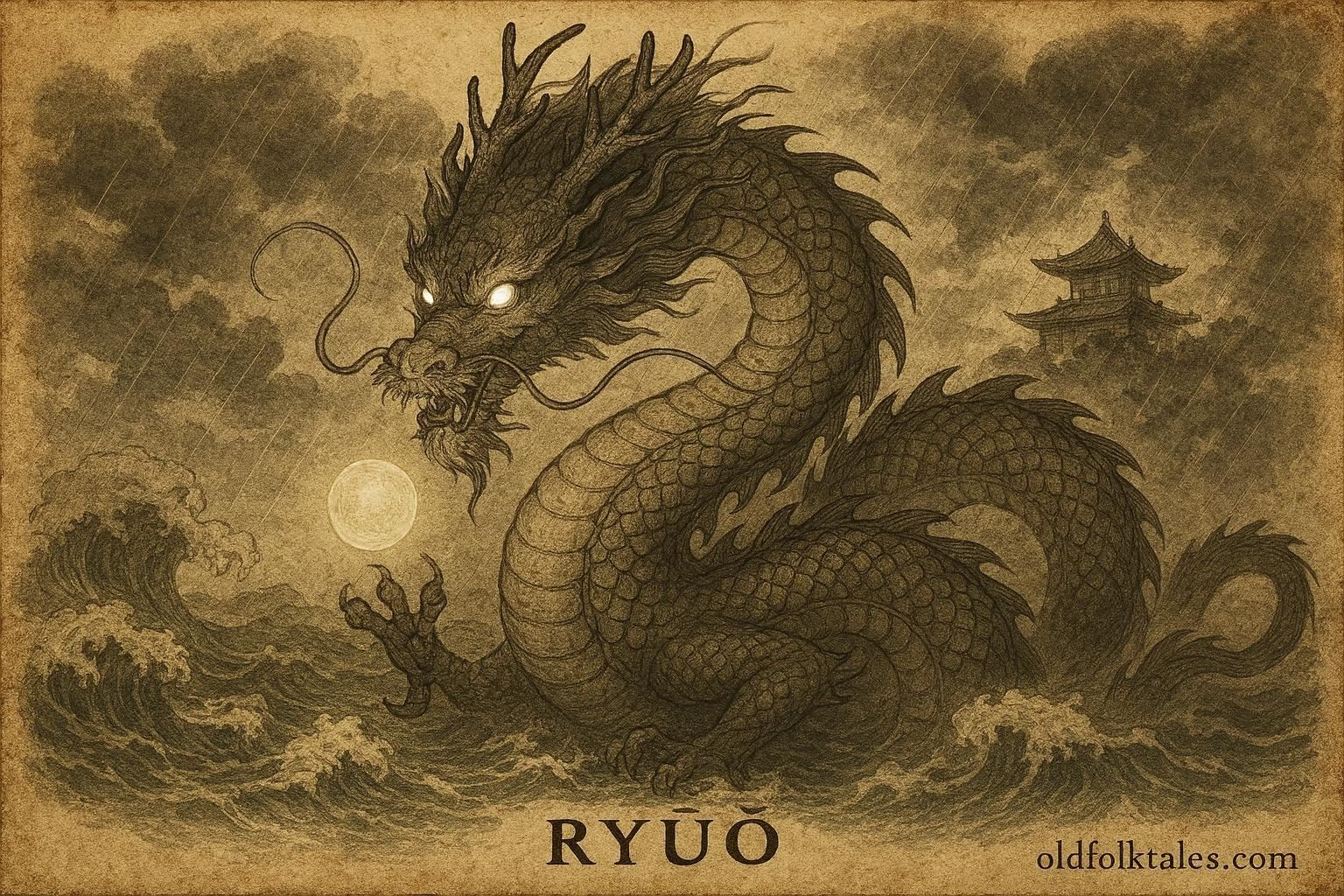
The Dragon King, or Ryūō in Japanese, represents a powerful dragon deity ruling over waters, often linked to rain, rivers, seas, and weather. Across Asia, he appears in multiple forms: sometimes as a colossal sea-serpent with scales and horns, sometimes as a fully anthropomorphic dragon capable of speech and ritual negotiation
- China: Known as Lóngwáng, Dragon Kings preside over specific seas (East, South, West, and North) and appear in classical texts like Shanhaijing, Buddhist sutras, and temple legends. They are often depicted holding a pear or pearl, symbolizing wisdom and life-giving rain.
- Japan: Called Ryūō, he governs rivers, rainfall, and sometimes storms. Shrines near coasts and rivers honor him, and he features prominently in Noh theater, folklore, and Buddhist iconography.
- India / Hindu traditions: Similar to Nāgarāja, dragon-serpent rulers are linked with rain, fertility, and protection of waterways. They are often depicted semi-anthropomorphic with serpent tails or multiple heads.
- Southeast Asia: Local forms appear in Thai, Cambodian, and Javanese traditions, sometimes linked to river-spirit cults, sea navigation rituals, and agrarian rain ceremonies.
Appearance varies regionally:
- Serpentine and scaled, with claws and antler-like horns.
- Variable size, from river-length serpents to massive celestial dragons.
- Symbolic adornments, including pearls, lotus motifs, or flaming jewels representing prosperity, fertility, and spiritual authority.
Behaviorally, the Dragon King is benevolent yet potentially wrathful. He ensures fertile crops through rainfall, safe navigation along rivers and coasts, and protection of aquatic life, but can unleash storms, floods, or droughts when disrespected or dishonored. Rituals often seek his favor: offerings of incense, food, and recitations at shrines or riversides are common.
Cultural Role
The Dragon King serves multiple overlapping roles in Asian cultural consciousness:
- Regulator of Water and Agriculture: In agrarian societies, rainfall is crucial; the Dragon King personifies this necessity. Farmers performed rituals to secure timely rains, abundant harvests, and protection from floods. In some Chinese villages, festivals honor Dragon Kings at riverbanks, combining ceremony, dance, and incense offerings.
- Protector and Divine Arbiter: The Dragon King is invoked to protect fishermen, sailors, and travelers. Maritime communities across Asia often include dragon shrines in ports or near river mouths to ensure safety and prosperity.
- Moral and Cosmic Symbolism: As a celestial dragon, he represents natural order, the balance of chaos and benevolence, and the link between humans and divine forces. Respecting water, rivers, and the environment is encoded in Dragon King mythology as a moral imperative.
- Religious and Ritual Function: In Buddhist traditions, the Dragon King is often depicted in sutras and temple carvings, such as the Dragon King offering rain to the Buddha. These stories emphasize intermediary roles, where dragons act as protectors of dharma, mediators between humanity and cosmic forces, and exemplars of pious devotion.
- Pan-Asian Archetype: The Dragon King embodies a shared mythic structure across multiple cultures: association with serpentine water deities, rain-bringing powers, maritime or riverine protection, and fertility blessings. This cross-cultural motif demonstrates deep oral and ritual continuity, pre-dating widespread written records.
Historical Context
The Dragon King appears in classical Chinese texts like Shanhaijing and in Buddhist sutras, often as rulers of four seas corresponding to cardinal directions. In Japan, Ryūō legends emerged from Chinese Buddhist influence and integrated into Shinto rituals. In South and Southeast Asia, Nāgarāja and related serpentine deities appear in temple sculptures, inscriptions, and folklore, reflecting syncretic adaptation to local geography and cultural practices.
Temples often feature Dragon King statues, sometimes holding pearls, riding waves, or intertwined with lotuses. Coastal festivals and river ceremonies perform ritual offerings, reflecting historical concern with flood control, safe fishing, and rain. Artistic depictions, paintings, Noh masks, carvings, reinforce his aesthetic and symbolic presence in human imagination.
Variant Note
Name variations: Lóngwáng (China), Ryūō (Japan), Nāgarāja (India/South Asia), Naga or Nāga (Southeast Asia).
Functional variations: Some are universal sea rulers; others govern specific rivers, seas, or regions.
Appearance: Can be fully serpentine, draconic, or semi-anthropomorphic; wings are rare in East Asia but common in later iconography influenced by Buddhist cosmology.
Behavior: Benevolent yet capable of wrath, especially in controlling weather patterns, punishing irresponsible water use, or defending holy spaces.
Authenticity Assessment
The Dragon King is well-rooted in classical and folk religious traditions:
- Chinese folk religion includes worship of river and sea Dragon Kings in historical temples.
- Buddhist sutras and legends present him as a protector and rain-bringer.
- Hindu Nāgarāja and Southeast Asian Nāga traditions show continuity of serpent-like water deities.
His cross-cultural ubiquity, ritual function, and historical documentation confirm his role as an ancient mythic archetype rather than a modern invention. While narrative details vary, the core symbolic functions, water governance, fertility, and divine protection, remain consistent.
Encounter dragons, spirits, and beasts that roamed the myths of every civilization
Author’s Note
The Dragon King illustrates the remarkable longevity and adaptability of water deities across Asia. He embodies human attempts to understand and negotiate natural forces, especially water, essential for agriculture, trade, and survival. By integrating dragon mythology with ritual, social norms, and art, the Dragon King exemplifies how mythology operates as a living cultural system, sustaining human-environment relationships and moral lessons over millennia. This entry emphasizes ethnographic, textual, and artistic evidence to capture his authentic mythic role rather than modernized or fantasy interpretations.
Knowledge Check
- Q: What domains does the Dragon King govern?
A: Seas, rivers, rain, water, weather, and fertility. - Q: Name three regional variants of the Dragon King.
A: Lóngwáng (China), Ryūō (Japan), Nāgarāja (India/Southeast Asia). - Q: How is the Dragon King typically depicted?
A: Scaled, serpentine or draconic, with horns and sometimes a pearl; can be anthropomorphic in some traditions. - Q: What societal functions does the Dragon King fulfill?
A: Rain-bringer for agriculture, protector of sailors and fishermen, enforcer of moral and cosmic order. - Q: In what types of rituals is the Dragon King involved?
A: Temple offerings, river festivals, coastal rituals, and Buddhist ceremonial depictions. - Q: What does the Dragon King symbolize in pan-Asian mythology?
A: Control of natural forces, fertility, protection, divine order, and human-environment balance.
Source: Classical texts, temple worship, folklore, and ethnographic records from China, Japan, India, Southeast Asia, and Buddhist traditions.
Origin: East, South, and Southeast Asia; widely attested in Chinese folk religion, Buddhist cosmology, Japanese mythology, Hindu myth, and local maritime traditions.