The Samoan Fire-Knife Dance, known traditionally as ‘Ailao Afi or Siva Afi, descends from the warrior culture of ancient Samoa. Its foundation lies in the handling of the nifo’oti, a hooked knife-club once wielded by Samoan fighters as both tool and weapon. The dance first began as a martial flourish: a show of mastery, intimidation, and victory in battle. Over generations, these movements became woven into ritual displays that honoured ancestors, chiefs, and the legendary prowess of Samoan warriors. In the mid-20th century, the ritual evolved into its modern flaming form, an innovation partly attributed to a Samoan chief who adapted fire performance after witnessing other Pacific fire arts. Today, the Fire-Knife Dance stands as one of the most electrifying symbols of Polynesian identity.
Description
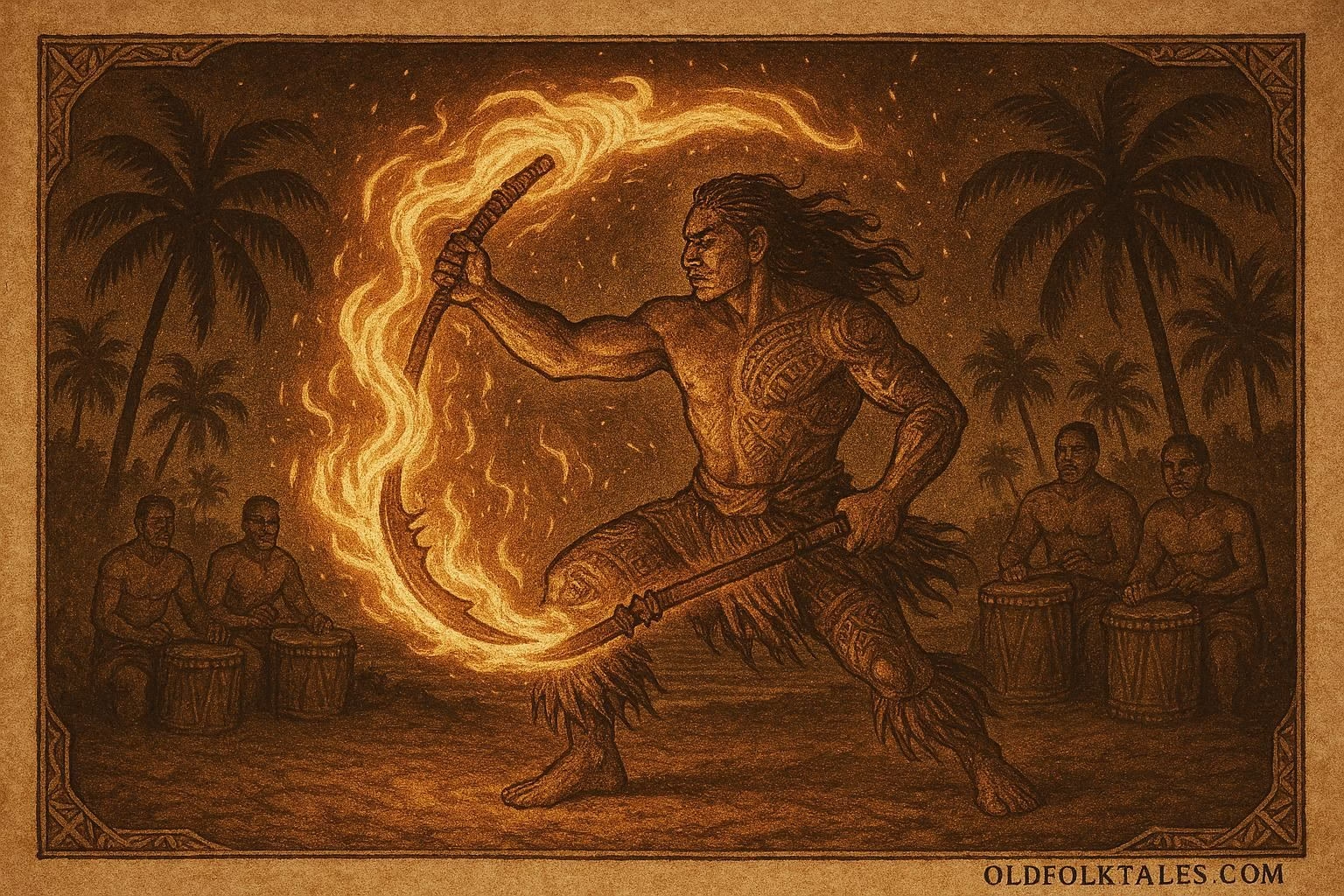
The Fire-Knife Dance is a breathtaking spectacle. At its centre is the nifo’oti, originally a heavy, curved club designed to hook shields or limbs in combat. In performance, the tool transforms into an extension of the dancer’s body. Wrapped in cloth and set ablaze, it becomes a moving spear of light.
Dancers enter the space barefoot, hips low, shoulders squared, channeling the stance of the old toa (warriors). Traditional tattoos, known as tatau, often adorn their bodies, emphasizing lineage and courage. Accompanied by thunderous drumming and sharp vocal chants, the dancer twirls the flaming blade around limbs, neck, and torso, creating rings of fire that pulse with rhythm and precision.
The movement vocabulary is drawn from archaic martial gestures:
– sweeping arcs reminiscent of battlefield strikes
– low spinning footwork used in close-quarter combat
– high tosses symbolizing the warrior’s dexterity before chiefs and ancestors
– rapid wrist rotations echoing the readiness of a fighter in the moment before conflict
In Samoan gatherings, especially at fiafias, chiefly ceremonies, and cultural exhibitions, the Fire-Knife Dance serves as a dramatic reminder of Samoan strength and communal pride. It is not merely a performance; it is a test of composure, discipline, and bravery in the presence of fire, the most volatile element in Polynesian cosmology.
Modern variations include competitions such as the World Fire-Knife Championships in Hawaiʻi and Samoa, where performers demonstrate feats of agility, double-knife spinning, acrobatics, and multi-level fire choreography. Yet, beneath the spectacle, the dance maintains its ancestral heartbeat: an homage to warriors and the spiritual authority of fire.
Mythic Connection; Fire, Warrior Spirits, and Mana
Although the Fire-Knife Dance is rooted in warrior practice rather than a single codified myth, its spiritual depth aligns with Samoan cosmology. In Polynesian thought, fire is not merely a physical force; it is mana, a manifestation of energy, authority, and divine presence. The dancers who manipulate flames symbolically channel this sacred power.
Several mythic themes intertwine with the ritual:
1. Fire as a Divine Gift
Throughout Polynesia, fire is often described as a gift taken or learned from gods, ancestors, or trickster figures. In Samoa, knowledge is frequently conceptualized as something passed down by atua (gods) or aiga atua (ancestral spirits). To command fire in dance is to honour those who first mastered it.
2. The Warrior’s Spirit
The original holders of the nifo’oti were toa, warriors who served chiefs and defended villages. Their spirits, strengthened by warfare and ritual obligations, became part of the collective memory of Samoa. The Fire-Knife Dance reenacts their presence: each twirl echoes their vigilance; each burst of flame recalls the dangerous intensity of combat.
3. Purification Through Flame
In many Pacific traditions, fire purifies, reveals truth, and protects. The dancer steps into the flame’s reach not as an act of self-destruction, but as an assertion of fearlessness. The fire becomes a ritual test, affirming inner clarity and the elimination of cowardice.
4. Display Before the Gods and Chiefs
Historically, ‘ailao displays were performed before high chiefs to demonstrate loyalty. In Samoan cosmology, chiefs possessed spiritual authority connected to the gods. To dance before them was to dance before the divine hierarchy itself. The modern fire-knife retains this sacred dynamic: a dancer stands before the community as though before gods and ancestors.
Thus, the ritual reflects Samoa’s cultural worldview: courage, lineage, warrior honour, and the spiritual vitality carried within the fire.
Author’s Note
This article explores the Samoan Fire-Knife Dance as a cultural bridge between ancient warrior traditions and modern performance. Its enduring symbolism lies in the interplay of fire, courage, and ancestral memory, revealing how Samoan identity continues to honour strength, lineage, and the spiritual essence of mana.
Knowledge Check
1. What is the traditional weapon used in the Fire-Knife Dance?
The nifo’oti, a hooked knife-club originally used by Samoan warriors.
2. What element symbolizes mana and divine energy in the ritual?
Fire, representing power, purity, and spiritual authority.
3. Which cultural setting often hosts fire-knife performances today?
Fiafia celebrations, cultural ceremonies, and international championships.
4. What historical practice inspired the dance’s earliest movements?
The martial gestures and victory displays of Samoan warriors.
5. How does the dance connect to ancestral spirits?
Through movements that honour toa warriors and channel the divine energy associated with fire.
6. When did the flaming modern version develop?
In the mid-20th century, influenced by Samoan chiefs adapting Pacific fire arts.