In the time before time, when the world had not yet taken form, there existed only two realms: Orun, the vast sky above where the orishas dwelled in radiant splendor, and below, an endless waste of waters that stretched without boundary or purpose. There was no land, no mountain, no valley only the restless churning of primordial ocean beneath the eternal sky. The universe hung incomplete, waiting for the hand that would shape it into being.
In the golden halls of Orun, Olodumare, the Supreme Creator, the Ancient of Days, the One who needs no other, looked down upon the watery void and decided that the time had come for creation to be completed. Among all the orishas who surrounded the divine throne those spirits of power and wisdom who served the Supreme One Olodumare chose Obatala, the orisha of purity and creation, to descend on a sacred mission.
Click to read all Myths & Legends – timeless stories of creation, fate, and the divine across every culture and continent
“Go down,” commanded Olodumare, “and make solid land upon the waters, so that life may have a place to dwell.”
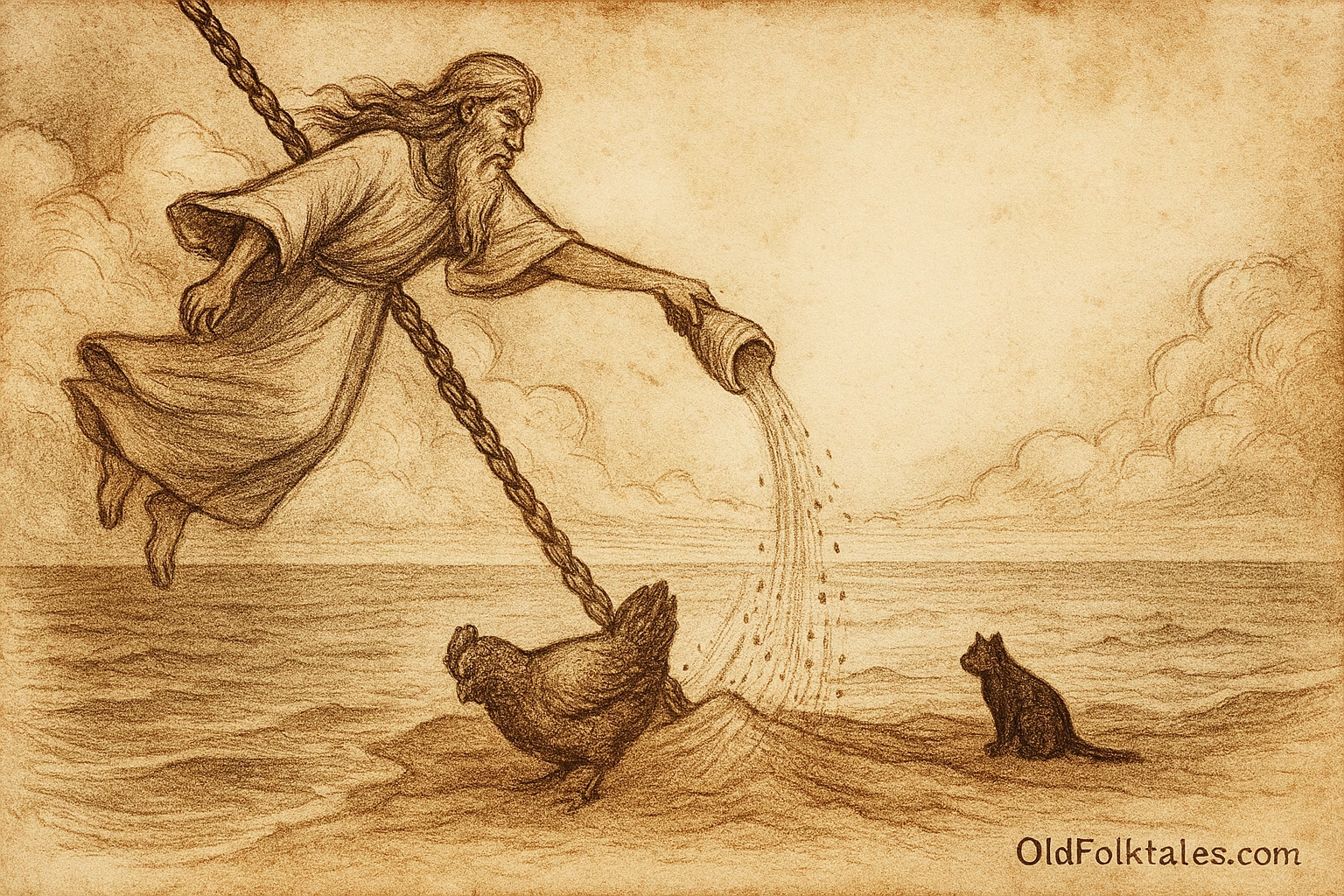
Obatala, clothed in white garments that shimmered like moonlight, prepared himself for the great descent. But one cannot simply step from heaven to the formless waters below. Olodumare gave him tools for the sacred work: a golden chain, long enough to reach from sky to sea; a snail shell filled with sand from the divine realm; a white hen whose feathers had never known earthly dust; and a black cat for companionship in the lonely work ahead. Some say he also carried a palm nut, which would later become the first tree.
Obatala fastened the golden chain to the edge of heaven and began his descent, climbing down link by link, passing through layers of mist and cloud, through spaces where neither sky nor water held dominion. Down and down, he climbed until the chain ended, and still there was no solid ground beneath his feet only the endless waters stretching in all directions, dark and deep and waiting.
Suspended above the abyss, Obatala took the snail shell and poured out its contents. The sacred sand fell like stars falling, like hope descending, like the first word spoken into silence. It scattered across the surface of the waters, forming a small pale mound that floated but did not sink the first promise of solid earth.
Then Obatala released the white hen. She fluttered down to the mound of sand, and by instinct older than thought itself, she began to scratch and scatter with her claws, as chickens have done since that first day. Wherever her feet touched, the sand spread outward. East and west, north and south, the sand expanded, pushed by the hen’s relentless scratching, growing wider and wider until it formed a substantial patch of dry land rising from the waters.
This place, where the first sand fell and the first earth took form, became known as Ile-Ife the sacred city, the navel of the world, the spot where creation began. Obatala stepped down from his chain onto the new land, and it held firm beneath his feet. The black cat followed, and together they walked upon the first ground that had ever existed below the heavens.
For a time, Obatala worked with pure devotion, expanding the land, shaping hills and valleys, preparing the earth for the life that would soon inhabit it. He planted the palm nut, and it grew into a great tree with sixteen branches, representing the original kingdoms that would spread across the world. The work was good, and Obatala was pleased with what he had created.
But then pride, that ancient poison, began to seep into his heart. “See what I have accomplished,” Obatala thought. “I have created land from water, form from chaos. Surely there is none among the orishas as skilled as I.”
To celebrate his achievement, Obatala tapped palm wine from the tree he had planted. The wine was sweet and strong, and he drank deeply, then drank again. As the wine clouded his judgment, Olodumare sent word that it was time to create human beings the crowning achievement of creation, beings who would walk upon the earth and carry the divine spark within them.
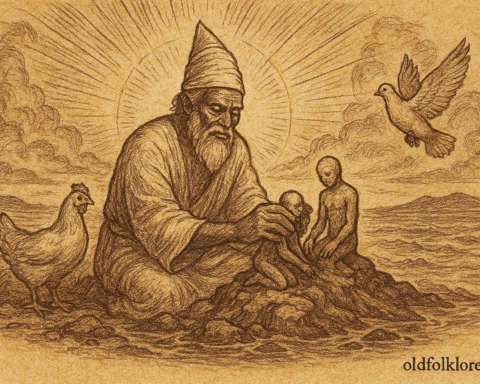
But Obatala, intoxicated and unsteady, began to mold the first humans from clay. His hands, so skillful before, now wavered and erred. Some of the figures he shaped were twisted, others incomplete. He formed people with crooked spines, with missing limbs, with bodies that did not work as they should. The divine spirit was still breathed into them for that comes from Olodumare alone, but their earthly forms bore the marks of Obatala’s impaired craftsmanship.
When the wine’s effects finally wore away and Obatala saw what he had done, horror and shame overwhelmed him. He wept for the imperfect humans he had created, and he made a sacred vow: never again would he drink palm wine, and he would forever after being the special protector of those born with disabilities or differences, for they bore the mark of his mistake and therefore deserved his particular care and advocacy.
But creation could not remain in this state of disorder. Olodumare, seeing that the work had been compromised, called upon another orisha: Oduduwa, a being of balance and restoration. Some say Oduduwa was Obatala’s sibling, others that they were rivals, but all agree that Oduduwa descended with clarity of purpose and sobriety of spirit.
Oduduwa completed the work Obatala had begun. With steady hands untouched by wine or pride, Oduduwa shaped humans properly, creating the diversity of forms and faces that would populate the earth. But Oduduwa did not erase what Obatala had made those first imperfect humans remained, for they too carried the divine breath, and they too had their place in creation’s grand design.
From this dual creation came an understanding that would echo through Yoruba wisdom forever after humanity bears both divine spirit and earthly imperfection. We are created by the gods but shaped through both skill and error. We carry heaven’s breath in flawed vessels. And those differences among us those marks of imperfection are not mistakes to be erased but sacred reminders of our origins, deserving of special protection and honor.
And so the world came to be: Ile-Ife stood as the center of creation, the point where heaven’s chain touched earth’s surface. From there, humanity spread outward like sand scattered by a hen’s claws, carrying within them both the glory of divine origin and the humility of imperfect creation. The land that Obatala birthed became home to millions, and the lesson of his pride became wisdom passed from elder to child across countless generations.
To this day, the Yoruba people trace their lineage back to Ile-Ife, the sacred heart of the world. They remember Obatala’s descent on the golden chain, the white hen’s scratching that spread the first land, and the lesson learned when pride compromised holy work. They remember that we are all, in our various forms, children of both heaven and earth, spirit and clay, perfection and flaw and that in this duality lies our truest humanity.
Author’s Note
The Yoruba creation myth is remarkable for its honesty about imperfection’s divine origins. Unlike creation stories where everything emerges flawlessly, this narrative acknowledges that mistakes happened even in the sacred act of creating humanity and those “mistakes” aren’t corrected or hidden but honored. Obatala’s vow to protect people with disabilities transforms his error into ongoing compassion, suggesting that imperfection can birth deeper understanding. The story also warns against pride, even in legitimate achievement, showing how self-satisfaction can corrupt good work. Most profoundly, it presents humanity as simultaneously divine and flawed, made from heaven’s breath and earth’s clay, perfectly imperfect by design.
Knowledge Check
1. What did Olodumare give Obatala to accomplish his mission of creating land?
Olodumare gave Obatala a golden chain to descend from heaven, a snail shell filled with sacred sand, a white hen to scatter the sand, and a black cat for companionship. Some versions include a palm nut.
2. What is Ile-Ife and why is it significant?
Ile-Ife is the place where Obatala first poured the sacred sand and where the hen scattered it to create dry land. It became the sacred heart of the world, the navel of creation, and remains the spiritual center of Yoruba civilization.
3. What caused Obatala to make errors when creating humans?
Obatala drank palm wine from the tree he had planted to celebrate his achievement. The intoxication clouded his judgment and made his hands unsteady, causing him to create some humans with physical imperfections.
4. What vow did Obatala make after realizing his mistake?
Obatala vowed never to drink palm wine again and pledged to be the special protector and advocate of people born with disabilities or physical differences, since they bore the mark of his error.
5. Who completed the work of creating humanity after Obatala’s error?
Oduduwa, another orisha, descended with clarity and sobriety to complete the work of creating humanity properly, shaping humans with steady hands and balanced judgment.
6. What deeper truth about humanity does this myth convey?
The myth teaches that humanity carries both divine spirit (breath from Olodumare) and earthly imperfection (flawed clay forms), and that our differences and imperfections are not mistakes to be erased but sacred parts of creation deserving honor and protection.
Cultural Context: Yoruba (Nigeria) mythology, Ifa religious tradition, West African cosmology, orisha worship
Source Reference: Bascom, William Ifa Divination: Communication Between Gods and Men in West Africa (1969); Idowu, E. Bolaji Olódùmarè: God in Yoruba Belief (1962)