Sarasvatī (Sanskrit: सरस्वती) is one of the most ancient and enduring goddesses of the Hindu world. In the earliest Rigvedic hymns, she is both a mighty river and a divine inspiration, the living stream of clarity, eloquence, and wisdom. As centuries flowed, the river became the goddess of learning, speech, music, and insight, revered as the consort of Brahmā, the Creator.
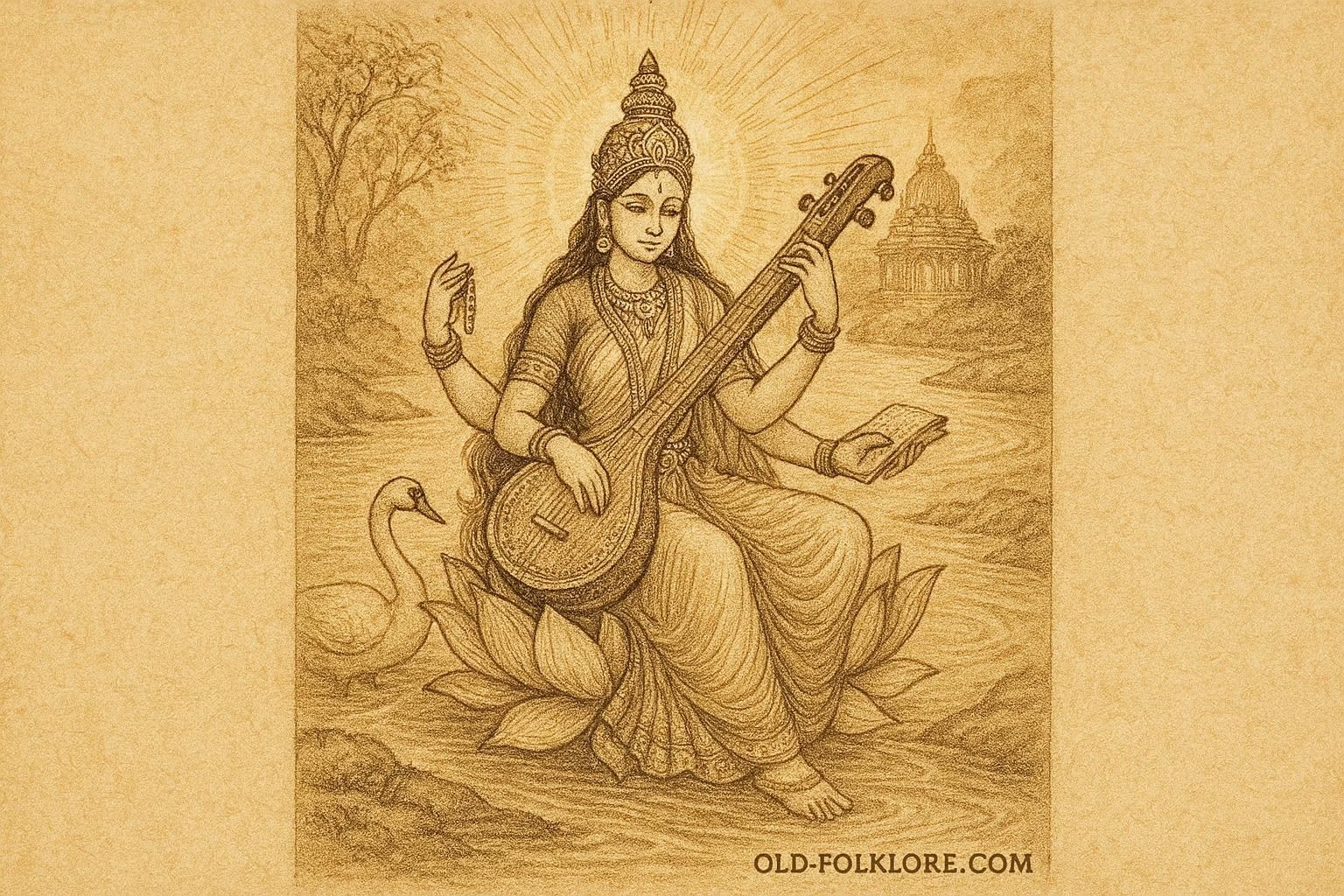
She is depicted as radiantly white, seated upon a lotus or swan, symbolizing purity and transcendence. In her four graceful hands, she holds the veena (a lute for the music of creation), a book (the Vedas, or divine knowledge), a rosary (spiritual discipline), and a water pot (purity of mind and word).
Sarasvatī’s sacred day, Vasant Panchami, marks the coming of spring and is celebrated across India with offerings of yellow flowers, recitations, and prayers for insight. Her symbols, the swan (hamsa), the river, and the white lotus, reflect her nature as both movement and stillness, intellect and grace.
From her flows not only speech, but all creative intelligence, the śabda-brahman, the eternal vibration of truth that gave birth to the universe itself.
The Mythic Story: The Voice of the Sacred River
In the earliest dawn of time, before the world had shape or song, there was only sound, vast, unspoken, and infinite. From that sacred vibration rose a luminous current, a river of light and melody, flowing through the cosmos. That river was Sarasvatī, born of the divine waters, both goddess and river, both speech and silence.
The ancient seers of the Rigveda sang her name in reverence:
“Sarasvatī, who slays the darkness with her flood,
who awakens the mind and grants wisdom,
may she inspire our thoughts.”
As a river, Sarasvatī nourished the Vedic lands, her waters gliding through the plains between the Indus and the Ganges. Villages rose by her banks; rituals were performed in her honor. Yet her divinity reached far beyond the physical stream. The rishis (sages) felt her presence in their own breath, their words, their hymns. She was Vāk, the divine speech, the moment when thought becomes truth and sound becomes creation.
In those early ages, the god Brahmā, the Creator, sat in meditation, envisioning the universe. But his mind was filled with silence, no word, no concept, no rhythm to shape the void. From the still waters before him, a gentle radiance rose, and a woman emerged, Sarasvatī, shining like the moon on a white lotus.
“Without voice,” she said softly, “your creation has no life.”
Brahmā opened his eyes, and for the first time, sound entered existence. From Sarasvatī’s lips came the first syllable, AUM, the seed of all speech. At that vibration, stars flared into being, and the earth began to hum with meaning. Sarasvatī’s voice became the foundation of all knowledge, poetry, science, chant, and song.
Brahmā, filled with awe, made her his consort. Yet Sarasvatī was not merely his companion, she was his power of articulation, the sacred force that allowed thought to manifest as creation. “Through you,” Brahmā said, “the mind speaks, and the world understands.”
In time, Sarasvatī’s river dried from mortal sight, but her presence endured within the spirit. She became the inner stream of inspiration, the current that flows through the heart of every thinker, musician, and seeker of truth. The poets said that when one’s mind becomes still, Sarasvatī plays her veena upon it, and the soul begins to sing.
In another tale, when demons sought to corrupt the purity of the Vedas, distorting the sounds of truth, Sarasvatī descended again. She spoke the true rhythm of the sacred syllables, cleansing the world’s speech. Each vibration she uttered became a mantra, and each mantra became a light, restoring order to the cosmos.
To mortals, she taught that knowledge is not possession but purification, a cleansing of ignorance like a river washing silt from stone. Hence, in her temples, students place their books and instruments before her image, seeking clarity of thought and humility of learning.
Even now, on Vasant Panchami, when the mustard fields of India glow yellow with bloom, devotees wear white and pray before her. They do not ask for wealth or power, only for wisdom, the pure speech that uplifts rather than wounds. Children trace the first letters of the alphabet in the dust, invoking her blessing for eloquence and learning.
Sarasvatī’s river, the ancient Ghaggar-Hakra, may no longer flow as it once did, yet her spiritual stream continues, as every song sung, every poem recited, every act of understanding that moves humankind toward light. She is the river of time and thought, endlessly renewing herself through the minds of all who seek knowledge.
Thus, Sarasvatī remains the voice of divine truth, the still melody beneath all creation, forever whispering through the silence of the world.
Author’s Note
Sarasvatī teaches that speech is sacred, a reflection of divine consciousness. She reminds us that knowledge is not domination but reverence, and that every word should flow like a clear river: honest, gentle, and pure. In her, thought and nature unite, proving that true wisdom is both a human gift and a cosmic current.
Knowledge Check
Q1. What was Sarasvatī’s original form in early Vedic belief?
A: She was first revered as a powerful river goddess associated with purity and inspiration.
Q2. How did Sarasvatī evolve in later Hindu tradition?
A: She became the goddess of learning, speech, and the arts, Brahmā’s consort and divine intellect.
Q3. What are Sarasvatī’s primary symbols?
A: The veena, white lotus, book, rosary, and swan, representing purity and knowledge.
Q4. What is the significance of Sarasvatī’s color and mount?
A: Her white attire and swan symbolize purity, clarity, and spiritual transcendence.
Q5. What festival honors Sarasvatī in India?
A: Vasant Panchami, celebrating learning and the arrival of spring.
Q6. What does Sarasvatī’s myth teach about speech?
A: That words hold sacred power; truth must be spoken with clarity and devotion.
Source: Rigveda Hymns to Sarasvatī; Devi Bhagavata Purana; India.
Source Origin: Vedic India (circa 2nd millennium BCE)