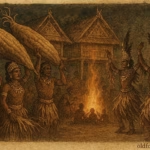
Se Faiva is a ritualised dance tradition rooted in the islands of Tonga and Samoa, within the broader Polynesian cultural region. In both societies, ceremonial dances are integral to social and spiritual life, functioning as both aesthetic performance and sacred practice. Historically, these dances were performed during kava ceremonies, chiefly title bestowals, and communal festivals, reflecting the hierarchy, genealogy, and cosmology of Polynesian societies. Early ethnographers and Polynesian historians, including Gifford (1929) and more contemporary research from the Journal of the Polynesian Society, describe these dances as highly structured, codified, and deeply symbolic. Movements, gestures, and chants were not merely entertainment but acted as conduits of mana (spiritual power) and communal cohesion.
Description
Se Faiva is not a single choreographed dance but a ritualised performance genre, incorporating intricate footwork, hand gestures, and synchronized movements, often accompanied by chants, oratory, and music. It is commonly performed during kava ceremonies, where the consumption of kava (Piper methysticum) itself carries sacred significance. In this context, dance complements the ceremonial offering of kava, enhancing the spiritual environment and reaffirming social order.
During Tongan royal kava ceremonies, dancers perform in strict sequence: movements align with hierarchical seating, gestures honour specific chiefs, and chants recount genealogical lineages and ancestral deeds. In Samoa, ceremonial dances may vary by island or lineage but maintain symbolic meanings related to community respect, ancestral veneration, and spiritual mediation. Performers often wear traditional attire, including fine mats, tapa cloth, or decorative belts, and sometimes headpieces that mark rank or affiliation. The choreography is codified: a raised arm may signify the gods’ blessings, a step forward may indicate offering respect, and synchronized clapping may echo the rhythm of creation narratives.
Beyond formal events, variations of Se Faiva appear in more informal kalapu kava gatherings, where dance blends with communal storytelling, song, and oratory, reinforcing social bonds while preserving ancestral practices. These performances also act as visual language, communicating genealogical knowledge and social etiquette to younger generations.
Mythic Connection
Se Faiva is deeply intertwined with Polynesian cosmology. In Tongan mythology, the origins of kava and ceremonial practices trace back to Kava’onau, a young woman whose death and transformation led to the growth of the kava plant. This myth connects the ritual dance to sacred life cycles, death, and renewal, reinforcing the dance’s function as a spiritual and social mediator. Movements within Se Faiva often symbolically enact the planting, offering, and blessing of kava, linking human action to divine favor.
Similarly, Samoan variants integrate references to ancestral ʻaumākua (family gods or spirits). Certain gestures or chants in the dance are intended to invoke ancestral protection, convey gratitude, or signal the transmission of spiritual power from the divine to the human participants. In both cultures, the dance is a ritual dialogue between the earthly and spiritual realms, emphasizing respect for gods, chiefs, and ancestors.
How the Ritual Reflects Polynesian Spirituality
Se Faiva embodies key Polynesian values:
-
Mana (spiritual power): Every gesture channels or conveys ancestral and divine power, especially when performed during kava ceremonies.
-
Tapu and Social Hierarchy: Dance reinforces societal rank, protocol, and sacred restrictions; chiefs and nobles are honored through choreography.
-
Genealogical Memory: Movements and chants transmit ancestral stories, maintaining the continuity of history and knowledge.
-
Community and Reciprocity: Participation is collective; observers, performers, and guests all contribute to spiritual balance.
The ceremonial dance thus functions as a living ritual, preserving connections between gods, nature, and humans while sustaining cultural identity across generations.
Author’s Note
Se Faiva illustrates the inseparable bond between ritual, spirituality, and social structure in Polynesian culture. As a dance intertwined with kava ceremonies, it embodies ancestral memory, divine invocation, and communal cohesion. This ritual not only preserves cultural knowledge but also manifests the cosmological worldview of Tonga and Samoa: that human actions, ritual precision, and ceremonial artistry can mediate spiritual power and uphold social harmony.
Knowledge Check
1. What is Se Faiva?
A ritualized ceremonial dance from Tonga and Samoa performed during kava ceremonies and major social events.
2. How is Se Faiva connected to kava?
It accompanies ceremonial kava offerings, enhancing spiritual power and honoring chiefs.
3. Who is Kava’onau?
A mythological figure in Tongan lore whose death led to the growth of the kava plant, linking the dance to divine and ancestral cycles.
4. What role do gestures and choreography play?
They transmit genealogical knowledge, honor gods and ancestors, and reflect social hierarchy.
5. How do Tongan and Samoan variants differ?
Tongan royal ceremonies are highly formal and structured; Samoan dances may vary by island or lineage but retain ancestral and spiritual significance.
6. What Polynesian values does Se Faiva express?
Mana (spiritual power), tapu (sacred protocol), community unity, genealogical memory, and reverence for ancestors and gods.