In the ancient days when the Arctic ice gleamed under endless summer light and winter darkness, there lived a young Inuit woman named Sedna. She was known throughout her village not only for her striking beauty but also for her fierce independence and stubborn heart. While other young women her age welcomed the attention of hunters and providers, Sedna turned away every suitor who came to seek her hand in marriage.
One after another, skilled hunters and respected men of the community approached her father’s tent, bearing gifts of seal meat, carved bone, and promises of protection. Each time, Sedna refused. She would not be swayed by wealth, reputation, or charm. Her father grew increasingly worried and frustrated. In the harsh Arctic, survival depended on family bonds and shared labor. A woman needed a husband, and a man needed a wife. But Sedna remained resolute, her heart unmoved by any man in her village.
Then one day, a mysterious stranger arrived by kayak across the gray, churning waters. He was unlike any man Sedna had ever seen. His voice was smooth and hypnotic, and he spoke of a distant land where food was always abundant, where her tent would be lined with the finest furs, and where she would want for nothing. He painted such vivid pictures of comfort and ease that even Sedna’s stubborn heart began to soften. Perhaps, she thought, this was the life she had been waiting for. Against her better judgment and her father’s cautious warnings, she agreed to become his wife.
The stranger took Sedna away in his kayak, paddling swiftly across the cold sea toward a remote and rocky island. But as soon as they reached his home, the terrible truth revealed itself. The man was no man at all he was a spirit-bird, a powerful creature who had disguised himself in human form. His promised paradise was nothing, but a desolate nest perched on jagged cliffs, exposed to howling winds and biting cold. Instead of soft furs, Sedna slept on rough twigs and feathers. Instead of abundant meat, she ate scraps of fish. Her heart filled with despair and rage, but there was no escape from the lonely island.
Time passed, and Sedna’s father was consumed with guilt. He could not forget his daughter or the haunted look in her eyes as she departed. Finally, he could bear it no longer. He launched his kayak and traveled across the treacherous waters to find her. When he arrived at the rocky island, Sedna wept with relief and joy. Her father helped her into his boat, and together they fled, paddling desperately toward home.
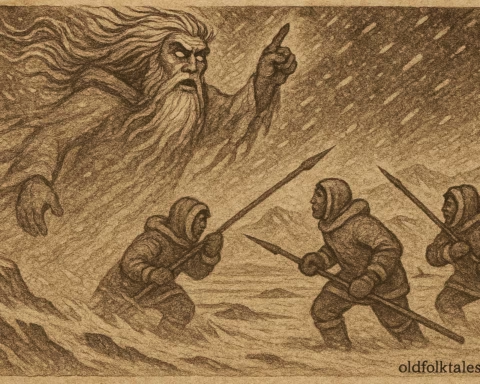
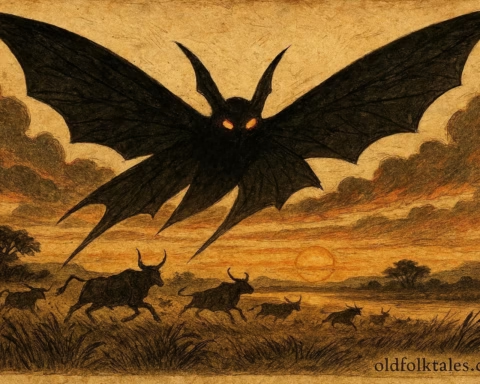
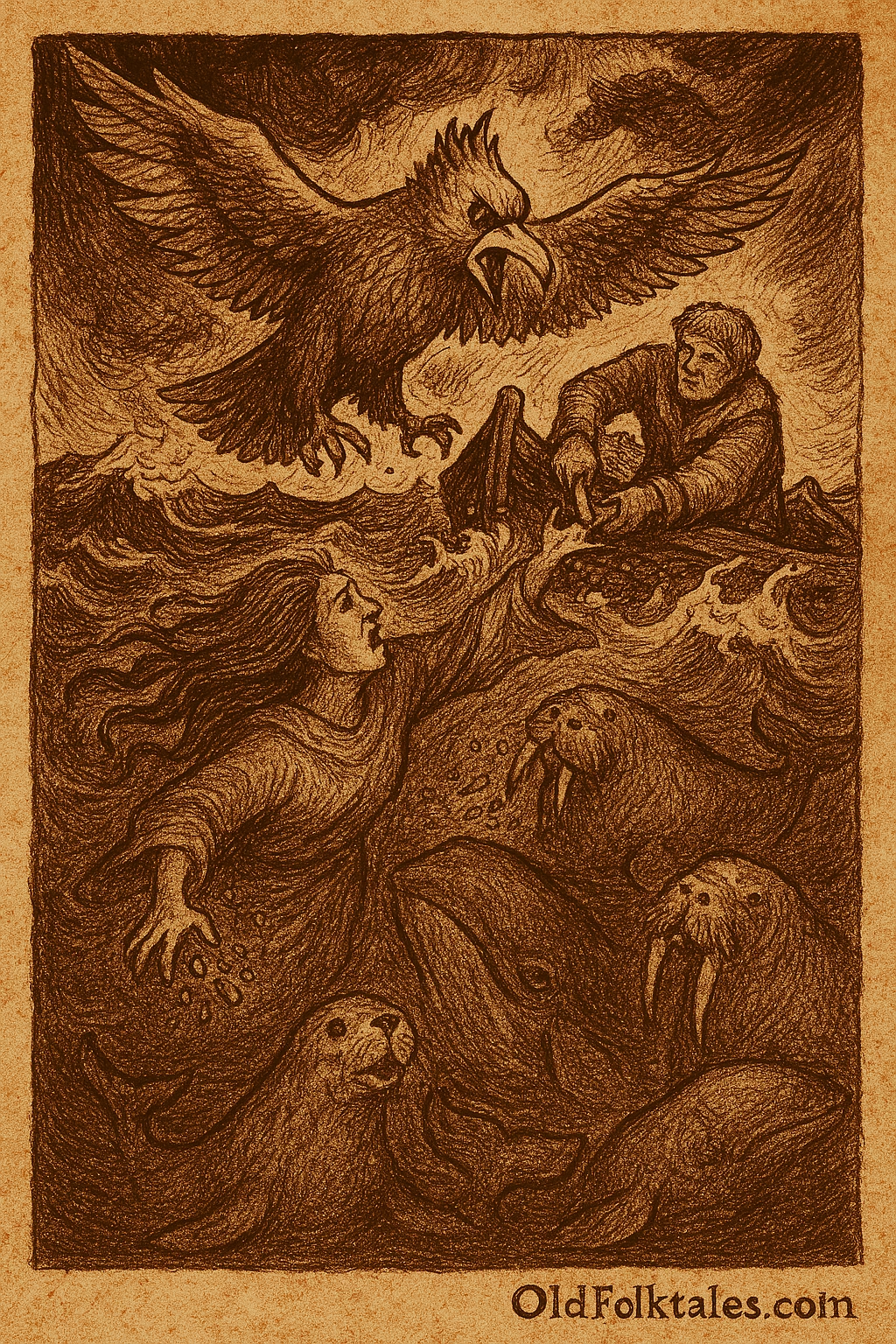
But the bird-spirit soon discovered that his bride was gone. Enraged and heartbroken, he took to the sky and pursued them. With wings as wide as storm clouds, he flew above the tiny kayak and began to beat the air with terrible fury. The wind rose to a shriek. Waves as tall as mountains crashed against the fragile boat, threatening to swallow it whole. The sky darkened, and the sea churned with a violence unlike anything the father had ever seen.
Terror gripped the old man’s heart. He realized that the spirit would not stop that the storm would destroy them both unless he did something drastic. In that moment of panic and selfishness, he made a choice that would echo through Inuit memory forever. He grabbed his daughter and threw her overboard into the icy, frothing sea.
Sedna gasped as the freezing water closed over her head. She fought her way to the surface and reached for the edge of the kayak, her fingers clutching desperately to the side. But her father, wild-eyed and frantic, pulled out his knife. With shaking hands, he brought the blade down and cut off her fingers at the first joints. Sedna screamed, and her fingertips fell into the sea. As they sank into the depths, they transformed becoming seals, sleek and swift, diving into the dark waters below.
Still Sedna clung on, her hands now bleeding stumps. Again her father struck, cutting off the second joints of her fingers. These pieces, too, fell into the ocean and became walruses, massive and powerful, their tusks gleaming as they descended into the abyss.
One final time, Sedna reached up with what remained of her hands. And one final time, her father brought down the knife, severing the last of her fingers. These fragments became whales great leviathans that sang mournful songs as they disappeared into the deep, cold darkness.
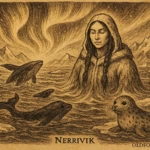
With nothing left to hold on to, Sedna sank. Down, down, down she went, past the light, past the reach of storms, past the world of the living. She fell to the very bottom of the ocean, where the water is black and still, where no sunlight ever penetrates. There, in that cold and silent realm, Sedna did not die. Instead, she transformed. She became something far greater and more terrible than a spurned bride or a betrayed daughter. She became the Sea Mother, the goddess of all marine life, the ruler of every creature that swims in the Arctic waters.
From her throne at the bottom of the sea, Sedna holds dominion over seals, walruses, whales, and all the animals that the Inuit depend upon for survival. Her hair tangles with seaweed and sorrow, and when she is angry or in pain, she withholds the animals from the hunters above. The people starve. The ice remains empty. The nets come up bare.
It is then that the shamans must make their perilous journey. In deep trances, they travel in spirit down through the cold waters to Sedna’s dwelling. There, they must comb her long, tangled hair with gentle hands and soothe her rage with songs and apologies. They plead on behalf of their people, promising respect and gratitude. Only when Sedna is appeased does she release the sea animals once more, allowing the hunters to provide for their families.
And so Sedna remains, eternally bound to the ocean depths, her severed fingers swimming as the creatures that sustain the Inuit people a reminder of betrayal, transformation, and the delicate balance between humanity and the natural world.
Click to read all Myths & Legends – timeless stories of creation, fate, and the divine across every culture and continent
The Moral of the Story
The legend of Sedna teaches profound lessons about respect, responsibility, and consequence. It reminds us that our actions especially those born of fear or selfishness can have lasting and transformative impacts. Sedna’s father’s betrayal did not simply end a life; it created a powerful force that must be honored and appeased. The story emphasizes the importance of respecting nature and the animals that provide for us, recognizing that survival depends on maintaining balance and showing gratitude. It also speaks to the resilience of those who are wronged, showing how suffering can transform into power. For the Inuit people, Sedna’s story is a call to live with humility, to honor the gifts of the sea, and to remember that everything in nature is connected.
Knowledge Check
Q1: Who was Sedna before she became the Sea Goddess?
A: Sedna was a young Inuit woman known for her beauty and independence. She refused every suitor in her village until a mysterious stranger convinced her to marry him, only to reveal himself as a bird-spirit who trapped her on a desolate island.
Q2: Why did Sedna’s father throw her into the ocean?
A: When the bird-spirit husband created a violent storm to stop their escape, Sedna’s father panicked and threw her overboard to save himself from the spirit’s rage and the deadly storm.
Q3: What did Sedna’s severed fingers become?
A: As her fingers were cut off and fell into the sea, they transformed into different marine animals seals from the first joints, walruses from the second joints, and whales from the final pieces.
Q4: What role does Sedna play in Inuit culture and hunting traditions?
A: Sedna is the Sea Mother who controls all marine life in Arctic waters. When she is angry or her hair is tangled, she withholds animals from hunters. Inuit shamans must journey to her underwater realm to comb her hair and appease her, ensuring successful hunts.
Q5: What is the symbolic meaning of the shamans combing Sedna’s hair?
A: The ritual of combing Sedna’s hair represents reconciliation, respect, and the restoration of balance between humans and nature. It symbolizes taking responsibility for humanity’s relationship with the natural world and showing proper reverence for the creatures that sustain life.
Q6: What does Sedna’s transformation teach about the relationship between humans and nature?
A: Sedna’s transformation illustrates that nature is powerful, conscious, and must be respected. Her story teaches that humans depend on the natural world for survival and that disrespect or betrayal has consequences that affect entire communities. It emphasizes the sacred contract between hunters and the animals they hunt.
Source: Adapted from “Intellectual Culture of the Iglulik Eskimos” by Knud Rasmussen (Report of the Fifth Thule Expedition 1921-24, Vol. VII, No. 1, 1929).
Cultural Origin: Inuit First Nations, Arctic Canada