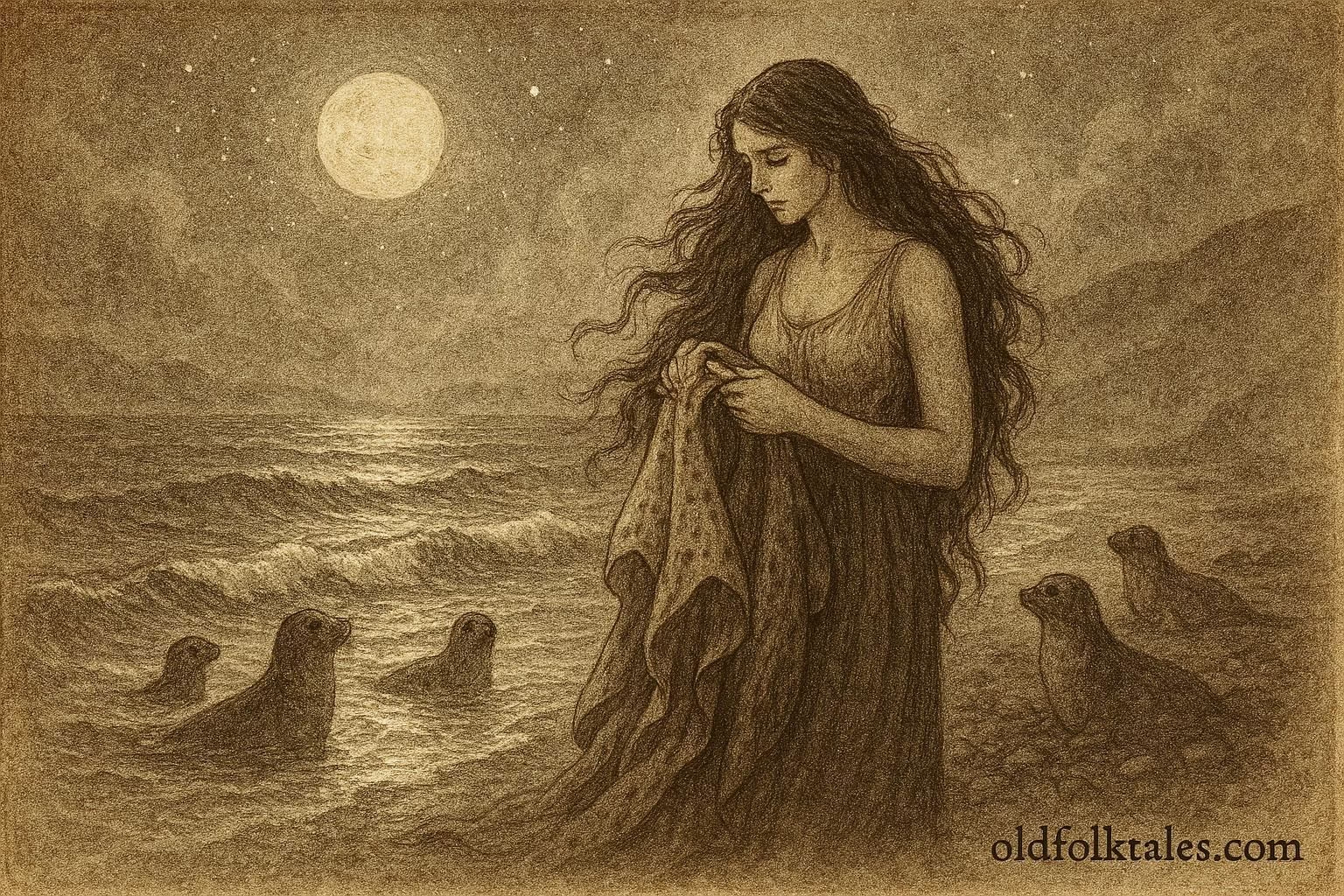
Along the wind-cut coasts of the Hebrides and Orkney, fishermen spoke of nights when the moon gilded the surf and selkies, seal-folk, would rise from the deep. Shedding their glossy seal skins, they stepped ashore as men and women of unearthly beauty. By dawn they donned their skins again and slipped back beneath the waves.
In Gaelic lore, selkie comes from the Scots word for “seal,” but the beings themselves belong to an older, hybrid world, half human, half sea-spirit. Their eyes hold both warmth and sorrow; their touch, though human, carries the chill of deep water. A selkie in human guise might dance upon a lonely strand or rest upon a rock combing salt-wet hair. Yet to keep their freedom, they must never lose the seal skin that binds them to the sea.
Relive the heroic sagas of every age – stories of triumph, tragedy, and timeless valor
Descriptions gathered by 19th-century collectors such as John Francis Campbell and Gregorson Campbell present selkies as graceful and melancholy beings. The women, when human, have pale luminous skin and long dark hair smelling faintly of the tide. The men are broad-shouldered, with sea-gray eyes and voices that echo like surf in a cave. When transformed, they become sleek grey seals, their eyes still disarmingly human.
Myths and Behavior
The most widespread selkie tale is the “seal-wife” legend. One moonlit night, a fisherman finds a circle of selkie women dancing naked on the shore, their discarded seal skins lying nearby. Captivated, he hides one skin. When the selkies hear the call of the sea, they hasten to reclaim their pelts, save one. Bereft of hers, she cannot return. The man offers shelter and, in time, marriage. She becomes a loving wife and bears him children, yet her gaze forever drifts toward the sea.
Years later, while cleaning or tending the hearth, she discovers where the hidden skin lies, beneath a stone, in a chest, or behind the rafters. Without hesitation she takes it, kisses her children farewell, and returns to the waves. In some versions she later visits her children at the water’s edge, calling them to come when storms threaten; in others she is never seen again.
This story, recorded across the Hebrides, Orkney, and Shetland, mirrors the swan-maiden motif found across Eurasian folklore: the stolen garment, the compelled marriage, and the eventual reclamation of freedom. It is a myth of love, loss, and the impossible bridge between land and sea.
Other tales tell of selkie men who come ashore seeking human wives or lovers. Handsome and mysterious, they are said to charm lonely women with music or dreams. In Orkney, a woman longing for a selkie lover would shed seven tears into the sea on a calm tide; if her heart were true, he might appear. Yet such unions are transient, by dawn the selkie must return to his world beneath the waves.
In Hebridean prophecy tales, selkies are keepers of secrets and warnings. Some foretell storms or drownings; others grant blessings to respectful fishermen. To harm a seal was once taboo in many Gaelic coastal villages, for it might be kin in another form. Fishermen who killed a seal risked misfortune, nets torn, boats capsized, or children struck by fever. The sea remembers, say the elders, and the selkie’s kin avenge their own.
Cultural Role and Symbolism
The selkie embodies the tension between belonging and freedom, the call of home versus the pull of love. To coastal Gaelic communities whose lives were ruled by the sea, these tales gave emotional shape to daily reality: men lost at sea, women widowed young, children half-orphaned by the ocean’s hunger. The selkie’s return to the waves mirrors the sea’s own rhythm of taking and giving.
Symbolically, the selkie represents transformation and liminality, a being poised between two worlds, never entirely at peace in either. Her story warns against possession: love cannot flourish through captivity. Yet it also affirms empathy across boundaries; humans and nature, land and sea, share a kinship deeper than difference.
In the Gaelic worldview, the sea is not a void but a living realm populated by spirits and ancestors. Selkies express that cosmology: they are kin of the deep, occasionally crossing into human space to remind mortals of the ocean’s sentient power. The reverence shown to seals in traditional taboos echoes this belief. In parts of the Outer Hebrides, seals were addressed in Gaelic as maighdean-mara (“maid of the sea”) or bràthair na mara (“brother of the sea”), underscoring familial respect.
Modern scholarship (e.g., ecological and gender-studies readings) interprets selkie tales as metaphors for displacement and identity, especially in island cultures where migration and loss are constant. The seal-wife’s yearning for the sea mirrors the diaspora’s longing for homeland, while her captivity critiques patriarchal control over women’s autonomy. Thus, the selkie legend continues to evolve, resonating across centuries as both environmental and emotional myth.
Explore the mysterious creatures of legend, from guardians of the sacred to bringers of chaos
Author’s Note
What draws me most to selkie lore is its quiet ache. These are not grand battles of gods, but intimate tragedies of choice. The selkie wife loves her family, yet her nature demands freedom; the fisherman loves her, yet his act of possession ensures his own loss. Their story feels timeless because it is human.
Reading the old field transcriptions in Popular Tales of the West Highlands, I am struck by how simply island storytellers spoke of such marvels: “She went to the sea, and she was never seen again.” That understatement carries centuries of coastal understanding, of love that ebbs like the tide, and of respect for the mysteries that cannot be kept.
Knowledge Check
- What does the word “selkie” mean?
→ It derives from Scots for “seal,” referring to seal-people who can take human form. - What object allows selkies to transform?
→ Their seal skin or pelt, which they must keep to return to the sea. - What is the common moral theme of the seal-wife tale?
→ Love built on captivity cannot last; freedom is essential to true harmony. - Where were most selkie stories collected in the 19th century?
→ Across the Hebrides, Orkney, and other Scottish coastal regions. - Why was killing a seal considered taboo in Gaelic communities?
→ Seals were believed to be related to selkie folk, spiritual kin of humans. - What cultural idea do selkies symbolize overall?
→ Balance and kinship between humanity and the living sea.
Source: John Francis Campbell, Popular Tales of the West Highlands (19th-century field collection, Internet Archive); Gregorson Campbell, Superstitions of the Highlands and Islands (19th century).
Origin: Hebrides, Orkney, and coastal Scotland and Ireland, oral Gaelic and Norse-influenced tradition with 18th–19th-century documentation