Seollal, Korea’s Lunar New Year, is one of the country’s most important cultural and spiritual celebrations. Rooted in ancient seasonal observances, it blends pre-Confucian folk beliefs, early agricultural astronomy, and later Confucian ancestral rites shaped during the Joseon dynasty. While the festival marks the turning of the lunar cycle, it also preserves several layers of older cosmology. These include reverence for household deities, the hope for seasonal blessings, and deep obligations to one’s ancestors. Over centuries, Seollal grew into a ceremony that unites family identity, moral renewal, and the reaffirmation of harmony between the living and the deceased.
Description
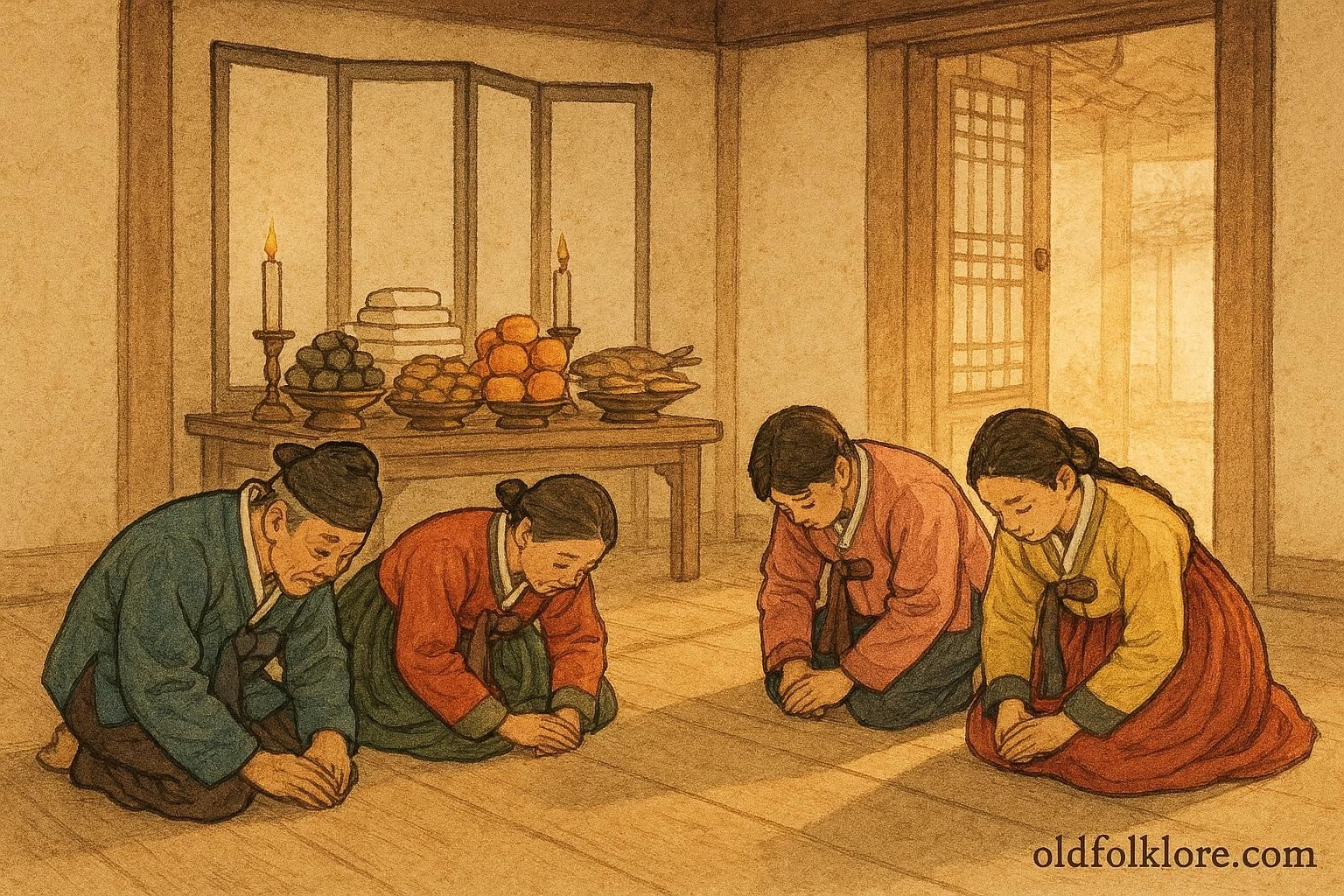
The central practice of Seollal is charye, a formal ancestral memorial rite performed at home. Early in the morning, families prepare a table filled with carefully arranged foods: fruits, rice cakes, meat, dried fish, traditional liquors, and seasonal dishes. Each item represents gratitude, continuity, and respect. The layout follows symbolic rules that guide order, direction, and meaning, reflecting a worldview in which harmony arises from careful alignment between people and the natural order.
When the table is ready, family members bow deeply before the ancestral tablets or memorial sheets. This bowing is not a gesture of worship but an expression of remembrance, connectedness, and moral responsibility. Offering cups of rice wine to the ancestors invites them to share in the household’s first ritual of the year. After the rite ends, the family shares the ceremonial food together in a meal known as eumbok, believed to carry ancestral blessings into the year ahead.
Another significant practice is sebae, the formal New Year’s bow offered by younger family members to their elders. As they bow, they speak words of goodwill and receive blessings in return, often accompanied by small gifts placed in silk pouches. This exchange strengthens generational respect and acknowledges the family’s moral hierarchy, which is considered essential for social harmony.
Food also carries symbolic meaning during Seollal. Families eat tteokguk, a rice cake soup associated with gaining a symbolic year of age. The white tteok represents purity and new beginnings. Traditional games, such as yutnori, fill the afternoon. Dressed in hanbok, families engage in kite-flying, folk dances, and outdoor visits, creating a balance between solemnity and celebration. Through these acts, Seollal becomes both a day of reverence and a festival of joy.
Modern Korean families continue these traditions even when living abroad. Though variations exist, the core values, respect, remembrance, unity, and renewal, remain unchanged.
Mythic Connection
Seollal’s mythic significance rests on its deep connection to ancestors and cyclical time. In Korean tradition, the boundary between the worlds of the living and the dead is permeable during major seasonal transitions. The New Year is a moment when the ancestors draw close, offering guidance and protection. The charye rite symbolizes the lineage as a living chain, stretching backward into antiquity and forward into generations not yet born. This view turns the home into a sacred space and places the family at the center of cosmic order.
The festival also reflects Korea’s agricultural and lunar cosmology. Before the introduction of Confucian rites, early Korean communities celebrated the New Year with ceremonies to village gods, household spirits, and tutelary deities of mountains and fields. These spirits governed the environment and the success of crops, so the New Year required offerings of gratitude and requests for continued protection. Even after Confucian influence shaped the rite, the older idea of cosmic purification remained.
The moon itself plays a symbolic role. A new lunar cycle represents rebirth, clarity, and the renewal of moral intentions. This aligns with the practice of forgiveness, family reconciliation, and the clearing away of past grievances. When families bow, they symbolically bow to time itself, acknowledging change, accepting accountability, and preparing to walk forward with restored harmony.
Seollal’s rituals also echo the broader East Asian belief that social order mirrors cosmic order. A family that maintains proper respect among generations becomes a household aligned with the universe. In this perspective, charye is not only an act of memory but also a spiritual duty that sustains the moral fabric of society. Through food, bows, speech, and silence, families reenact a cosmological story: that humans exist in relationship with ancestors, nature, and the rhythms of the moon.
As Korea modernized, Seollal adapted without losing its sacred core. Though urban life simplified some rituals, the meaning of renewal and the importance of honoring lineage remain powerful. Each year, the festival reminds Koreans that their lives are part of a larger, ancient cycle that renews itself beneath the same moon their ancestors once watched.
Author’s Note
This article traces how Seollal blends ancestral reverence, social duty, and lunar cosmology into a unified rite of renewal. Its practices reflect a worldview that links family identity with seasonal cycles, shaping a festival where memory, gratitude, and moral renewal unfold through food, bows, and ritual sequence.
Knowledge Check
1. What is charye?
A formal ancestral memorial rite performed at home during Seollal.
2. Why is tteokguk eaten on Seollal?
It symbolizes purity and the gaining of a new year of age.
3. What does sebae represent?
A respectful bow to elders that strengthens generational bonds.
4. How does Seollal connect to lunar cosmology?
It marks the rebirth of the lunar cycle, symbolizing renewal and moral clarity.
5. What older traditions influenced Seollal?
Pre-Confucian folk beliefs, household-spirit rites, and agricultural rituals.
6. Why is ancestor veneration important during Seollal?
Ancestors are believed to offer guidance and blessings at the year’s beginning.