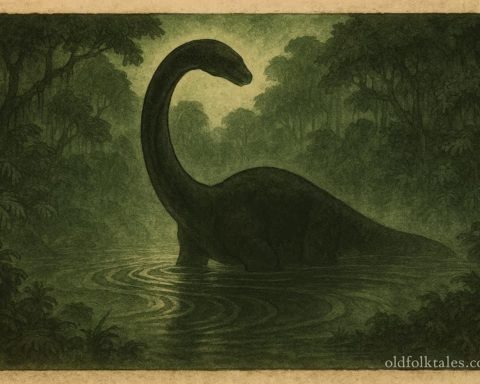
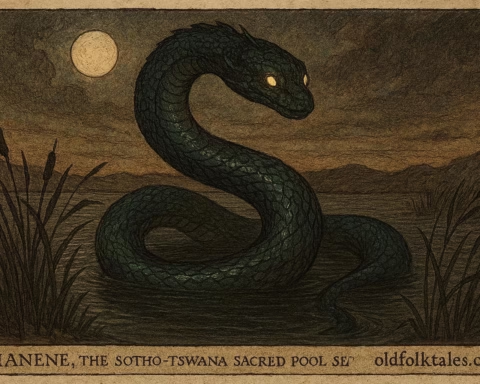
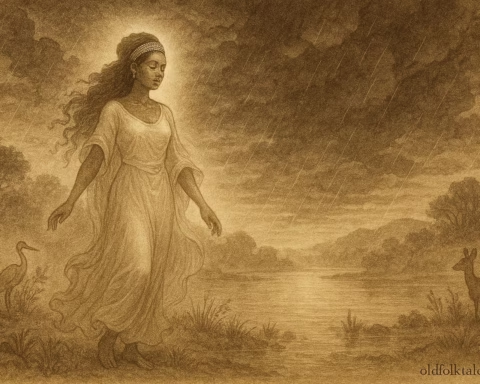
The Seri Gumum, also called Seri Pahang, is a legendary dragon-like creature inhabiting Tasik Chini (Lake Chini), one of Malaysia’s largest natural lakes. Descriptions vary: some tellers depict her as a serpentine, naga-like dragon with shimmering scales and a long, sinuous body, while others emphasize her origin as a cursed princess, whose human form was transformed into a dragon due to a mystical curse.
- Size and form: Accounts describe her as enormous, capable of coiling through the lake and sometimes surfacing with a glimmering, scaled body. Some narrators note horns and a crest on her head, akin to South-East Asian naga depictions.
- Movement and behavior: She is elusive, rarely seen, but believed to patrol the lake and its surrounding vegetation. According to legend, she is protective of the sunken garden beneath the waters, a magical or sacred space where the lake’s treasures and mystical flora reside.
- Powers: Seri Gumum is attributed with aquatic mastery, including control of lake currents and possibly influencing rainfall or fertility around the lake region. Some folklore suggests her roar or emergence can summon storms, while her silence ensures calm waters.
The cursed-princess variant emphasizes moral lessons: betrayal, injustice, or divine punishment transforms her into a dragon. She retains traces of human intelligence, sometimes showing mercy, warning visitors, or punishing disrespectful intruders. In contrast, the purely naga-like version treats her as a guardian spirit of natural and sacred spaces, embodying the mystery and power of water bodies in Malay cosmology.
Cultural Role
The Seri Gumum Dragon occupies both mythic and environmental roles in Malay culture:
- Guardian of the Lake: By protecting Tasik Chini and its hidden gardens, she symbolizes the connection between humans and natural sacred spaces, reflecting a traditional belief in spirits that maintain ecological balance. Villagers respect lake boundaries and water rituals in deference to her.
- Moral and Cautionary Lessons: In the cursed-princess narrative, the dragon serves as a moral enforcer, showing that human actions, such as betrayal, greed, or disrespect, can have lasting consequences. Visitors are reminded of the consequences of hubris, impiety, or environmental neglect.
- Integration with Malay and Indian Epics: Some tales link Seri Gumum with Ramayana motifs, integrating her into broader Southeast Asian narrative streams. She is sometimes cast as an ally or adversary to epic heroes, blending local animism with classical mythological elements.
- Environmental and Religious Symbolism: The dragon represents the mystery of lakes, the sacredness of water, and the presence of supernatural order in nature. Her existence justifies ritual practices such as offerings to the lake, ceremonial prayers for fishing, or festivals acknowledging local water spirits.
- Oral Tradition and Cultural Continuity: Seri Gumum highlights the Jakun Orang Asli and Malay oral narrative systems, where myth, morality, and local geography interweave. Tales transmitted verbally over generations ensure the dragon remains a living symbol of cultural identity.
Historical Context
Tasik Chini has been a cultural landmark for centuries, and the Seri Gumum legend is closely tied to its physical geography. Ethnographers and local historians note that:
- The dragon is anchored to a specific site, unlike universal dragons of classical myth, emphasizing local cosmology.
- Oral accounts vary depending on community, age, and storytelling purpose, with children hearing cautionary tales, while elders recount the princess transformation for moral reflection.
- Some stories associate the dragon with hidden treasures or mystical gardens, reflecting a belief in water as a liminal space between the human world and the supernatural.
Unlike pan-Asian dragon gods, Seri Gumum does not have a standardized written mythology. The narratives persist primarily through oral transmission, storytelling, and recent tourism retellings.
Variant Note
- Dragon vs. cursed princess: Two main versions exist; the former emphasizes her role as a water spirit, the latter as a punished human-turned-dragon.
- Local integration: Some adaptations incorporate Ramayana-inspired plotlines, while others remain purely Malay or Jakun folk narratives.
- Behavioral differences: Protective vs. vengeful, benevolent guardian vs. punisher of intruders, reflecting storyteller intent and audience.
- Appearance differences: Scaled, horned dragon in some versions; partially humanoid traits in princess-transformed variants.
Authenticity Assessment
The Seri Gumum legend is deeply rooted in local oral tradition:
- Ethnographic accounts from Jakun Orang Asli and Malay villages document the lake dragon consistently across generations.
- Its connection to Tasik Chini provides verifiable geographical context, lending cultural traction.
- While recent tourism publications have popularized the dragon for narrative appeal, core elements of the story, dragon form, lake guardianship, moral transformation, reflect authentic folklore, not modern fantasy invention.
This makes Seri Gumum a valuable lens into Malay animistic belief, moral teaching, and environmental respect.
Explore the mysterious creatures of legend, from guardians of the sacred to bringers of chaos
Author’s Note
The Seri Gumum Dragon illustrates how local geography and myth converge in Southeast Asian oral traditions. By situating her in a real lake, the narrative bridges the tangible and the supernatural, teaching moral, ecological, and social lessons. This entry prioritizes folklore-scholarly perspectives, emphasizing oral transmission, ethnographic consistency, and cultural integration over modern tourist or media embellishments. Seri Gumum is both cultural guardian and narrative mirror, reflecting the values, fears, and hopes of Malay communities through the enduring symbolism of water and transformation.
Knowledge Check
- Q: Where does the Seri Gumum Dragon reside?
A: Tasik Chini, Pahang, Malaysia. - Q: What are the two main narrative variants of Seri Gumum?
A: Dragon-like water spirit; cursed princess transformed into a dragon. - Q: Which indigenous group preserves oral traditions of Seri Gumum?
A: Jakun Orang Asli. - Q: What symbolic role does Seri Gumum play in local culture?
A: Guardian of sacred lake, enforcer of morality, protector of ecological balance. - Q: How does Seri Gumum connect to broader mythic traditions?
A: Some tales integrate Ramayana motifs and Southeast Asian naga legends. - Q: What moral lesson is often associated with the cursed-princess version?
A: Human wrongdoing or betrayal can lead to lasting consequences, symbolized by transformation into a dragon.
Source: Oral folklore from Jakun Orang Asli and Malay communities; local tourism narratives; ethnographic compilations of Malaysian mythical creatures.
Origin: Malay Peninsula, Malaysia, especially Pahang. Rooted in local oral tradition, with centuries of transmission among Jakun Orang Asli and Malay village communities around Tasik Chini.