The Dogon Sigui, sometimes written Sigi, stands as one of West Africa’s most remarkable ceremonial traditions. Held approximately every sixty years, this festival embodies the Dogon worldview, blending cosmology, social cohesion, and ritual renewal. The Sigui is not a single event but a sprawling cycle, moving sequentially from village to village across years. It involves masked dances, initiation rites, and the dedication of newly carved ritual masks. At its core, the Sigui serves to embed mythic knowledge into the fabric of communal life, ensuring continuity across generations.
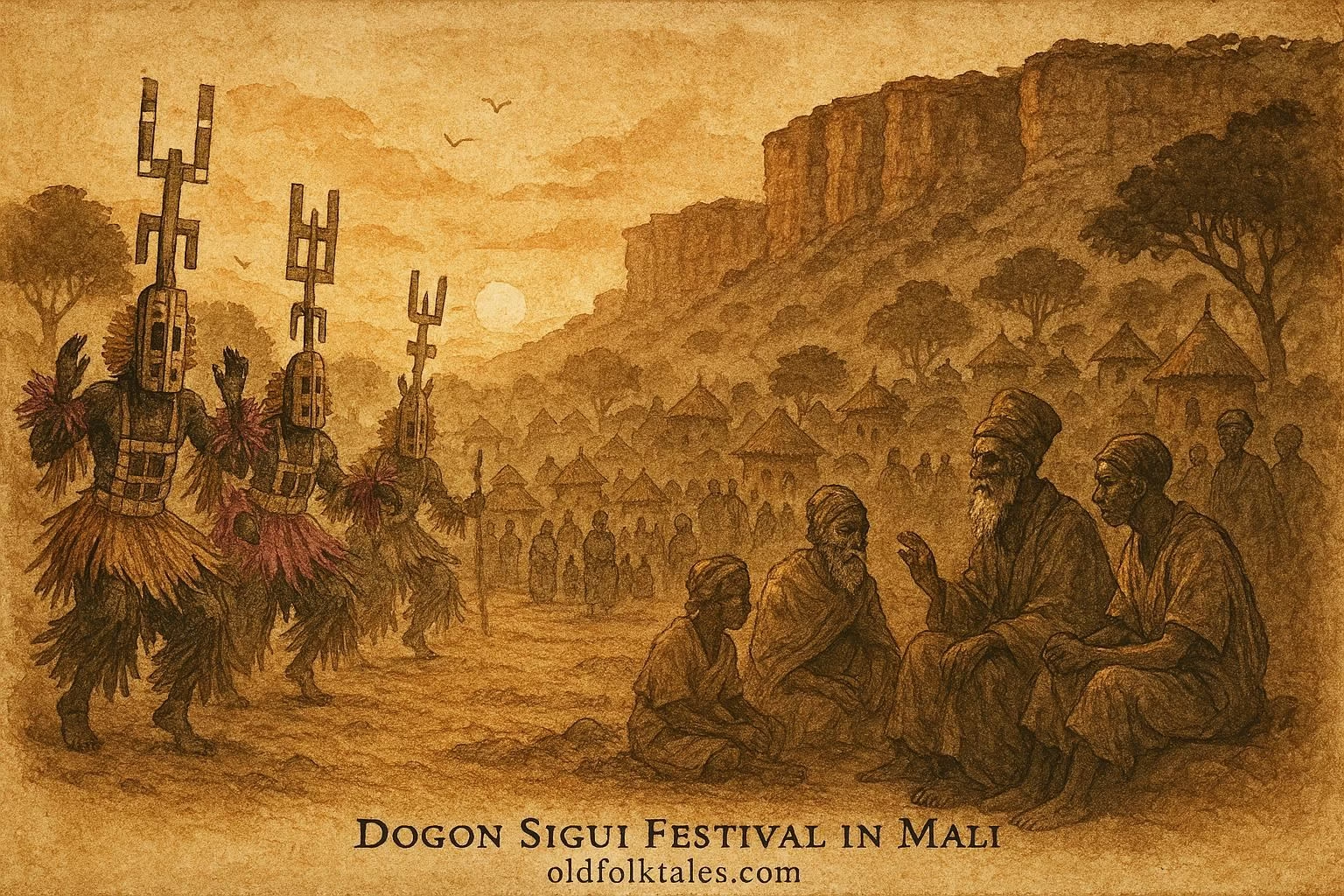
The festival begins with preparation of sacred spaces and the selection of initiates, who undergo instruction in ritual language, song, and the spiritual meanings embedded in the Dogon mask traditions. Masked performers, often members of the Awa society, enact ancestral spirits and cosmological figures. Each mask embodies a different aspect of Dogon myth: from the primordial ancestors who shaped the cosmos to symbolic representations of social and moral principles. Dancers move rhythmically to the beat of drums, conveying narratives of creation, migration, and social order. The performances are visually striking, featuring elaborately carved and painted masks with distinctive elongated forms, each telling a story both sacred and educational.
The sixty-year cycle of the Sigui is intimately tied to Dogon conceptions of time and cosmic renewal. Elders interpret the timing as a moment when the world must be ritually refreshed, ancestral wisdom reaffirmed, and secret knowledge transmitted to younger generations. This period marks the passing of older initiates into elderhood and the induction of new generations into ritual authority. As the festival moves from village to village, knowledge is not only preserved but shared, strengthening social networks and communal identity across the Dogon region.
Mythic Connection
The Sigui ritual is deeply entwined with Dogon cosmogony. According to Dogon mythology, the universe was organized by the ancestor Nommo, a primordial being who brought water, life, and order to the world. Masks and dances enacted during the Sigui dramatize these mythic origins, visually representing the ordering of the cosmos and the interplay between humans, spirits, and the natural world. Each initiation teaches participants about moral conduct, cosmic balance, and the spiritual authority of ancestors. In this way, the Sigui is not only a social event but a sacred reenactment of the Dogon creation story, aligning the community with the rhythm of the universe.
The ceremonial masks, central to the festival, embody spiritual forces and ancestral authority. The elongated, geometric forms symbolize cosmic concepts such as the continuity of life, death, and renewal. Through choreography, drumming, and song, participants internalize these myths, transmitting knowledge that is both practical for social governance and profound in spiritual significance. The Sigui underscores the Dogon belief that humanity exists in an ongoing dialogue with the cosmos, and that the proper performance of ritual maintains harmony between the living and the divine.
Cultural and Social Significance
Beyond its mythic dimensions, the Sigui reinforces social structures within Dogon society. Age-sets, village hierarchies, and the transmission of specialized ritual knowledge are central to the festival. Initiates learn not only spiritual content but practical wisdom for leadership, conflict resolution, and communal stewardship. The festival’s long duration and inter-village movement also serve to unify geographically dispersed Dogon communities, fostering shared identity and continuity.
Modern scholarship highlights that while ethnographers like Marcel Griaule and Dieterlen documented these practices extensively, contemporary Dogon communities retain their own interpretations and adaptations of the festival. Mask types, dance sequences, and ceremonial emphases vary between villages, reflecting local histories and priorities. Despite external influences and the pressures of tourism, the Sigui continues to function as a vital mechanism for cultural preservation, spiritual renewal, and the reinforcement of communal ethics.
Author’s Note
The Dogon Sigui festival exemplifies the profound connection between myth, ritual, and social organization. By staging cosmological stories through masks, dances, and initiations, the Dogon embed sacred knowledge into the rhythm of daily life. This sixty-year ceremonial cycle reflects a worldview in which human life, ancestral authority, and the cosmos are inseparably intertwined. Observing or learning about the Sigui offers a rare window into a society where ritual preserves knowledge, sustains moral order, and honors the invisible forces shaping existence.
Knowledge Check
1. What is the primary purpose of the Sigui festival?
To renew ancestral ties, transmit secret ritual knowledge, and reinforce social cohesion across Dogon villages.
2. How often is the Sigui held?
Approximately every sixty years, marking generational transition and cosmic renewal.
3. What role do masks play in the festival?
Masks embody ancestral and cosmological figures, teaching mythic narratives, morality, and spiritual authority.
4. Who participates in the initiation rites during Sigui?
Selected young men of the community, guided by elders and members of the Awa society.
5. How does Sigui connect to Dogon cosmology?
It reenacts the creation by Nommo, illustrating the ordering of the universe and humanity’s relationship to ancestral spirits.
6. How have modern influences affected the festival?
While documentation and tourism exist, villages maintain local interpretations, preserving sacred practices and social functions.